

5 Things You Should Never Plug Into Your Home's Outdoor Power Outlets

We may receive a commission on purchases made from links.
A dangerous mistake to make is assuming that all outlets are created equally. It can lead to frying your electrical equipment, damaging property, and creating serious safety hazards. Whatever works perfectly fine in your cozy, climate-controlled living room is not always built to handle the rough, totally unpredictable conditions Mother Nature throws its way. Before you connect anything to that outdoor outlet, you should consider whether the unit has the specialized, tough gear to survive.
The minute you drag those devices outside, they start getting attacked by the elements. UV rays from the sun seriously break down standard indoor plastic housings, making them weak and leaving live wiring exposed. Moisture, whether it comes from direct rain, snow, or just heavy morning dew and high humidity, is the worst enemy of unsealed household gear. It causes fast corrosion and short circuits that can set off a fire instantly.
Also, outdoor outlets usually have a Ground Fault Circuit Interrupter (GFCI). This is a safety feature that's significantly more sensitive than your standard indoor breaker. Since GFCIs are meant to stop electrocution in wet areas, they will instantly trip and kill the power if they sense minor electrical leakage, which is common in older, indoor-rated appliances. Don't let your simple convenience turn into a frustrating, expensive power failure or safety issue.
Indoor extension cords, power strips, & surge protectors
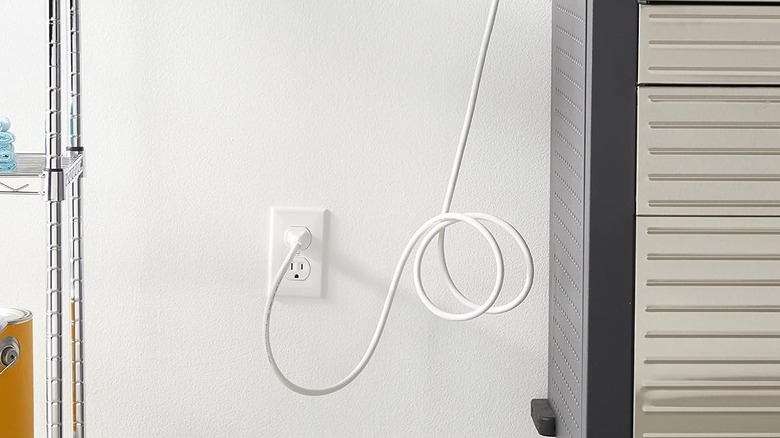
Extension cords aren't engineered with the heavy-duty insulation needed to withstand the weather. Outdoor-rated versions are totally different; They have tough, weather-resistant jackets usually marked with a "W" so you know they can withstand the elements. Indoor cords are made only for dry, climate-controlled spaces.
When the sun hits that lightweight indoor insulation, the UV radiation chemically destroys the plastic casing. It gets brittle, discolors quickly, and starts to crack. Once that protective layer fails, you've exposed live wires to moisture and everything else, creating a massive risk of shock or an electrical short. These products aren't sealed against the elements at all, so rain, snow, or even just morning dew can easily seep into the casing of a power strip or the connection point of an extension cord. When moisture gets into these unsealed spots, it sets up unintended conductive pathways that instantly lead to short circuits, arc faults, and corrosion of the internal parts.
Indoor extension cords are also often made with lighter-gauge wire meant for low-amperage household goods, like charging your phone or plugging in a small lamp. If you use an undersized indoor cord for high-power tools, you force it to carry far more current than it was built for, and this overloading can melt the insulation right off the wire and start a fire.
Indoor smart plugs & Wi-Fi timers
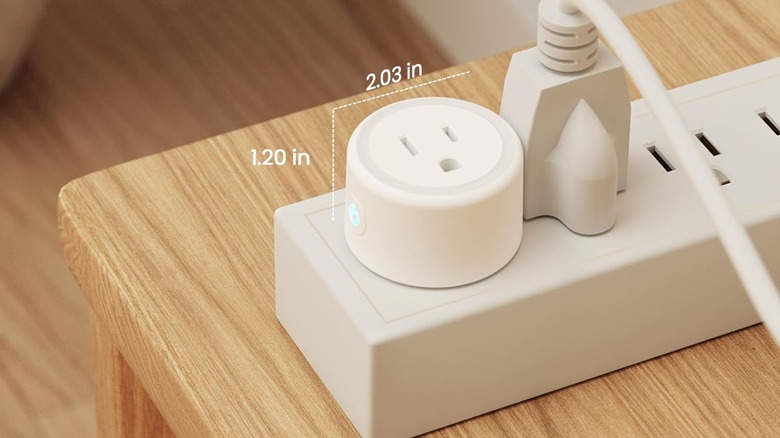
Using a standard Amazon or Hue smart plug for your patio string lights or holiday decorations is a dangerous mistake. It's clear that these devices are only meant for indoor use and need to stay away from water and humidity, as they don't have the necessary IP rating to be used outside. It would be a misconception to assume that placing these under a covered porch or roof overhang provides enough protection, but that setup won't safeguard you from constant outdoor environmental changes.
Indoor smart plugs aren't sealed units; They are missing the specialized gaskets and casings needed to repel moisture. Even if you shield the device from direct rain, the natural humidity and temperature swings that happen outdoors will always cause condensation to form inside that smart plug. When water vapor turns into liquid droplets within the housing, this moisture creates unintended conductive pathways, bridging components that should stay separate, which instantly leads to short circuits and the device failing.
In the worst situation, this frying of the circuit board can cause the unit to overheat, melt, or spark, creating a serious fire hazard or the risk of electrical shock. Indoor plugs in general aren't generally made for the outdoors, and sunlight exposure will make the materials brittle, causing them to crack and expose those dangerous live wires over time. So make sure to get an outlet made for the outdoors.
Chest freezers
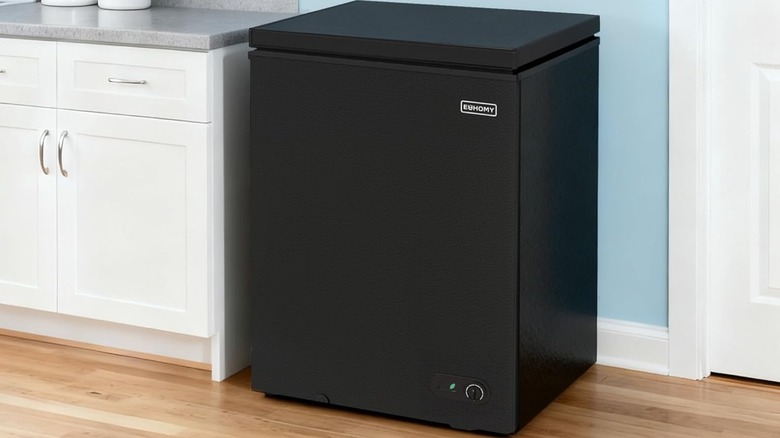
Moving that huge chest freezer onto the patio or carport might look like the perfect space-saving solution, but plugging it into an exterior outlet is asking for an expensive electrical failure. The main issue comes down to how older appliance motors interact with the highly sensitive safety mechanisms required for outside power sources. As those freezer compressors age, they naturally start letting small amounts of electrical leakage escape the circuit.
Your normal indoor breaker won't even notice this and won't trip over it because it's built to handle minor variances without stopping. However, an outdoor Ground Fault Circuit Interrupter (GFCI) is set to trip if it detects just 5 milliamps of leakage; It has to do this to stop electrocution in wet environments. A freezer that works perfectly fine inside your house will end up constantly tripping that outdoor outlet.
Indoor-rated freezers don't have the protective weatherproofing of appliances built for outside, making them sensitive to high humidity and temperature extremes that quickly damage their internal components. For instance, when it gets cold outside, the oil inside the compressor can thicken. This forces the motor to strain itself just to continue, potentially causing the compressor to overheat or fail completely.
Home security hubs & bridges

Hooking up your home security hubs or smart bridges to outdoor outlets completely defeats the whole purpose of having them. While you might be focused on complex digital problems, like some hacker remotely infiltrating your network, the biggest threat to exterior-powered security gear is actually much simpler and arguably more effective: someone physically pulling the plug.
These are fully accessible to anyone walking by. So, if you connect something critical like a security camera hub, a smart lock bridge, or an outdoor camera, to one of these exposed spots, you create a weak spot that requires no technical skill to exploit. To make sure your home security system works reliably, you absolutely must protect it from this kind of interference.
The power source for these systems should be secure, using outlets that unauthorized individuals can't easily get to. When a bridge loses power, the features like remote alerts, video recording, and real-time monitoring often stop functioning immediately. Instead of putting them outside, these really should be located deep within your home. However, if you really need to use external power for specific edge devices, those connections must be secured inside lockable, tamper-resistant enclosures that physically lock the plug in place to prevent accidental or malicious unplugging.
Guitar amplifiers (tube or solid state)
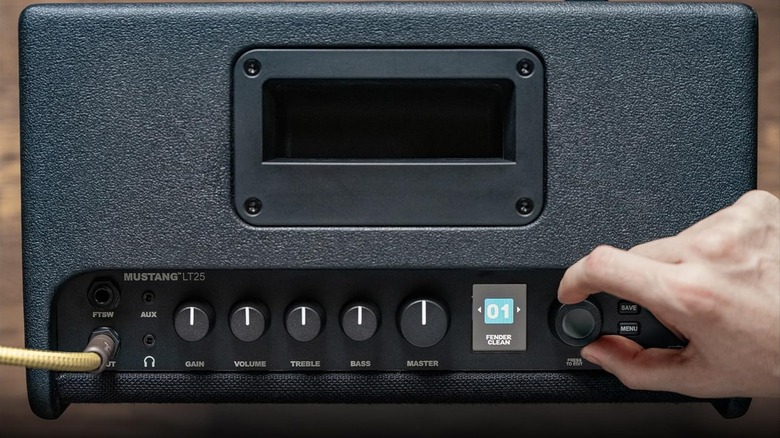
It is not uncommon to see people dragging their gear outside for a summer backyard party, BBQ, or just an open-air practice session. However, plugging your guitar amplifier into an outdoor outlet is a serious safety risk. It doesn't matter if you're using an old vintage tube amplifier or a modern solid-state model; These things are famous for having grounding problems and leaking electricity.
The vibe of an outdoor jam is great, but mixing high-voltage electronics with weather and moisture creates a recipe for disaster and electrocution. Indoors, floors like wood, carpet, or vinyl usually insulate you, but outside, surfaces like concrete, grass, and plain dirt are highly conductive, especially when they're wet.
The specific danger is baked right into how the instrument and amplifier are designed. Electric guitar strings are usually grounded to the bridge to help cut down on that annoying electromagnetic hum. This means the player is physically linked to the amp's electrical ground the moment their fingers hit the instrument. If the amplifier runs into a fault, the entire chassis and those strings can become energized. If you were inside, you might only get a little "tingle" because your flooring insulates you from true earth potential. However, depending on the severity, you could be killed by the shock.