

Why US States Are Trying So Hard To Delay AI Data Centers From Being Built
You may avoid ChatGPT and Google's Gemini because artificial intelligence, or AI, makes you nervous, but you probably use AI every day without even knowing it. Gallup reported in 2025 that 50% of Americans answered "no" when asked if they had used an AI-enabled product in the past week. But when asked whether they used products that typically include artificial intelligence features, such as navigation and weather apps, social media, and even streaming platforms, 99% of those same respondents said yes. AI has slowly permeated our lives in ways that many don't understand. The underlying infrastructure that supports artificial intelligence is vast, and it's not completely understood how that can affect surrounding communities.
AI growth is exploding – ChatGPT is the fifth-most-visited website in the world, with more than five billion visits per month. Because AI requires massive amounts of data to learn and grow, the demand for AI has led to a rapid increase in the number of data centers. Data centers are typically large buildings that house servers, data storage systems, and networking equipment essential to our modern digital world. These facilities also require power and cooling systems. According to the Pew Research Center, AI is supported by hyperscale data centers, which typically host at least 5,000 servers and occupy hundreds of square feet. As demand for these centers increases, however, some communities are saying no, we don't want that in our backyard. Now, the fight is going state-wide, at least in some parts of the U.S.
The fight against massive AI data centers
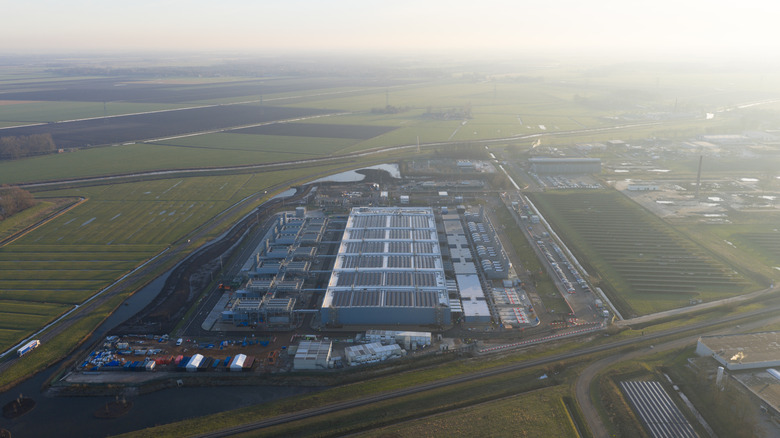
Recently, residents of Virginia, Pennsylvania, and North Carolina have pushed back against plans for new data centers, stalling and in some cases successfully canceling projects, and lawmakers in Georgia are considering bills that call for statewide moratoriums on new data centers — but why? Data centers use massive amounts of energy, typically off the local grids around them. Because most grids still rely on fossil fuels, using artificial intelligence actually increases greenhouse gas emissions. Additionally, when a data center comes to town, local grids are often upgraded, a cost sometimes passed on to consumers.
In addition to energy, data centers require large amounts of water to keep their air conditioning systems running. Just like your laptop, the computers in these massive buildings get hot and need to stay cool. In 2023, data centers in the U.S. used more than 17 billion gallons of water. They consume so many resources that Senator Bernie Sanders recently proposed a national moratorium on new data centers pending an exhaustive review of their environmental impact.
In Georgia, regulators in December 2025 agreed to allow a large expansion of the state's power grid in response to Georgia Power's request for almost 10,000 megawatts of new energy capacity. In response, state lawmakers have proposed several bills to shelter residents from higher energy costs, protect natural resources, and end tax credits that benefit data centers. Additionally, Representative Ruwa Romman introduced a bill that would place a moratorium on new data centers for a full year. Eyes are on Georgia as more communities move against the massive data centers knocking on their doors.