

These Aquatic Wind Turbines Are Doing A Lot More Than Generating Energy
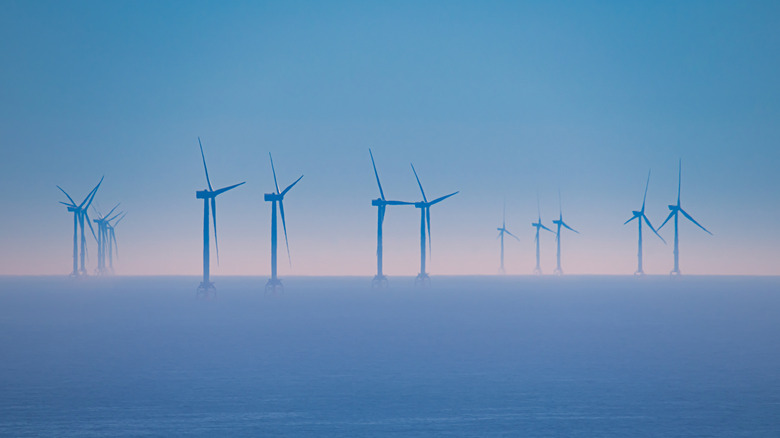
Wind farms may be a modern invention, but humanity has tapped into the power of the wind for thousands of years, beginning with sails to propel boats and simple windmills to pump water. The first megawatt turbine, used to produce electricity, was invented in 1941, and the world began to change. Today, the U.S. alone has more than 90,000 wind turbines and several operational offshore wind farms.
Offshore wind farms, or parks, are exactly what they sound like — wind turbines that are anchored to the seabed or float on the surface of the ocean. The electricity these turbines produce is carried back to shore via cables that are buried underneath the ocean. Offshore, the winds tend to be stronger and more reliable than wind on land, and offshore wind farms have seen a global uptick over the last 10 years, especially in Europe.
Just as land-based wind farms raise environmental concerns, offshore wind farms raise their own ecological concerns. In addition to the risk of bird collisions, noise and vibrations during construction are potentially harmful to underwater species; the installation of cables disturbs the seafloor, which can damage ecosystems; and the electromagnetic fields generated by the underground cables can also disturb wildlife. Several independent studies of North Sea wind farms that have hosted turbines for 20 years have found that the situation may not be as dire as scientists once feared — for example, China's wind farms are doing much more than just generating electricity. Here's what they know, and what it means for other offshore wind farms worldwide.
Unlikely benefits to offshore wind farms
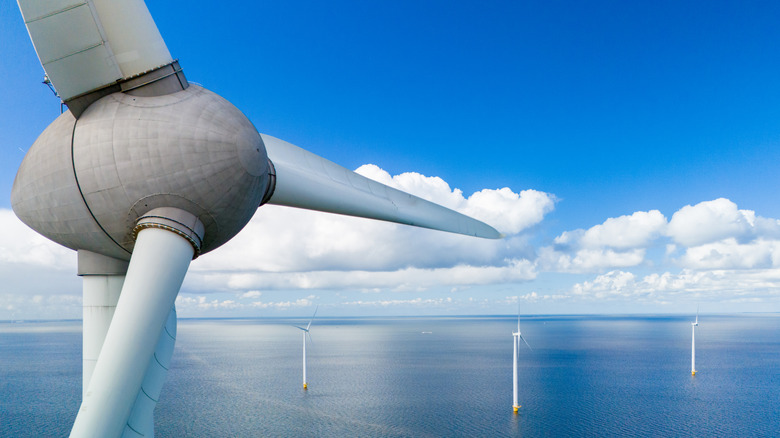
The ocean is home to some of the largest wind turbines in the world, and there have been wind turbines in the North Sea for longer than any other water body on Earth. In several instances, those areas have been protected from the fishing industry, allowing them to develop without boats or trawling nets disturbing the environment. This has given scientists a unique glimpse into what the installation of wind turbines has done to the underwater environment over a long period of time, and an expose in The Anthropocene magazine details some of their findings.
Artificial reefs can be made from cinder blocks, purposefully sunken ships, and even old tires, and now researchers have found that wind turbines anchored to the ocean floor may act as artificial reefs and sanctuaries for marine life. While concerns remain about the impact on marine life, The Nature Conservancy is also conducting research on how to integrate reef restoration into offshore wind farms. Protected areas for marine life could vastly help us restore fish populations, and scientists have found that some animals, like harbour seals, are actively seeking out the protected areas around wind turbines, likely for food, and lobster and cod populations are growing and healthy in those areas.
According to The Nature Conservancy, the world will need to install almost 500 gigawatts of offshore wind power by 2030 to meet current climate goals, but it and organizations around the globe hope to do so in ways that mitigate environmental impacts and maximize potential benefits.