

5 Cruiser Motorcycles With High Resale Value
We have a bold claim to make: Cruiser motorbikes depreciate differently from other kinds of bike. Market trends seem to largely back this up. Sportbikes (and superbikes) typically plummet in value as soon as next year's model releases despite minimally better specs and marginally better performance. For instance, 2024 models of the Yamaha R1M (MSRP: $27,399 plus $575 destination) are already selling for about $20,000 on the used market.
Adventure bikes also lose value, especially related to their condition, once they get scratches and dings from actual adventuring. Case in point: the Yamaha YZ125, which sold for $6,999 new in 2023 is now going for about $4,000, just two years in. Then there's also the fact that many vehicles will lose a chunk of value in the first year of ownership.
However, second-hand buyers of the best cruiser bikes don't really care about fuel economy, the most cutting edge tech, or 0-60 times that get superseded each year. These buyers want style, comfort, road presence, and that massive rumble between their legs that only cruiser bikes can provide. The cruiser market rewards factors that have nothing to do with the model year, such as timeless styling, ease of maintenance, model popularity, and more. Perhaps this is why even some decade-old bikes still sell for 80% (or more) of their as-new MSRP.
Harley-Davidson V-Rod
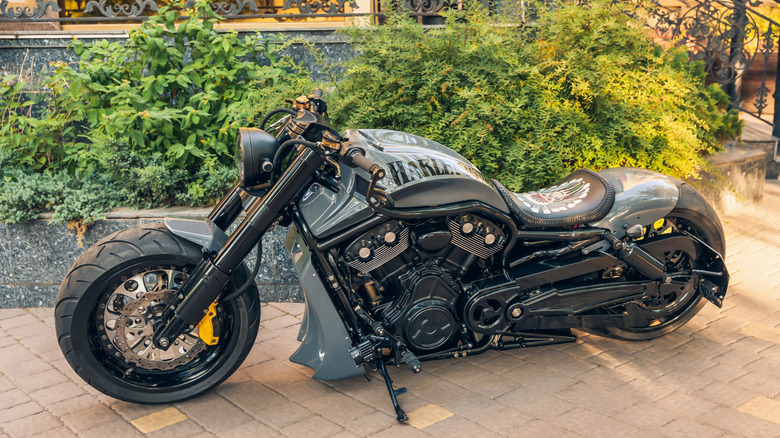
Harley's V-Rod was initially released way back in 2001, meant to bridge the gap between a pure cruiser bike and a sport bike. This model line carried the code VRSC, an acronym for "V-twin Racing Street Custom." That said, even decade-old V-Rod units from 2016 and 2017 are currently selling for upward of $11,000, with many examples surpassing even that price. This is especially surprising considering that the MSRP for a 2015-2016 Harley V-Rod was $16,449. Assuming that was the purchase price, and that a buyer scoops one up today for about $12,000; that translates to a depreciation of just 30% (approximately) in a decade, which is pretty impressive.
The V-Rod (in its final years) was powered by the Revolution engine, which displaced 1,247cc and was mated to a five-speed gearbox. It's well known that the original early-2000s Revolution engine was developed with help from Porsche, with the main change being the move to 60 degrees from 45. This powertrain developed a respectable 122 hp at 8,250 RPM along with 86 lb-ft of torque from 6,750 RPM, and drove the rear wheel via belt final drive, though primary drive was via chain. Both the brakes are hydraulic in nature, though we should mention that the front wheel brakes had dual hydraulic disks, while the rear was a single unit. The Harley V-Rod was discontinued in 2017, probably because of emissions standards.
Indian Super Chief
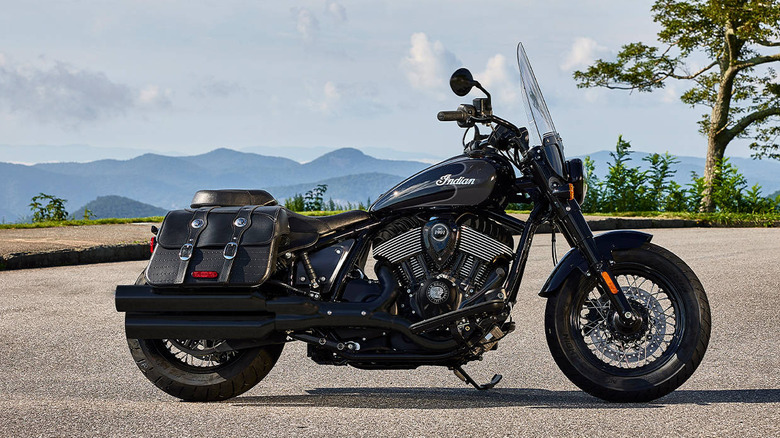
It should surprise no one that the legendary Super Chief by Indian Motorcycles makes our list. The Super is the newest bike to hit the lineup from Indian, released just over five years ago, when Indian was celebrating its centennial. As part of that centennial lineup refresh, three new models were released: the Indian Chief Dark Horse, Super Chief, and the Chief Bobber Dark Horse. Power came from a 1,890cc engine called the Thunderstroke, which spread displacement across twin cylinders. The power output was about 122 hp and 108 lb-ft, mated to a six-speed transmission.
While the other two centennial models were updates to existing nameplates, the Super Chief was an all-new introduction. It had features like a seat that is similar to Harley's 2-UP dual-person seat, a removable windshield, and 2i2 exhausts; chrome, of course. When launched in 2022, the as-new price for an Indian Super Chief was $18,499; which made it a square competitor to the Harley-Davidson Low Rider. However, even (almost) half a decade on, the Super Chief models still hold their value quite well. 2022 models in good condition are selling for about $12,000, with desirable condition ones going for even higher. We should mention that at the time of research, we did see one listed for about $8,000, as well as a couple in the $10,000 range, but those seemed to be one offs, with most listings north of $11,500.
Kawasaki Vulcan 1700 Vaquero
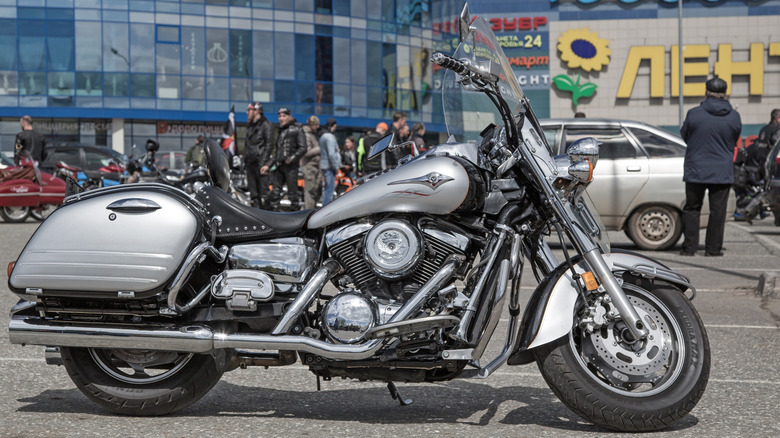
The first Kawasaki Vulcan model released back in 1984, and certain models that carry the nameplate are still in production today. At 8.2 feet in length, the Kawasaki Vulcan 1700 Vaquero is certainly on the longer side of things. But that's not the only place where it sports big numbers: we have to also acknowledge the giant engine that displaces 1,700cc across twin cylinders. This beastly powerplant is mated to a six-speed transmission. Put together, the bike churns out an eye-watering 82 hp at 5,000 RPM, and 107.6 lb-ft of torque at 2,750 RPM, while transferring all those ponies to the rear wheel via belt final drive.
We should point out to readers that while certain other Vulcan models have been discontinued, a number of Vulcans are still available in varying sizes. Also worth mentioning is that modern models of the 1700 Vaquero also come equipped with cruise control, which is a really nice feature to have on cruiser bikes.
For the current year, the Vaquero carries an MSRP sticker tag of $19,999, in addition to a $840 destination fee. On the topic of price though, the Vaquero does have pretty decent resale value, with eight-year-old models from 2018 still selling for between $11,000 and $13,000, which is amazing considering that the MSRP in 2018 was about $16,000 and change. There were a few listings below $11,000, but most were above that range.
Honda Gold Wing
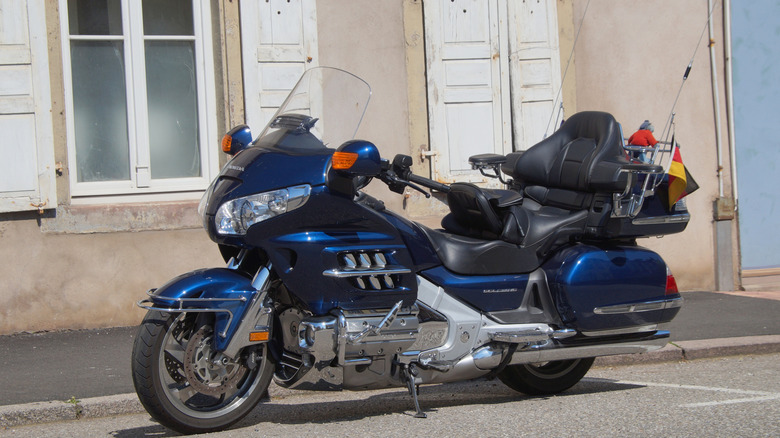
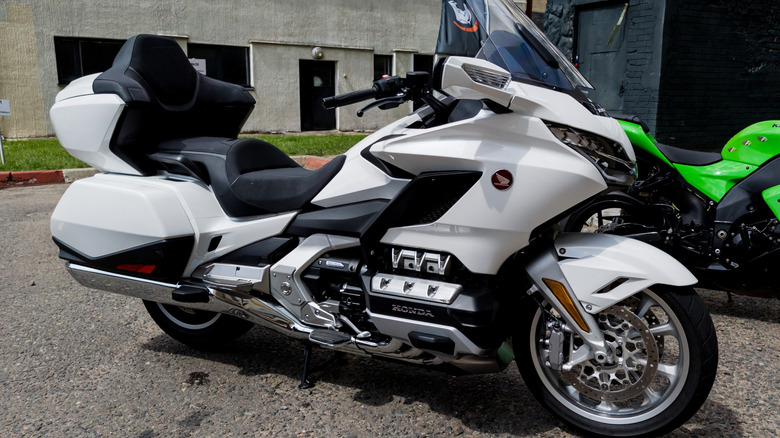
Another long-running cruiser motorcycle still available for purchase today is the Honda Gold Wing, and that's what makes its resale value surprising. One would logically assume that when a model is still available new, the supply keeps increasing and resale values drop, but the Indian Super Chief, Kawi Vulcan 1700, and Honda Gold Wing disprove that theory. Power for the modern Gold Wing comes from a six-cylinder engine that displaces 1,833cc. In 2026, the Gold Wing comes in with an MSRP of $25,500, in addition to a destination freight fee of $775, bringing the total out-the-door price for a new Gold Wing to $26,275.
There is also a slightly more expensive "Gold Wing Tour" model that focuses on long-distance riding through comfort packages. Though they've held value well, older Gold Wing models are priced a bit more palatably, with units from 2020 currently going for about $18,000 on the used market. For clarity, a 2020 Honda Gold Wing would have made a $23,800-sized hole in buyer's pockets back when new, which shows that the depreciation rate on these things is a stellar 20% (approximate) in six years.
As impressive as that six-year depreciation rate is, the decade-long trend on Gold Wings is even more so. Units from 2015 and thereabouts are still routinely being listed for north of $12,000, which works out to about five percent depreciation per year, which is stellar. For those interested, a 2015 Honda Gold Wing would have come with a base MSRP of $20,499 when new.
Yamaha V-star 1300
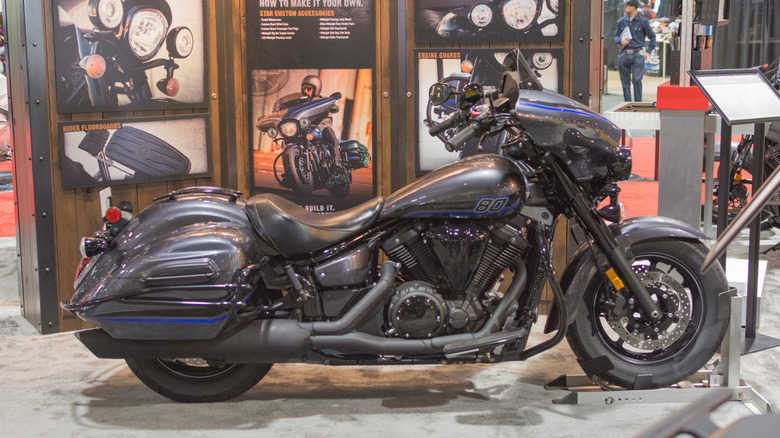
The Yamaha V-Star line was a range of large touring cruisers manufactured by the Japanese bike company largely between 1997 and 2017. There have been sporadic revivals of the line since then, such as with the recent V-Star 250, but none have held a candle to the big rumblers of the decade gone past. The relative rarity (compared to Harley and Honda models) of the V-Star, coupled with the inability of new models to live up to the glory days, probably explains why the older bikes hold their value so well. The V-Star 1300 came with, as the name hints, a 1,304cc engine that achieved said displacement via a bore of 100 millimeters and stroke of 83 millimeters, across dual cylinders.
The transmission on these bikes was a five-speed box that featured belt final drive. In terms of power output, the 1300s punched above their weight a bit, producing 70 hp and 82 lb-ft of torque. They held value well too. A V-Star 1300 from 2012 had an MSRP of $10,990. Today, bikes from that period sell for between $5,000 and $8,000, which, just like the Gold Wing, works out to an approximate depreciation of just about 5% per year. Readers might also be interested to learn that there are (so far, unsubstantiated) rumors about Yamaha bringing back the V-Star big-displacement cruisers in either 2026 or 2027, which would be a welcome change, given every manufacturer seem to be shrinking displacements to comply with emissions regulations.