

Put The Grill Away Safely: What To Do With Your Propane Tank In The Winter
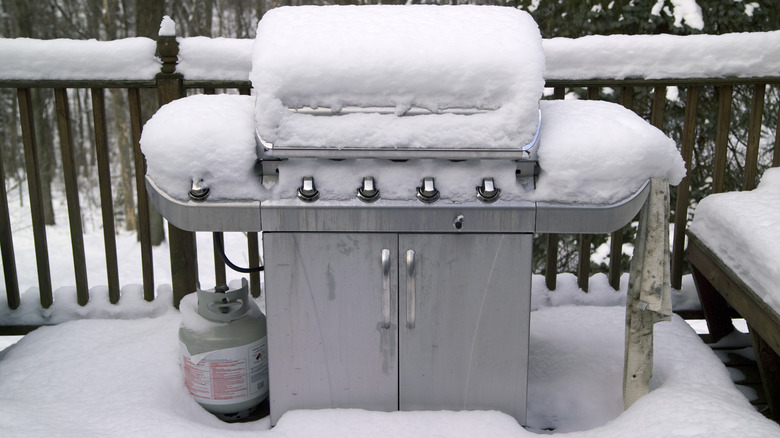
Outdoor living is on hold for many people, thanks to winter weather. If you're one of those people, you're probably taking steps to keep your equipment safe, including your outdoor electronics. When it comes to your grill's propane tank, keep it outside, not inside your home, and stored upright on a solid surface at least 10 feet away from any other building. Be sure it's well ventilated, where it won't be disturbed. Even if it snows, as long as your outside temperature stays above -40 degrees Fahrenheit, you're covered.
Though outside storage is recommended, according to AmeriGas, you can store your tank in an outdoor structure not connected to your home. But this area has to be well ventilated as well, and the tank must be kept away from power tools or other flammable items. Once the tank is properly secured, be sure the valve is turned off, or it could begin leaking propane. Keep a regular check on the tank through the winter to ensure it remains in good condition.
This is especially important after a winter storm hits, as snow and ice can build up on your tank, potentially causing it crack. Plus, if your tank gets completely covered by snow, the pressure may affect the tank's ability to turn the propane inside into a usable gas later on. If you get any accumulation on your tank or valve, don't try knocking it loose. Instead, take care to safely remove snow or ice by gently brushing it away.
Tank safety and winter grill tips
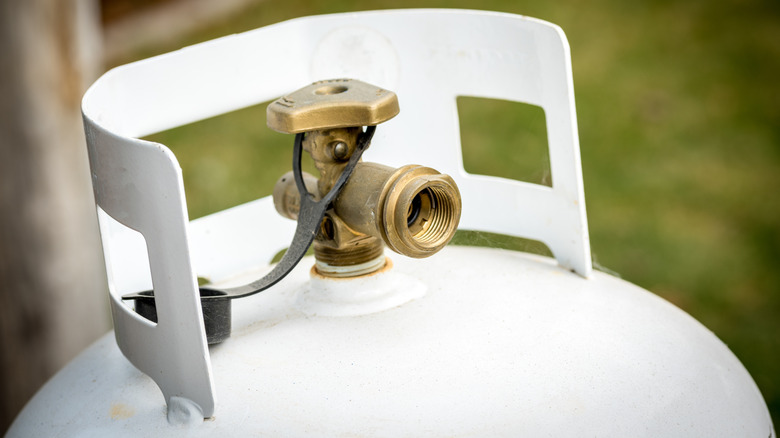
Even after safely storing your grill's propane tank during the winter, rust, corrosion, or issues with the valve or regulator are still possible. If you encounter any of these problems or other visible damage, don't use the tank again. Also, don't ever try repairing or modifying the tank yourself. The right move is to take it to your nearest propane retailer, like Tractor Supply, for inspection. You can then switch the tank out for another one if necessary.
You should also protect the grill itself as well. First, clean the grill racks of any residue or grease. Leftover gunk and moisture can cause rust or corrosion over time. Then, cover the grill with a durable water-resistant cover. This will ensure that you're keeping it safe from the elements. You can even store your grill in a dry space, like a garage or shed, as long as your propane tank is not attached. With the proper care, your grill's metal parts should be safe.
It's a good idea to do monthly checks on your grill, no matter where you're storing it. Moisture is always a danger, and pest activity outside can happen when you least expect it. Just remove the cover and inspect the grill for any warning signs of moisture buildup. Clean the grill as needed, and secure the cover once you're done. By taking these steps, you're ensuring that everything remains in good working order for when you begin using the grill again.