

How China's 'Hurricane 3000' Microwave Weapon Drops Drones From The Air
The ongoing war in Ukraine has changed the face of battlefields forever. The widespread use of drones has left traditional air defenses floundering; launching missiles that cost hundreds of thousands of dollars to counter threats that may only cost a few hundred dollars is not practical. Scale this up to countering swarms of drones, and the logistics, costs, and effectiveness of such systems wane even further. This is why systems like Israel's Iron Beam laser weapon that can destroy drones for a few dollars "a pop" are being developed and introduced into combat service.
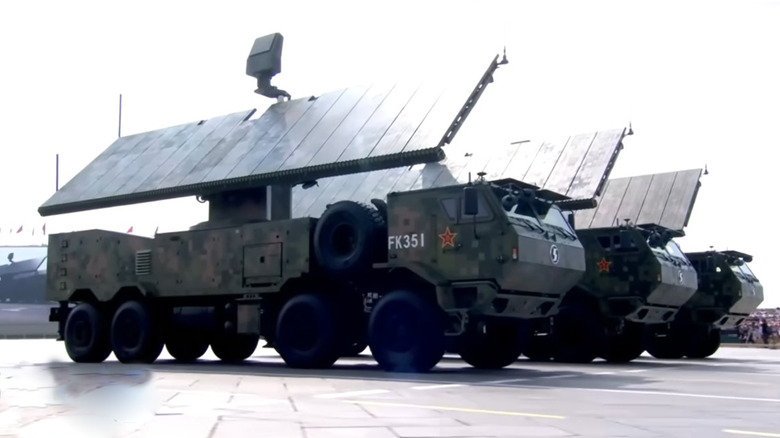
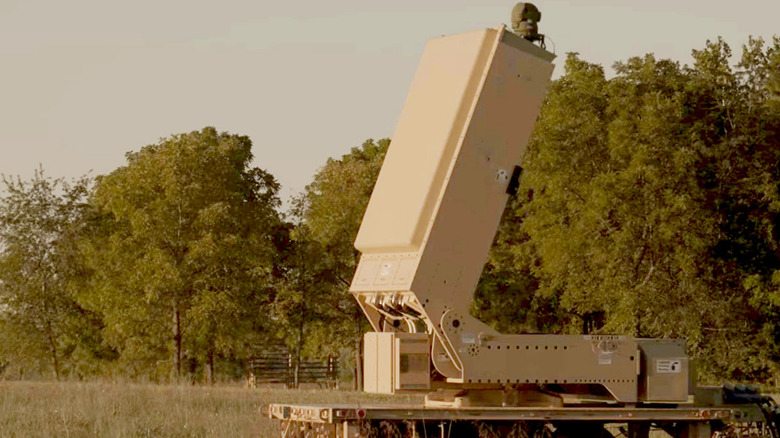
The Chinese Hurricane 3000 system is another new weapon developed to tackle the growing use of drones in combat. However, unlike the laser-based Israeli system, the Hurricane 3000 system uses microwaves to disable drones and drone swarms at ranges exceeding 3 kilometers (1.9 miles). This is a similar weapon to the US Army's Leonidas microwave weapon, although China claims that the 3000's reported three-kilometer-plus range is over a kilometer more than the Leonidas system.
The Zhuhai Airshow in 2024 was when the public got a first peek at the new system, and it was later showcased during a military parade in Beijing in September 2025. More recently, Norinco, the Chinese state-owned contractor that developed the system, has disclosed some of the system's technical details and its intended role. Both systems are vehicle-mounted and can be operated independently or networked into a cohesive air defence system with missile, laser, and artillery units.
How high-power microwaves disable drones
The history of war is not just a tale of conflicts; it's also often a story of an arms race that can seesaw dramatically. The rising use of drones on the battlefield amply demonstrates this point, as arms manufacturers clamor to come up with practical solutions to address this threat not just effectively, but cost-effectively. The use of high-power microwave weapons (HPM) is one area where developers have thrown a lot of resources, and the Chinese weapon is the latest manifestation of this.
Unlike laser or kinetic weapons, HPMs are designed to overwhelm a drone or a UAV's electronic systems using bursts of concentrated electromagnetic energy. These bursts travel at the speed of light and can cause drones to fail in several ways, including EMI-induced timing errors and physical damage to electronic components. Another feature of such weapons is their versatility; advanced systems like Epirus' Leonidas can not only target specific drones but have already disabled a swarm of 49 drones in a few seconds. And, as long as they have power, the other main advantages of these weapons are a bottomless ammunition supply and an exponentially lower engagement cost.
The fact that these beams travel at the speed of light allows a rapid response once a target is detected and tracked. This makes them effective against fast, low-flying drones that are difficult (and potentially costly) to intercept using traditional air-defense methods. However, the system isn't flawless; it's generally considered to be a line-of-sight weapon, and its effectiveness can be reduced with effective shielding.
The Hurricane 3000
The Hurricane 3000 and its smaller Hurricane 2000 variant are mobile, truck-mounted systems that have moved from the experimental stage to field deployment and were showcased at China's 2025 V-Day Military Parade. The more advanced Hurricane 3000 system has a longer range, improved tracking, detection, and fully automated combat capabilities. Overall, according to Yu Jianjun, a Norinco expert, the 3000 represents a "comprehensive upgrade in combat performance compared to the Hurricane 2000."
The system uses radar to detect threats at longer ranges. Once detected, the system switches to optoelectronic sensors to guide the microwave antennas onto the target. However, this is not designed to replace existing air defenses. Rather, it's intended to complement the existing "traditional" missile and artillery systems to form an "iron triangle" drone defense system, with each system used to its own strengths.
While the primary focus of the development program was to develop an effective way of countering the drone threat, Norinco says it wants to explore other potential applications for the platform. Mr. Yu said that among the options being explored are the use of the weapon to counter electronic warfare aircraft, interrupt communications, counteracting precision weapons, and, it's being proposed as a non-lethal active denial system against people. The latter is a beam of focused energy that can cause the recipients to encounter an intolerable burning sensation that has a minimal risk of injury.
In short, the Hurricane and similar weapons exist because shooting million-dollar missiles at hobby-grade drones stopped making sense.