

What's The Difference Between Inline-Eight And V8 Engines?
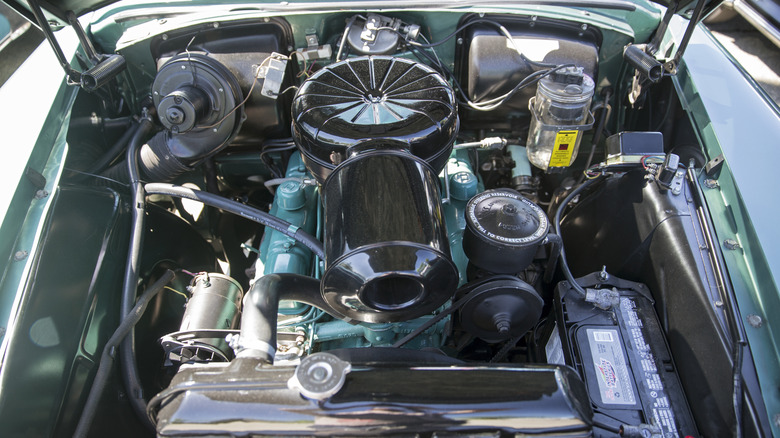
If you were to pop open the hood of any random automobile on the planet, chances are extremely strong that you are going to see an inline engine — sometimes referred to as a straight engine — or a V engine. These have become to go-to engine types for most car manufacturers, though you will very occasionally see a flat engine or something else from time to time. One of the more popular V engines, particularly in the United States, is the V8. This is an engine that has come to signify power, due in no small part to its prominence during the muscle car revolution of the 1960s and '70s. On the inline side of things though, you will be seeing inline-four and inline-six engines. Notably, there is a distinct lack of inline-eight engines.
One would maybe think that an I8 would be rather plentiful considering the proliferation of the V8. After all, these two engine types share one important thing in common. They both are piston engines with eight cylinders. The difference between them is how those cylinders are arranged. With a V8, you have two rows of four cylinders each with the rows perpendicularly aligned with each other, thus forming the V shape of its name. An inline-eight engine, on the other hand, merely has one long row of eight cylinders next to one another. They are quite literally "in line." The reason you almost certainly will not see an inline-eight engine under the hood of a car is that they stopped being produced for cars in the mid-1950s, as car manufacturers gravitated to what its V-shaped counterpart could do.
What happened to the inline-eight engine?
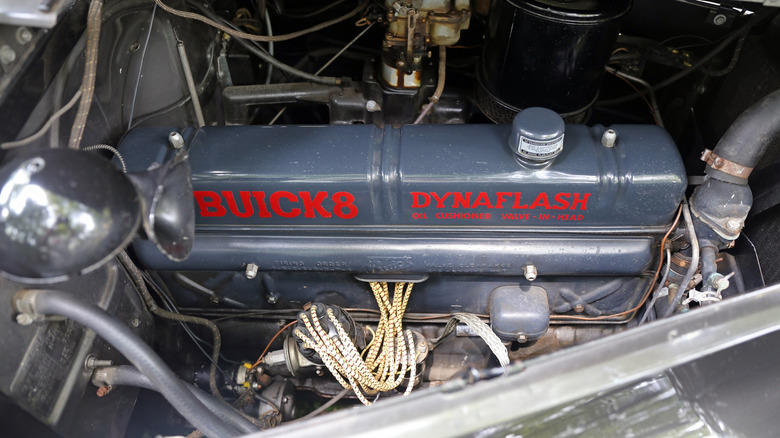
Why the inline-eight engine fell out of favor and basically has not been seen for about 70 years is quite simple. Because the inline engine design requires every cylinder to be in one row, these engines became incredibly long and heavy. If you have ever seen a vehicle from the first half of the 20th century and noticed that the front hood stretches way further than the hoods of today, it is because there needed to be room to store these very long engines.
The vehicles that used inline-eight engines also tended to be luxury automobiles. One of the most famous inline-eight engines was for the Bugatti Royale Type 41, which was in production in the late 1920s and early 1930s. This was a massive vehicle that was over six meters in length (nearly 20 feet) and weighed 3.5 tons. While that can be a nice status symbol for some wealthy clientele, that is ultimately not the direction automotive design trended. As the technology became more readily available and engineering advanced, the goal for most automakers was to make their vehicles smaller and more affordable. Having a gigantic inline-eight engine was the antithesis of that.
While inline-eight engines theoretically could generate a lot of power, that was much harder to do in reality. These engines relied on one very long crankshaft, and because of that length, it handled vibrations and pressure quite poorly, often leading to them breaking or at least limiting the power output. All of these issues were fixed by the V8 engine. They shrank the size and weight, were more reliable, and could deliver more consistent power.