

Don't Plug This Tiny Device Into Your Car's USB Port
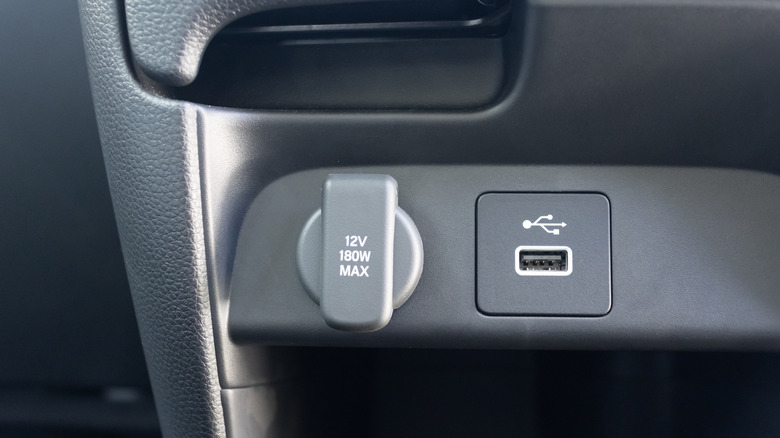
Ever since the late 2000s, almost every modern car has come with a factory-installed USB port. These allow you to charge your phone or other devices, as well as connect to the car's infotainment system through Apple CarPlay or Android Auto. Back in the day, they were also used for navigation map updates, could host storage devices, and could host some really cool gadgets that could upgrade your car.
For the most part, this is the furthest extent to which the USB port is utilized in cars. In some recent cars, like the Lynk & Co 02, the USB-C port also acts as a Thunderbolt port, allowing you to use the car's infotainment screen as a display. Some devices, like keyboards, won't get you very far when plugged into the USB port, but they're harmless.
There is, however, one type of device that you should never, under any circumstances, plug into the USB port — that's the USB killer. You've likely seen these devices floating around on YouTube and on internet shops; they are designed to literally render any electronic device a paperweight. The second you plug them into a USB port, your device will never function again. You won't be surprised to hear that these devices can harm your car's electronics, but there's a little more to it.
A USB killer will damage your car's electronics
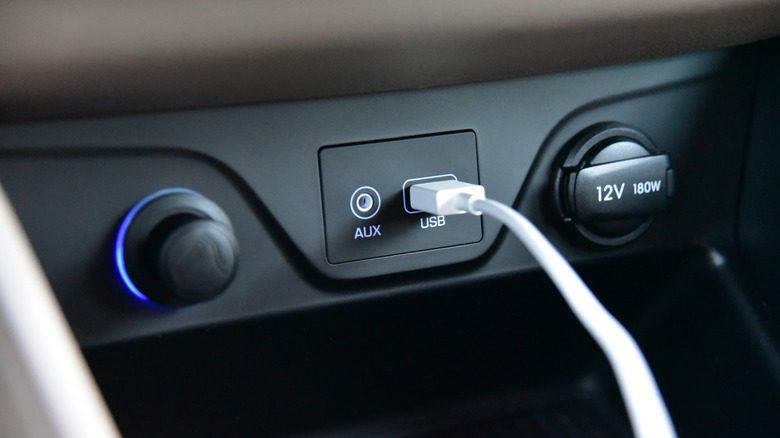
Several years ago, YouTuber EverythingApplePro decided to test one of these devices on a car's USB port, specifically a 2016 Nissan GT-R. Upon connecting the device, the infotainment system shuts down and boots back up. However, the USB port can no longer provide a charge to an iPhone that was used for testing, rendering the USB port useless. The infotainment system appears to work fine, so it's not all bad news.
USB killers work by exploiting an inherent flaw in the Universal Serial Bus connection standard. The device charges the capacitors using a DC to DC converter, and can supply up to 200V of electricity through the USB port, which is way too much for most electronic devices to handle. For reference, most laptop batteries run at a maximum of around 15V, whereas phone batteries max out at around 4V. There are several conflicting accounts of who actually invented the USB killer, but it's generally agreed that it's intended to exploit and test this vulnerability.
A lot of USB air ionizers can be disguised as USB killers, so it's important to know where you're shopping from, and as it's very difficult to distinguish a killer from a regular USB device — the only major difference being one differing wire — it could be too late. Be careful what you're buying, where you're buying it from, and if you do end up buying something that is explicitly labelled as a USB killer, only use it for testing; never plug it into a device that you actually use and/or need.