

This Snow Shoveling Trick Could Save You From Getting Plowed In
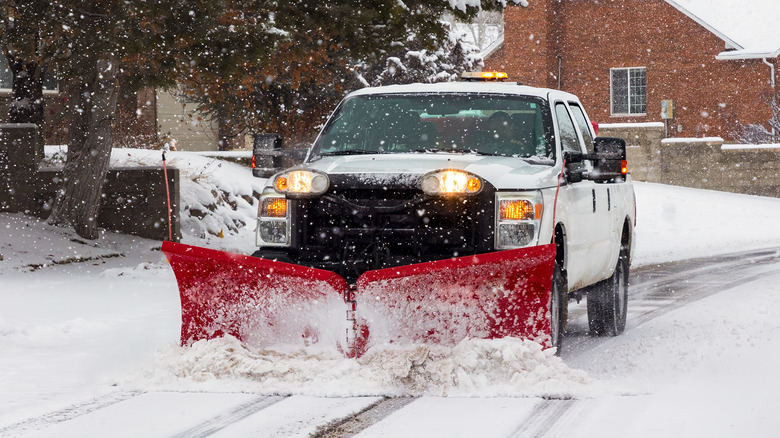
Snowfall is, for most areas, an unavoidable fact of life during winter. As a result, it's important to be mindful of how you're clearing a path for yourself, others, and your vehicle. Unfortunately, snow plows don't always offer the same courtesy, typically pushing wet, slushy snow to the end of folks' driveways and making it difficult to get out. Fortunately, there's a shoveling trick you can use to avoid this problem. This strategy, known as the snow pocket method, involves shoveling an extra 10 feet or so to the left of your driveway, parallel to the road, giving that plowed snow somewhere to go.
The reason this strategy works has to do with the plows themselves. As they drive down the road, snow accumulates on the front plow and is supported by high snow drifts. Once there's an opening, like the end of one's driveway, the snow is released into the space and ultimately gets in your way. By clearing out an extra few feet ahead of your driveway — whether that be with the aid of a shovel or a snow blower from one of the major snow blower brands currently on the market — the accumulated snow gets a chance to release early and fill that area instead of falling into and blocking the end of your driveway.
But what if you don't have time to do this trick or live somewhere where plows come from both directions? If your driveway ends up blocked by wet, heavy snow, you should remove it quickly and, most importantly, safely.
Dealing with wet, heavy plow snow safely and effectively
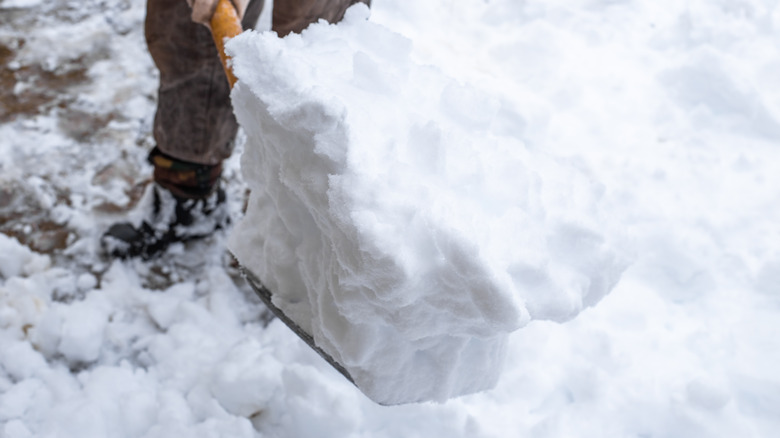
Should you end up with snow at the end of your driveway, you can clear it using a snow blower without much trouble. You'll likely just have to take it slow and be mindful of larger ice chunks hidden within. However, shoveling the wet snow at the end of your driveway is a whole other beast. Shoveling as it is can be hazardous to your health if you're not careful, even if you're using one of the best electric snow shovels. Cardiovascular strain can trigger heart attacks, and back and general muscle strain are ever-present risks. Thus, proper form and technique are essential.
First and foremost, you want to take good care of your body. You should stretch, hydrate, and have a little something to eat. With your body prepared, you can shovel at a pace that feels appropriate and doesn't strain your arms, shoulders, back, and chest. Try not to pick up huge amounts of snow with each scoop. You should also push snow rather than lift it, bending at the knees rather than the back. There's also shame in taking a breather if you feel yourself slowing down or getting weaker. If you're in pain, stop immediately to allow your body to recover.
It may not look like much, but snow is no joke if you're trying to remove it by hand, especially if it's dense, wet, and piled up at the end of your driveway. That's why it's not only a good idea to shovel safely, but to get proactive about preventing end-of-driveway snow accumulation.