

Boeing Wins $2B Contract To Bring B-52 Bombers Into The Modern Age
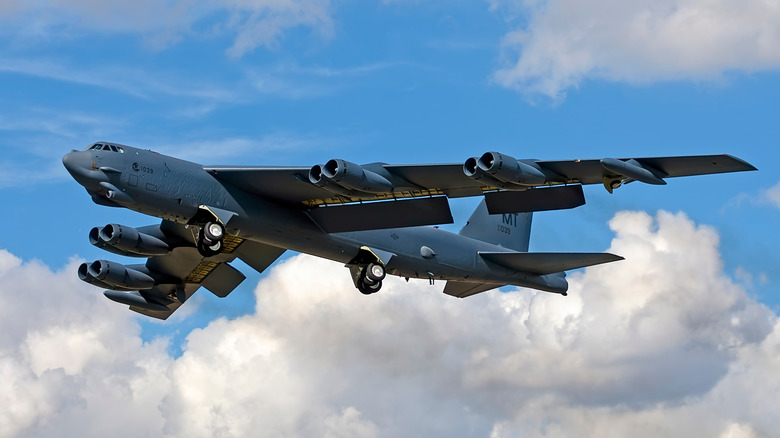
The Boeing B-52 Stratofortress is one of the most iconic warplanes of all time and has even become a piece of pop culture itself. More than that, though, the B-52 is one of the longest-serving military aircraft ever, and has established itself as a timeless marvel of aviation engineering. Despite its age, the B-52's story is not over, and the fleet is about to go under the knife for some serious modernizations.
In December 2025, Boeing won a $2 billion contract from the United States Air Force to give its fleet of aging Stratofortresses new engines and avionics — hopefully keeping them in service for several more decades. The contract is part of a long-running plan to modernize the Air Force's B-52 fleet, which will be re-designated from B-52H to B-52J during the overhaul process.
These will represent just the latest evolution of the enduring B-52 bomber, which began development immediately after World War II and entered service in the early 1950s. The Stratofortress would go on to become a symbol of American nuclear capabilities during the Cold War, and B-52s saw direct combat in Vietnam, the Gulf War, Afghanistan, and other U.S. military conflicts. And with these latest upgrades, the plane is likely to end up having a service life of more than 100 years.
Unmatched power and longevity

Boeing built several different iterations of the B-52 during its production run, but the B-52H is the only version remaining in service. And what's amazing is that despite the B-52's extremely long service life, the Stratofortress wasn't actually in production for all that long. The final B-52, which is still being flown today, was delivered back in the fall of 1962. Though it may have been designed for an entirely different era of warfare, the B-52's airframe has proven incredibly robust and adaptable for modern weapon systems.
Rolls-Royce won the contest to be the provider of the B-52J's new engines several years ago, and the firm's new F130 turbofan engines passed critical review in December 2024. A year on, the B-52's original manufacturer, Boeing, will handle the actual outfitting of the new engines on the USAF's entire fleet of 76 B-52Hs. The Air Force's B-52Hs are currently powered by aging Pratt & Whitney engines, and Boeing's primary task will be outfitting each plane with eight of the more modern and more efficient F130 engines.
A century of service?
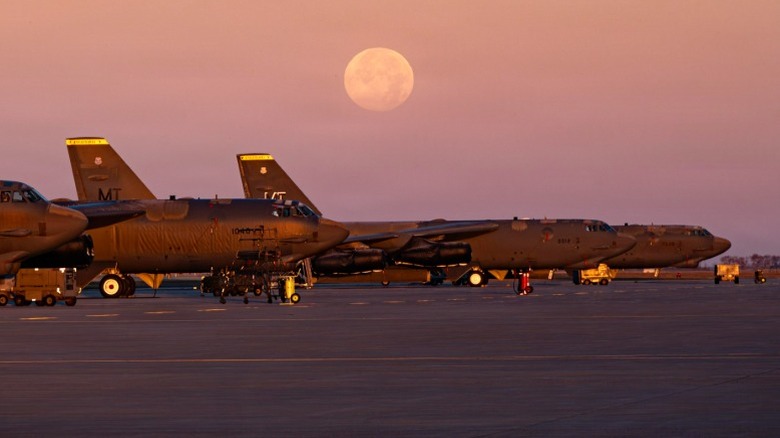
But it's not just an engine swap that the B-52 will be getting as part of its upgrade into the J model. Along with the modern Rolls-Royce turbofan engines, Raytheon will supply a brand-new radar system, and the planes will receive upgraded avionics and communication systems, as well as redesigned crew compartments. Upgrading the entire 76-plane B-52 fleet will be a time-consuming process, with the work scheduled to be completed by spring 2033.
Just because the B-52 has been so reliable for so many years does not mean that the U.S. Air Force can't or won't modernize its arsenal with new planes, though. The new sixth-generation B-21 Raider, for example, is an ultra-modern dual-role stealth bomber that the USAF plans to deploy in large numbers. But as the aging B-52 has already proven so many times during its long career, you can indeed teach an old dog new tricks. And if everything goes to plan, these upgraded B-52Js are poised to give the Stratofortress an astonishing military service run of 100 years — and possibly more.