

How Long You Can Expect Your New QLED TV To Last
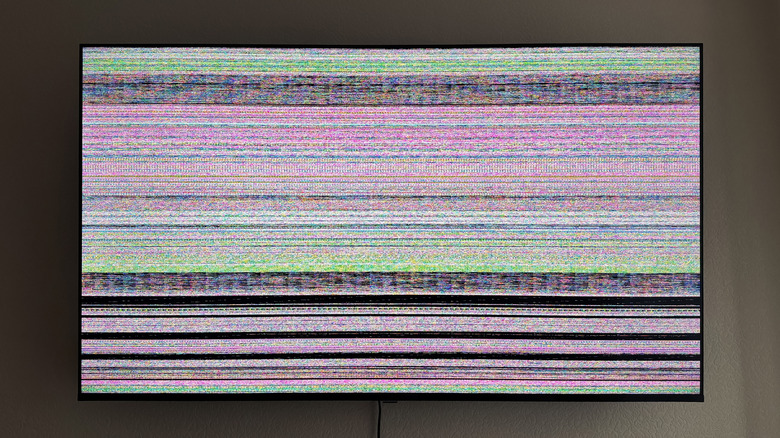
If you're getting ready to purchase a new TV, you may feel overwhelmed by the amount of choice you have at Best Buy, Walmart, and other retailers. LED, OLED, QLED — the acronyms fly fast and furious and often refer to the type of screen the TV has. QLED stands for quantum dot light-emitting diode. These types of TVs have a layer of quantum dots that make the screen brighter and the colors more vibrant and accurate. But what does that added tech mean for the lifespan of your TV?
Best Buy recommends QLED TVs for rooms that get a lot of light, such as your living room. These types of televisions are available in many brands, sizes, and price points, including budget brands like Hisense and higher-end brands such as Samsung and LG. Most brands offer a one-year warranty, but consumers obviously expect to get more years of life from their TV, even if they purchase a bargain brand.
According to a January 2024 Nielsen's insight report, 10,000 hours of TV use equals approximately six years for a typical American household (meaning we watch about 1,600 hours of TV every year!). CEDIA, the Association for Smart Home Professionals, reports that the average life span of a new TV is between seven to 10 years, depending on what type you select. A multi-year study by RTINGS makes that choice clear, finding that QLED is the clear winner over LEDs when it comes to longevity, with failure typically expected after more than 10,000 hours of use.
Just what exactly is QLED, anyway?
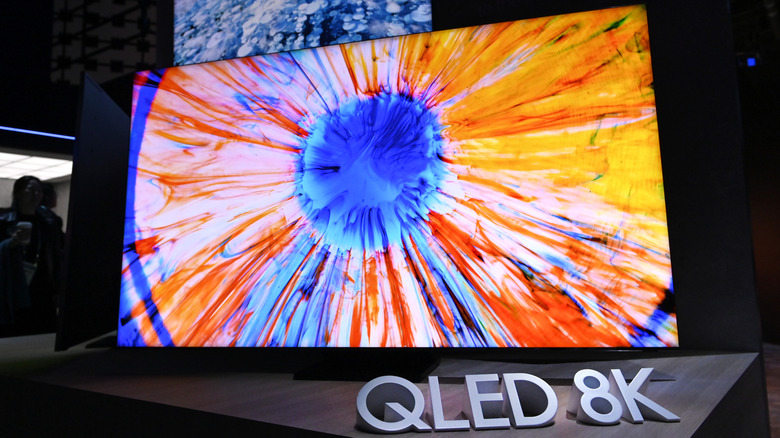
Unless you're very young, you probably remember the days of LCD TVs. Despite the name, QLED technology is actually more similar to LCD technology than it is to OLED technology, where the pixels emit their own light. QLED relies on a backlight, just like LED televisions. QLED is named for the quantum dots, or tiny molecules that emit different colored lights when they are hit by that backlight. Because the technology is different, QLEDs don't have the burn-in issues that other types of TVs often have.
So what tends to fail on a QLED TV? There are two major issues — edge lighting and backlight failure. Edge-lit TVs tend to break faster than direct-lit, and while many edge-lit models are LCD, some budget models of QLED TVs are also edge-lit. That important backlight that we discussed above can also fail, and RTINGS also reports that the QLED layer can degrade, but this is rare and typically doesn't happen until many thousands of hours of use.
There are other factors that affect the lifespan of your TV beyond the type. If you keep your TV on all day and into the night, you may experience issues sooner rather than later. Experts also recommend that you keep your brightness settings to a reasonable level to reduce pixel wear, and invest in a high-quality brand if possible. Update your smart TV regularly, and use a lint-free cloth to keep it clean.