

This Road Can Wirelessly Charge An Electric Semi At 65 MPH
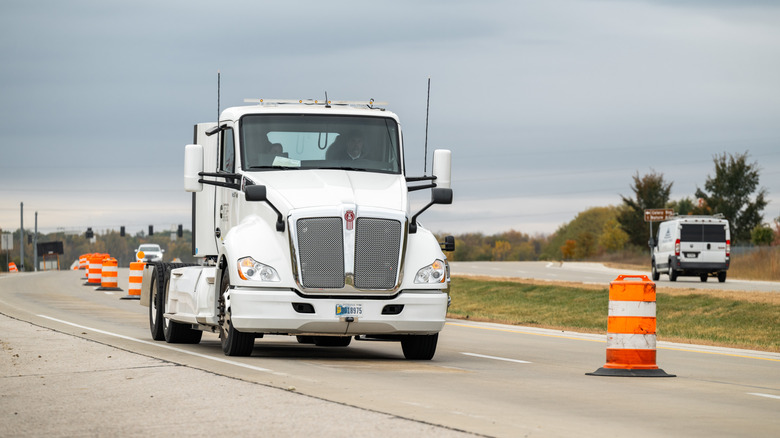
There is a road in Indiana that can wirelessly charge vehicles as they drive at highway speeds. Built by the Indiana Department of Transportation (INDOT), a quarter mile of the U.S. Highway 52/U.S. Highway 231 in West Lafayette, Indiana successfully charged an electric heavy-duty truck driving 65 mph during a test in December 2025.
The highway is testing a wireless charging system designed by engineers from Purdue University, first proposed in 2018. In a press release, Purdue professor Nadia Gkritza said that the road "has shown that powering large commercial vehicles wirelessly is not just technically feasible but could be a practical and scalable solution for real-world highway transportation."
While other states have been testing roads that can wirelessly charge vehicles (the first electric road was installed in Detroit in 2024), this is the first time that it's been possible on a highway and worked for heavy-duty vehicles. This is thanks to the system's faster and more powerful charging, which delivered 190 kilowatts to the truck. For context, 200 kilowatts is enough to charge 100 homes.
How do you charge a vehicle as it drives down the highway?
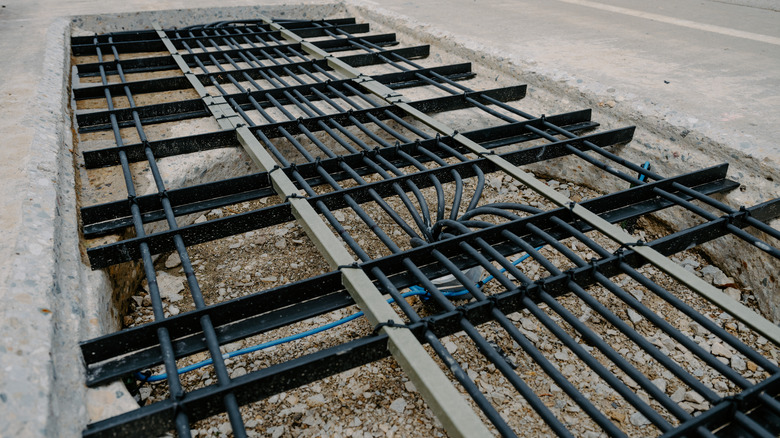
This stretch of highway utilizes magnetic fields to charge objects positioned above it wirelessly. Purdue Professor of Electrical and Computer Engineering Dionysios Aliprantis stated that the challenge is figuring out how to use magnetic fields to charge at longer distances and with more power; after all, electric semi-trucks need thousands of times more power than a smartphone.
To do this, the engineering team installed transmitter coils within the concrete pavement. The coils on the road then sent power to the receiver coil underneath the truck. For this test, Cummins modified a prototype battery-powered Class 8 so that it would work with the wireless power transfer system. The Purdue team claims that its coils have enough bandwidth for a large truck to only need a single receiver coil, keeping it simple.
While initially focused on powering large trucks, the highway system will easily power passenger vehicles as well, helping to solve the range anxiety that comes with switching to EVs. Civil and Construction Engineering professor John Haddock also noted that this technology could reduce EV costs, as being able to charge in motion means they wouldn't need such large and expensive battery packs to achieve good range.