

New Study Claims This US City Has The Worst Traffic In The Country
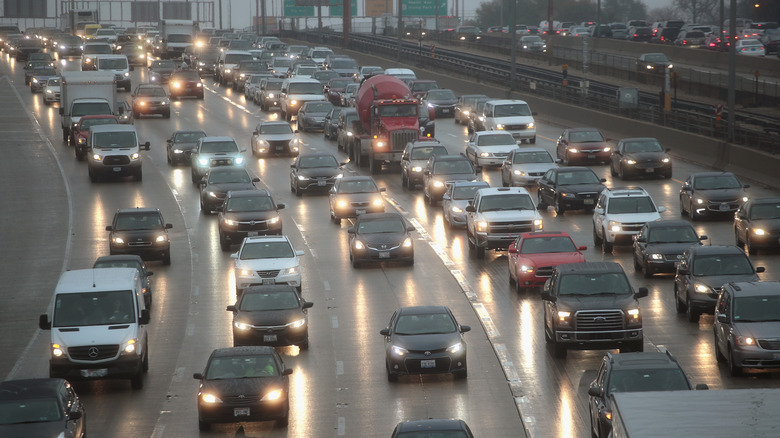
There's really nothing enjoyable about being stuck in traffic, whether you're in a rush or not. Of course, any driver could tell you that some areas are significantly worse than others when it comes to roadway congestion. Major cities in particular aren't always ideal for drivers to navigate, with one study claiming a specific city in the United States stands above the rest as the worst of the worst. Per the INRIX 2025 Global Traffic Scorecard, which uses multiple years of past driving data to determine the cities with the worst congestion-induced mobility delays, Chicago, Illinois, is the single worst city in the U.S. when it comes to traffic.
According to INRIX's findings, Chicago's traffic is so dense and congested that over the course of 2025, the average driver lost approximately 112 hours of commute time — a 10% increase from 2024 and a 17% increase from 2023. Converting 112 hours into minutes gives us 6,720 minutes, and dividing that by 365, you get just over 18 minutes per day in 2025, tacked onto one's Chicago commute. It should be said that individual experiences may vary, depending on how often you drive, where you drive, how long your commute is, and similar criteria. Still, approximately 112 hours lost to traffic in one year is astounding.
While those who've never been to Chicago might find these drive times surprising, especially if they're from one of the worst states to drive in, those from the area aren't nearly as shocked. The frustrating state of Chicago roadways is something that has been discussed and analyzed for years.
Chicago's road woes aren't anything new
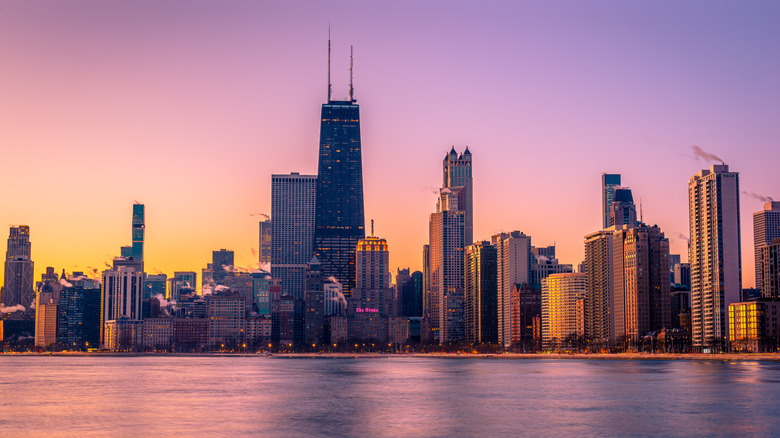
On the whole, Chicago natives and those from the surrounding area are well aware of how hard it is to drive through the city. Chicago is the third-largest city in the entire U.S., with a population of over 2.7 million residents. While not all of these individuals drive, those who do, coupled with tourists or those just passing through from the surrounding areas, can quickly clog up the several expressways and side streets throughout the city. INRIX's own author and analyst, Trevor Reed, explained to Curbed Chicago in 2020 that the city's continued road congestion isn't helped by its dense layout and proximity to Lake Michigan, which both restrict movement.
Along with this lack of movement in Chicago traffic, it's well-documented that the streets themselves are ill-equipped to handle it all. Increased movement means increased roadway damage, driving the need for construction all over the place. Sadly, this is a double-edged sword: Chicago leadership takes as proactive an approach as possible, budgetary limits permitting, though the construction itself causes slowdowns, lane closures, and detours that make travel even worse. The potential to face some of the most confusing traffic signs doesn't help either. Despite all of this, Cook County, where Chicago resides, saw an average of nearly 30.6 billion miles traveled in 2024 as drivers braved the slow-going traffic the city has become synonymous with.
Time will tell if someday, Chicago will become an easier place for daily commutes. Until that day comes, though, for those living there, it's undoubtedly a good idea to leave for your destination early, lest you get stuck in a slowdown that balloons your drive time.