

This Ancient Router Type Is Considered Outdated - Do You Still Use It?

We may receive a commission on purchases made from links.
In the US, four out of five households have a home network router. For many of us, these digital-life workhorses are a forgotten device that sits quietly in a corner gathering dust while making sure that all our connectivity needs are catered to. However, technology doesn't stand still, and while we're all keen enough to get our hands on the latest laptop or iPhone, the ubiquitous router is often neglected when it comes to upgrades.
One router type that immediately shows its age is the 2.4-GHz router, a device that hails from a simpler time before we had multiple high-demand devices all competing for bandwidth. The 2.4 GHz Wi-Fi band first entered mainstream use with the 802.11b standard in 1999, becoming the first widely adopted consumer standard.
The original version of the standard was capable of delivering data transmission rates of 11 Mbps, improvements over the years boosting this speed to 54 Mbps with the introduction of 802.11g. Later variants boosted this further, but although higher data rates are often advertised, in practice, 2.4 GHz routers topped out at a typical maximum speed of 100 Mbps.
For comparison, those of us connecting to a 5-GHz router can expect to achieve data transfer rates of up to 1 Gigabit per second (Gbps). And the latest 6-GHz Wi-Fi 7 band, which was given the go-ahead in the US in 2020, doubles this to 2 Gbps. Basically, if you're running a 2.4 GHz-only router, especially one of the older variants, then, in technology terms, it's considered ancient.
The problem with 2.4GHz
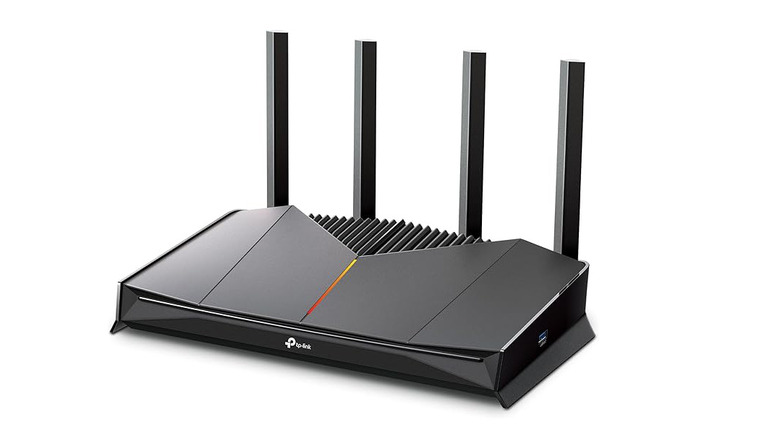
The 2.4 GHz WiFi router was an internet mainstay for many of us in the early days of home networking. However, it now has limitations that modern households with high data demands are struggling to cope with. Of course, the restricted speed is a main factor, with the lower bandwidth of the standard being tested to the extreme when multiple data-hungry devices are connected to the device.
Another limiting factor of 2.4 GHz is just how crowded the band is; despite its age and its limitations, it's still traditionally the most used portion of the spectrum. That's one reason why there are so many things in your home that can ruin your Wi-Fi connection. Devices like baby monitors, security cameras, IoT devices, and even microwave ovens can all clutter up the 2.4-GHz airwaves. The problem can intensify if you live in an apartment block, where signals can easily penetrate walls and add to the congestion.
However, it's also worth noting that the 2.4 GHz bandwidth offers better coverage than higher-frequency bands and can penetrate walls and obstacles better. This is why it's best not to drop the protocol entirely when shopping for a new router. Instead, a better option is to opt for a dual-band device like the TP-Link Archer GE230 Dual Band router, which also allows you to connect any legacy devices you may have that don't support newer standards.
In short, while it remains valuable for range and compatibility, expecting it to handle the demands of a modern, busy network is a 'bridge' too far.
Do 2.4 GHz-only routers still have a place?
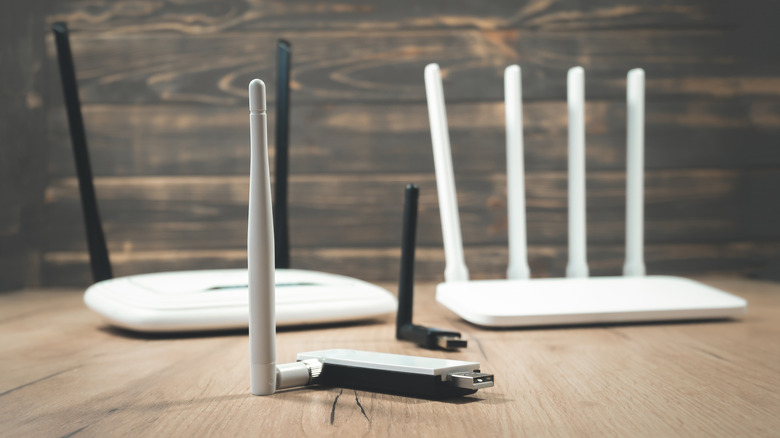
Before you send your router to wherever ancient routers go to die, it's worth considering if it can be repurposed. Despite their limitations, these routers aren't completely obsolete — after all, Costco and Home Depot still use computers from the 1980s. One potential use is to use it for IoT devices; its range and the signal's ability to pass through obstacles are why so many IoT devices like smart plugs, thermostats, and garage door openers all commonly use 2.4 GHz.
It can also be useful to keep legacy devices connected that don't have support for modern Wi-Fi standards. Additionally, if the router supports it, another potential use is to use it as a Wi-Fi extender. Okay, the speed will be restricted, but for Wi-Fi dead spots where the poorer penetration of 5 GHz is a factor, your ancient router could yet be the savior.
However, where the problems begin is when such a device is expected to function as the primary hub for a modern household. Streaming video, remote working, cloud backups, and the inevitable gaming sessions will quickly overwhelm it. A better approach is to use an older 2.4-GHz router as part of a broader setup, as opposed to being the main deal. A modern dual- or tri-band router can handle the heavy lifting, while the older 2.4 GHz network can be repurposed as a dedicated low-bandwidth lane for IoT hardware.