

How Well Does Harbor Freight's Daytona Creeper Fare Against Snap-On? This Test Has The Answer
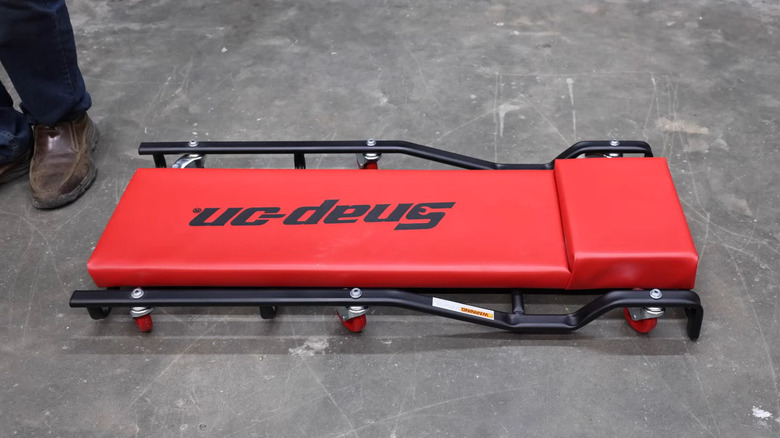
Harbor Freight has plenty of cut-price tools aimed at mechanics, but not all of Harbor Freight's tools are worth buying. To work out whether Harbor Freight's Daytona creeper was worth the cash, the Project Farm YouTube channel put it to the test against a wide range of other rivals, including a $333 creeper from Snap-On. Both the Snap-On and Daytona creepers performed well across the range of tests in the video, although the Snap-On still took top honors overall.
It might have fared the best in the test, but whether or not the Snap-On creeper is worth the price is much more subjective. The Daytona creeper costs $85, making it around a quarter of the price of the Snap-On. Project Farm noted that the size of both products was similar, and both were among the most comfortable creepers in the test. The Daytona also featured an adjustable headrest, whereas the Snap-On did not.
The biggest difference in performance between the two was caused by the wheels, with the Snap-On consistently requiring less force to move than the Daytona. Project Farm tested each creeper in a variety of situations, including rolling them sideways, changing the direction of the caster wheels, rolling over a tensioned wire, and rolling them across an uneven surface. While the Daytona was largely average or below the best in class, the Snap-On was consistently a strong performer.
There are other differences between the two creepers
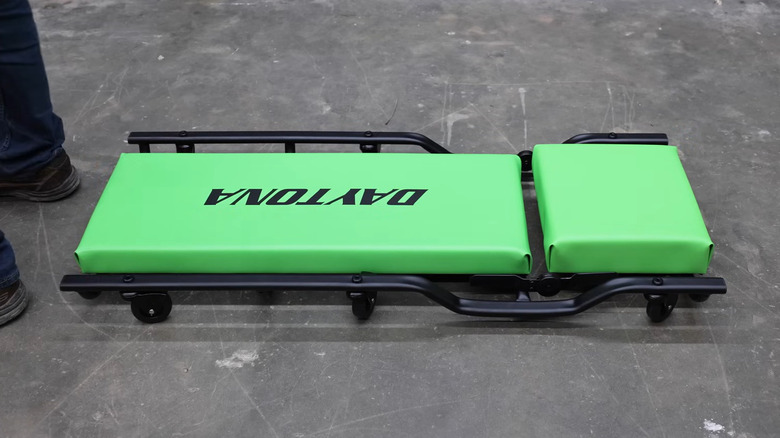
While Project Farm's testing focused on the performance of each creeper, there are a few other notable differences between the Snap-On and Daytona creepers. One is where they're made: the Daytona is made in China, while the Snap-On is made in the USA. While not all of Snap-On's tools are made domestically, the company still makes a significant proportion of its products in more than a dozen manufacturing facilities across 11 states. Both Snap-On and Harbor Freight are American-owned companies, with the latter being run by the Smidt family since 1977.
The YouTuber also measured the total height of the creeper with a cinderblock placed on top of it as a rough way to estimate how much clearance users might need to comfortably work under their cars, with the Snap-On needing half an inch less clearance than the Daytona. Again, whether that's worth the price premium is subjective — mechanics and repair shops might love to have Snap-On products on-hand, but they'll pay an awful lot for the privilege.