

Camelcamelcamel May Be Popular, But How Does It Compare To Other Amazon Price Trackers?
Camelcamelcamel is a website and browser extension that tracks Amazon prices so you can get a good deal. It's available in multiple countries, including the U.S., Canada, Australia, and the U.K. It's one of the best-known price tracking tools, and compared to similar tools, it's a brand with a long history. Sure, that only goes back to 2008, but in the price tracking world, that's long-established. Other once-popular tools, like Earny, have fallen by the wayside.
There aren't many tools that do exactly what camelcamelcamel does. Although it has a Highlighted Deals page showcasing pages of current bargains, there's a lot more to the site than that. With some tools, like DealNews and Woot, this is the primary focus. Other brands have features that overlap with camelcamelcamel's. Capital One Shopping provides coupon codes and compares prices across multiple websites, but it doesn't track Amazon prices or show historical data. Slickdeals is a useful community-driven free tool for finding bargains online. It has some historical price information and notification tools, but they're very limited. It's a similar story with Honey, which is primarily a coupon-finding site. It has some price-tracking features, but that isn't its main focus.
It turns out that there's really only one other tool available at the moment that is doing the same thing as camelcamelcamel. And that's Keepa, which often does it better. When comparing the accuracy and usability of Amazon price-tracking tools, the main focus will be on camelcamelcamel and Keepa, but we'll include other tools as well, where it's relevant.
Does camelcamelcamel provide the most accurate historical price information?
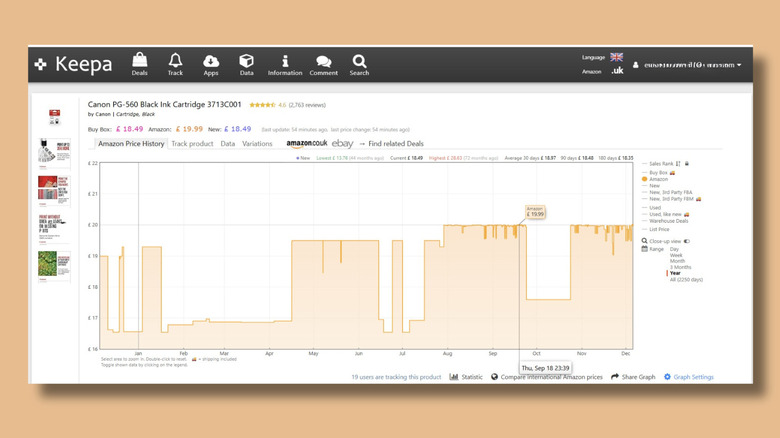
Testing the accuracy of historical pricing information is less straightforward than you might think, due to the way price data trackers collect information. I used my previous Amazon orders to see whether the amount I paid matched the data provided. All my purchases are from Amazon's U.K. site, so prices here are in GBP. In September 2025, I bought printer ink for £19.99. When I looked at camelcamelcamel, it showed Amazon's price for the date I ordered it was £16.76. Honey displayed a price for that time of £16.97. Only Keepa managed to provide the actual price I paid.
I looked up night-driving glasses I bought in January for £16.99. Once again, Keepa showed the correct price. Camelcamelcamel, on the other hand, hadn't been tracking this one, stating that it began monitoring it less than a minute ago. Apparently, I was the first person to look up this product, and now it's been added to the monitoring list. It turns out I wasn't just checking things, I was part of the process. Honey originally showed the glasses as costing $5.99, and when I refreshed the page, it showed the current price as £9.99. Simply by opening the Honey extension on the Amazon page, I updated the data.
According to its How Our Price Checking System Works page (which, admittedly, hasn't been updated since 2011), camelcamelcamel says it prioritizes tracked products over untracked ones, so if you create a price watch for something, the prices are more likely to be accurate. I tested various products' historical prices, and Keepa was the clear winner.
Which tool is best for tracking products?
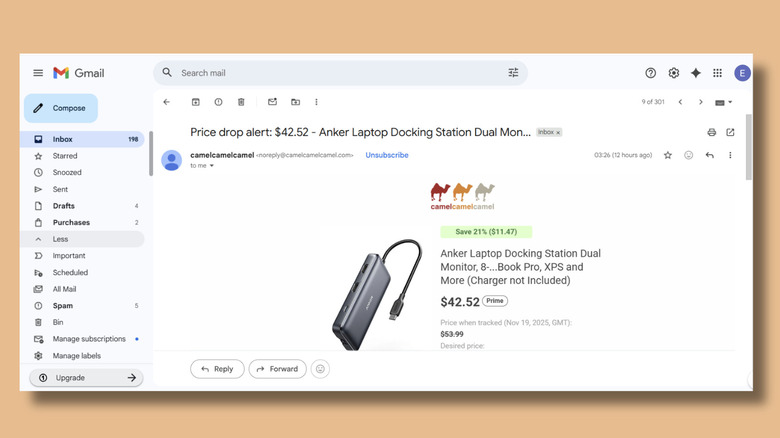
Tracking items on camelcamelcamel doesn't just keep the data refreshed, of course. It's primarily there so you can receive updates on the prices of things you are planning to buy, meaning you don't need to rely on Amazon's "Overall Pick" when shopping for bargains. You can set a Price Watch with your desired price for an item, and as soon as it hits that price, you'll receive an email from camelcamelcamel letting you know. Keepa has a Product Watch feature, which works in a similar way but has a lot more settings, which is useful but possibly a bit overwhelming. It has everything camelcamelcamel does — albeit with a less user-friendly layout — but there are additional options, including notifications when an out-of-stock product is back in stock, and price comparisons across different Amazon locations.
Honey allows you to create a Droplist via its money-saving browser extension, so you can add items to it directly from an Amazon page. However, the browser extension automatically sets it to a 5% discount, and you'll need to access your account page if you want to change it. SlickDeals lets you create alerts, which, unless you do it via one of its deal pages, requires a bit of manual setup. Capital One Shopping will email you when items you've been looking at go down in price. However, alerts aren't customizable and are sent automatically. Camelcamelcamel and Keepa were the best options for workable, easy-to-set-up notifications. Although the camelcamelcamel screen looks prettier, Keepa offers many more customization options.