

Can Side Gapping Spark Plugs Really Increase Your HP?
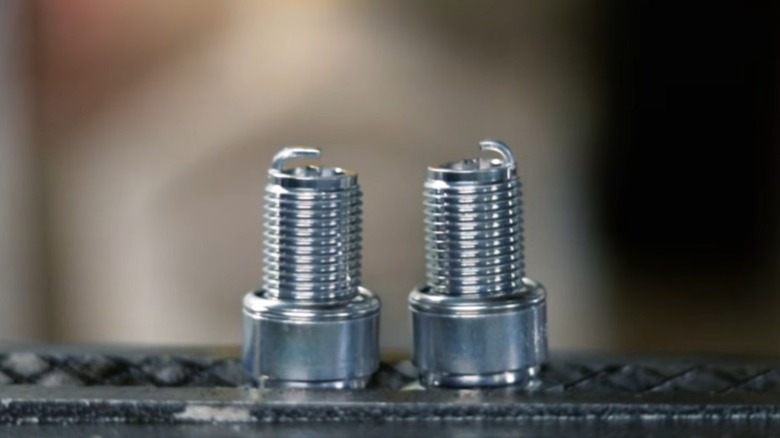
There are many paths on the quest for horsepower. You have the obvious modifications, of course, like installing a turbocharger or a supercharger, but there are plenty of other ways to get more horsepower out of a car. A new exhaust can help, for example, as can a less-restrictive intake. You can even go in for a bit of ECU tuning to enhance your engine's performance.
One method that is perhaps not quite as common is side-gapping spark plugs. Side-gapping spark plugs essentially means grinding or cutting the ground electrode — the curved metal part that looks like a hook — to shorten it. The idea, then, is that this shortened electrode produces a larger spark during combustion and allows more of the spark to come into contact with the air-fuel mixture, leading to more power.
It's not just a gearhead placebo, either. A paper published in the International Journal of Recent Technology and Engineering found that side-gapped spark plugs did indeed improve the power and torque output of a stock 1.6-liter inline-4 engine. It wasn't a huge difference, mind you — the biggest torque gap, for example, was 0.5 Nm (about 0.36 lb-ft) — but it was a measurable one nonetheless.
Side-gapped spark plugs have other benefits (and downsides)
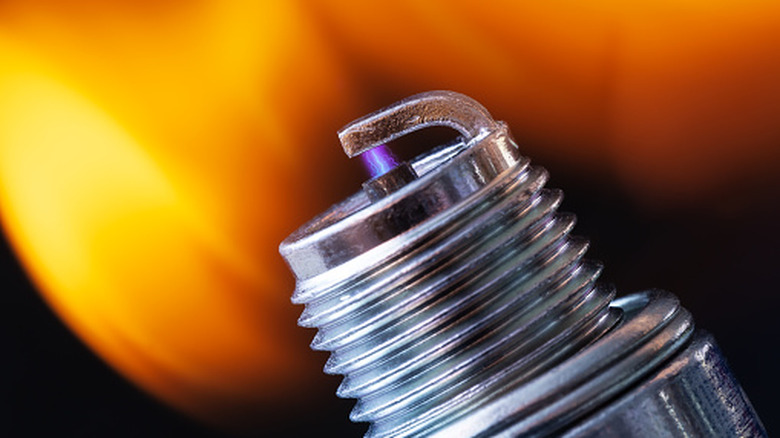
The power gains may not be massive, but the research showed that side-gapping spark plugs had other positive effects on the engine. Side-gapping a spark plug by 1.0mm (0.039 inches) reduced the engine's specific fuel consumption from 409.7 g/kWh to roughly 320 g/kWh. The modified plugs also improved emissions, with unburnt hydrocarbons dropping by 20-30%, depending on the size of the gap.
Side-gapped spark plugs, whether DIY or store-bought, can also reduce misfires and ignition voltage requirements. This can be especially beneficial for racing engines running nitrous oxide or some form of forced induction.
It's all looking pretty appealing, we admit, but there are a few downsides to consider before you rush out to take a Dremel to your engine's spark plugs. The main issue is that of longevity. Even without modification, a spark plug's ground electrode will wear down with use, resulting in a need for new spark plugs. Side-gapping accelerates this process, as it leaves a shorter electrode that'll wear out quicker. You'll need to replace spark plugs more often if you side-gap them.