

Are Home-Built, Custom Motorcycles Street Legal? What You Need To Know
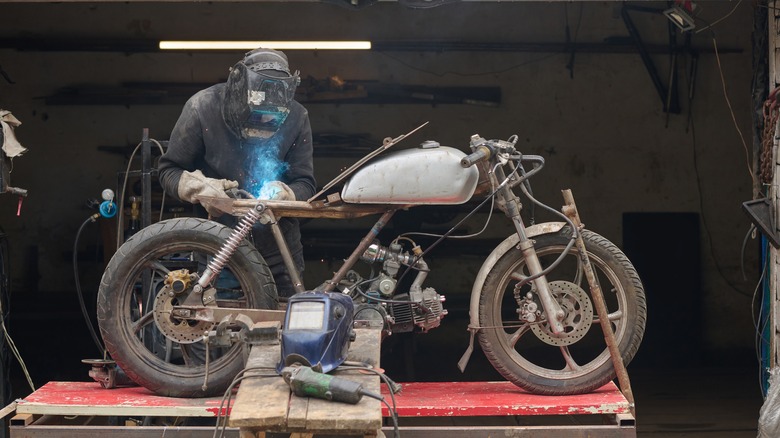
The idea of having a custom motorcycle is one to pump up any true bikehead, no doubt. For some, building one themselves is even more satisfying. Even so, a big question lingers: Are home-built or custom motorcycles street legal? Or do you just build one and join a bike club?
Given that custom bikes are not a new idea, this won't come as a surprise, but you can legally ride a custom or home-built motorcycle. There's a catch, though — registration paperwork and full safety compliance akin to that of a small manufacturing project. Custom bikes are classified as "specially constructed" or "assembled vehicles" in some states. This means that before registration, you must provide paperwork to prove ownership of the major parts used (frame, engine, transmission, etc.) and that the bike was built from the same parts rather than just being a modified version of a factory-built, titled motorcycle. California's DMV, for instance, has a well-laid-out Specially Constructed or Modified Vehicle (SPCNS) pathway that requires an Application for Title or Registration, a Statement of Construction, receipts or bills of sale for major components, as well as an in-office vehicle verification for original registration, among other certifications.
The basic principle isn't any different in other states; it's only the terminology that varies. In Texas, proof of ownership, a VIN or assigned ID (if the frame doesn't have one), a Rebuilt Vehicle Statement, a formal inspection, and weight certificate are some of the requirements for assembled vehicles, including assembled motorcycles.
What states and the feds expect
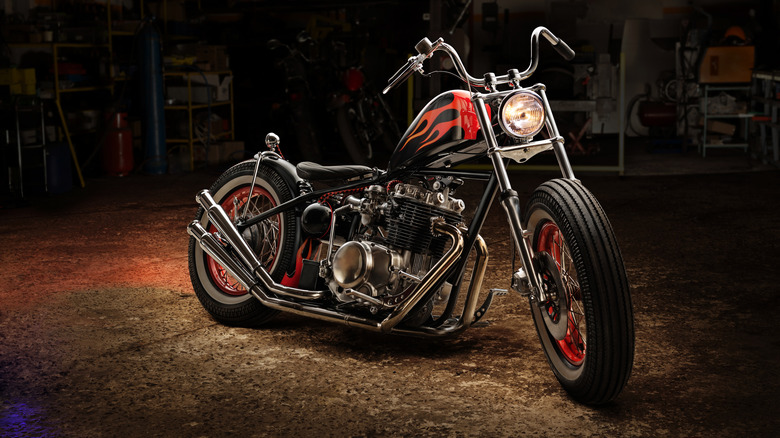
Assuming you get the paperwork out of the way, your custom bike must pass a practical safety test, like with any other vehicle. Everything has to be functional, and by everything, we're talking headlight (high and low), tail and brake lights, turn signals (where necessary), rear-view mirror(s), a properly lit license-plate mount, a horn, DOT-rated tires, as well as brakes and suspension that are sized and routed to satisfy safe stopping-distance and handling expectations.
After you're done with the state, there's still more; this time on the federal side. According to the NHTSA, a completed custom or "unassembled" motorcycle is considered a motor vehicle once it's sold or delivered with all the parts required for assembly. That makes VIN rules and identification requirements applicable under 49 CFR Part 565. In the event the bike's frame arrives without a manufacturer's VIN, you'll need to get an assigned VIN from the fabricator or DMV before registration. This is something NHTSA has long clarified, and mechanically, it basically means you can't fudge wiring, disregard proper brake routing, fit non-DOT tires, and expect to get around the inspector. Expect even more scrutiny if the bike was originally built as an off-road-only machine, like say a dirt bike, in which case you may have to answer a couple of more questions to do with the imports (if any), origin of the new parts, and emissions testing, as is the case in Texas.
How to get a custom bike registered and road legal
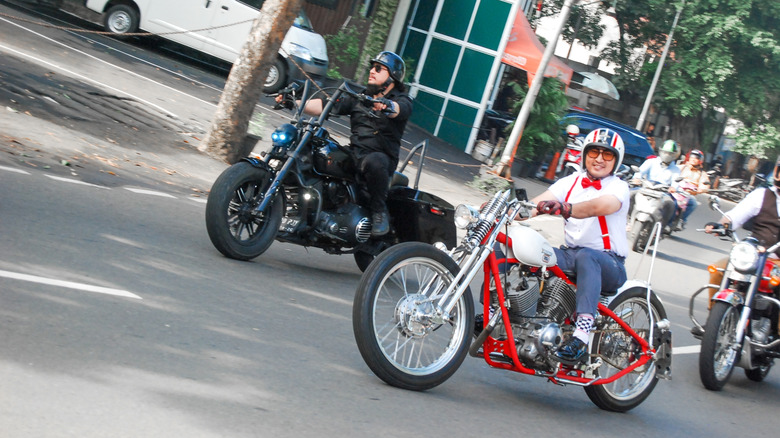
Whatever it is that you want to build, be it a café racer, chopper, bobber, or a one-off street tracker, it's best to start with the paperwork and a plan. For starters, log every major component, including the frame (serial numbers), engine, transmission, wheels, wiring harness, brake system, lighting, name it, and keep bills of sale or receipts for them. If you're unable to provide proof of ownership, you may be required to provide a bonded title or additional paperwork in some states. It's not much of a hassle, really; just look for "special construction," "assembled vehicle," "reconstructed or modified" registration guidelines from your state's DMV and follow the detailed instructions.
After the somewhat tedious paperwork, the process often ends with a physical inspection. In Texas, the DMV requires verification documents, some of which we mentioned earlier, and may direct you to a Regional Service Center or inspection process for initial titling or VIN number assignment. Assuming the inspection is successful, the agency grants you approval to obtain title and plates. Other states employ similar on-site verifications, with some like Texas going an extra mile of requiring law-enforcement VIN inspections. By simply keeping a complete packet of the required paperwork, including noise or emissions test results (if required by your state), and treating the regulators and safety systems as part of your engineering brief, it's possible for a well-built custom motorcycle to be street-legal, regardless of jurisdiction.