

11 Hiking Gadgets Small Enough To Fit In Your Backpack

We may receive a commission on purchases made from links.
Hiking can be therapeutic in many different ways. From getting plenty of steps in to improving sleep and lowering your risk of depression, there's plenty to like about a long walk in nature. However, if you're new to hiking and think you just need your most comfortable running shoes and a water bottle to hit the trail, think again.
Every hike, no matter how short you think the trail is, needs dedicated planning. Whether that means choosing shoes with plenty of grip, bringing enough snacks and water, or, most importantly, packing safety equipment, several variables can make the difference between a good hike and a great one. That's where hiking gadgets come in handy: depending on their function, they can make a real difference in keeping you safe and entertained throughout your journey.
Now, we know the main concerns about packing a full bag of supplies for a hike: weight and space. Nobody wants to be bogged down by a too-heavy backpack, and you're likely to end up negotiating with yourself as to whether you really need every item in your inventory — especially when you have to get creative about how to get them to fit in the bag. In that case, we've got you covered. Here, we outline 11 gadgets you can take on your hikes without clogging up your backpack.
Garmin inReach Mini 2
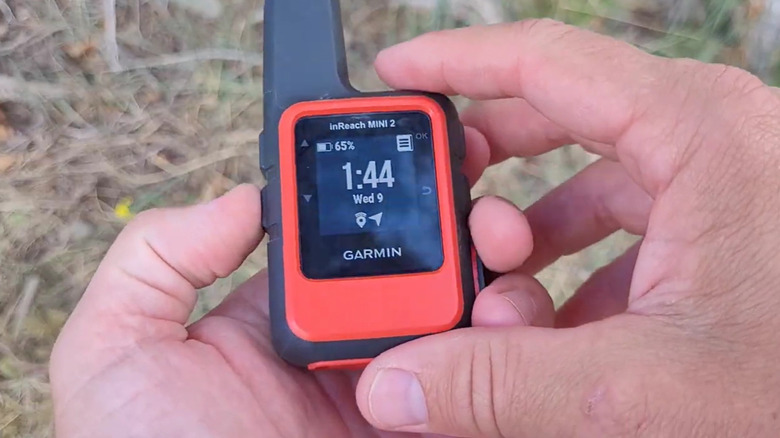
We know the whole point of hiking (besides staying fit) is to immerse yourself in nature and escape the hustle and bustle of everyday life. But just because you're hiking doesn't mean you should be completely isolated from the rest of the world, even if you only plan to be on the trail for a few hours. For starters, a good rule of thumb is to always let people know where you are.
The Garmin inReach Mini 2 lets you keep loved ones updated on your whereabouts at all times through satellite communication and location sharing. Both features require an active subscription, so you'll need to set them up before you head out. With a paid subscription, you can embed your coordinates in each message you send so the recipient can track your path on their end. Likewise, pushing the SOS button sends a message containing your location and identification information to Garmin headquarters, where they can arrange for local emergency services to reach you.
Battery life shouldn't be much of a concern, either; it can last up to 14 days with the 10-minute tracking mode enabled. With a 1.27-inch screen, it's small enough to fit comfortably in your pocket, and, by extension, your backpack. Essentially, you're more likely to lose it among other items in your inventory than to run into logistical problems. The Garmin inReach Mini 2 is listed on Amazon for $399.99, but it's currently on sale for $249.99.
Leatherman Signal Multi-Tool
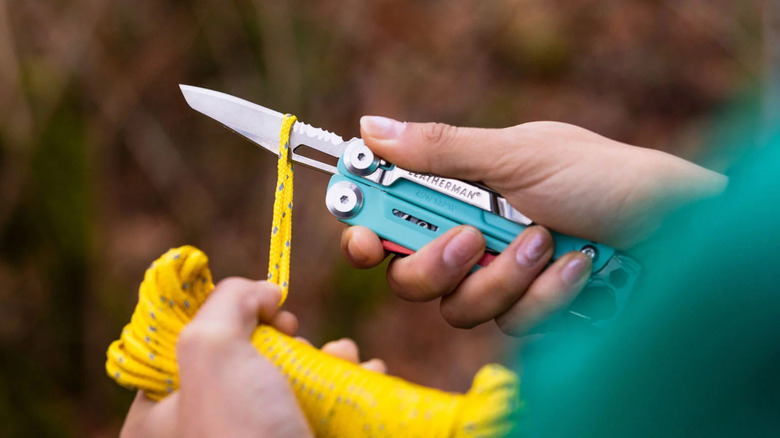
While you may not expect to run into many situations that call for knives or other sharp-edged tools while walking miles in the middle of nowhere, it's important to have at least one practical tool on hand. After all, you might need to start a fire, cut ropes (if you're camping), or even open a tin of canned food. With so many situations calling for specific tools, it's only natural to wonder how many items you can safely cram into your backpack, from knives to screwdrivers and the like.
The Leatherman Signal Multi-Tool is a handy addition to your arsenal. It includes an awl, wire cutters, bottle opener, and knife, to name a few, and it can handle up to 19 use cases. The Signal Multi-Tool uses a hybrid blade (a mix of straight and serrated edges) for cutting. Whether you're cutting branches, rope, or even preparing food while resting, the blade handles most tasks. Its small hammer can also anchor tent stakes.
If you need warmth or a hot meal and don't have a portable stove, the Signal Multi-Tool also includes a ferro rod for starting fires. It also includes an emergency whistle that can be useful for scaring off wildlife, calling to your pets, warning others in your party of danger, or sounding an SOS for people nearby. It's currently on sale at Walmart for $149.95.
GoPro HERO13 Black
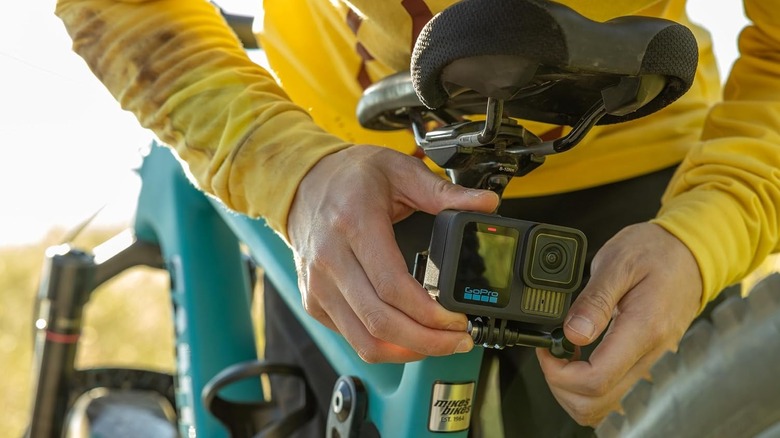
Hiking doesn't have to be all about survival or utility. It may be a common way to savor the thrill of living in the moment, but there's no rule against reliving it from the comfort of your couch on a random weekend. You can document your outdoor travels in more ways than a few aesthetic pictures or fleeting videos—a full vlog can capture more detail and better encapsulate the entire experience. A phone might be your go-to, but the main hindrance here is storage: phones can fill up pretty quickly.
A dedicated recorder like the GoPro HERO13 Black can make all the difference by ensuring you don't lose memories on a trip, especially if you plan to share your videos on social media. You'll get 5.3K video at maximum resolution and 27 MP photos from the 8:7 aspect ratio sensor; the Hero13 Black's 1,900-mAh battery supports 5.3K and 1080p recording for up to 1.5 and 2.5 hours, respectively. It can charge on the go with magnetic mounting, so you can move the camera around without worrying about thumb screws or a low battery.
Accessories such as the HB-Series lenses and filters are also compatible with the HERO 13 Black, and its built-in lens automatically adjusts its camera settings when it detects a mod. It can slow recordings up to 13x. It also uploads content over Wi-Fi 6, so you can cut down on upload times. The HERO 13 Black is on sale at Walmart for $414.
Petzl ACTIK CORE
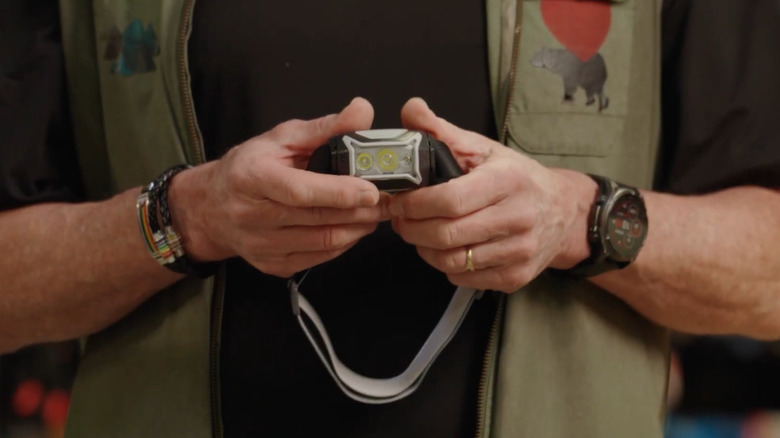
Although hiking is mostly considered a daytime activity, different circumstances can keep you on the trail longer than you bargained for. Or, if you planned to camp, being outdoors at night was part of the plan. Either way, it's good practice to keep a light source handy at all times when you're out in the wilderness.
Sometimes, a good old-fashioned torch works well. However, that can be tricky for space management (depending on the size), and you may want to keep your hands free. Headlamps like Petzl's ACTIK CORE fit into this convenience bracket—you strap it to your head and turn on the 625-lumen beam to light the path ahead. The beam pattern is variable: you can switch between a uniform beam and a mixed one for comfortable viewing both up close and further away. The white light is also adjustable across three modes, and it includes continuous red lighting to preserve night vision.
Of course, the ACTIK CORE's battery life depends on the beam setting; it can last 100 hours on the lowest setting compared to just two hours at maximum brightness. When the built-in rechargeable battery runs out, you can power the headlamp with three AAA batteries. Also, it's easy to spot in the dark: its body is lined with a phosphorescent reflector. Petzl's ACTIK CORE is on sale on Amazon for $88.
Katadyn BeFree AC 1L
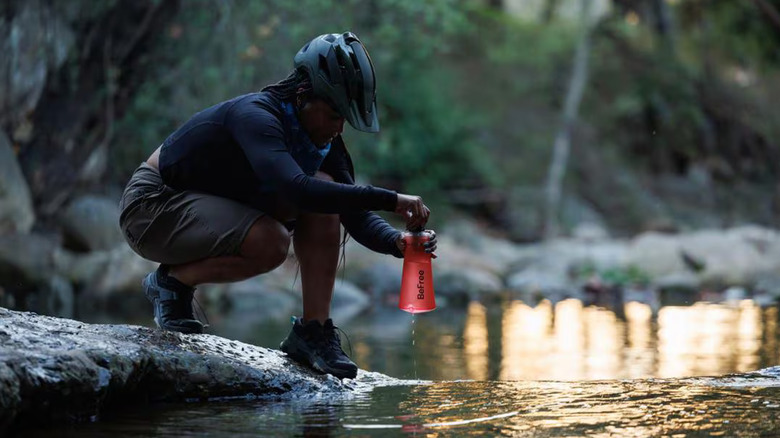
One of the most important aspects of being outdoors, whether camping or hiking, is staying hydrated. According to a study, three in four hikers show signs of dehydration after hiking in temperatures above 88 degrees Fahrenheit. The same research found that 58% of hikers did not bring enough liquid to replace estimated hydration loss from sweating. So, if you plan to go hiking, make sure you have a clean, reliable supply of water.
As a newbie, your first instinct might be to load up on plastic water bottles. However, you can only fit so many water bottles and containers in your backpack on the trail; you want it to be as light as possible, so staying hydrated can be a problem, especially on longer routes. With the Katadyn BeFree AC 1L filter bottle, though, you only need water within your immediate surroundings, whether from a spring or a pond, to drink. Operation is pretty simple, too: scoop up water from any source, let the 0.1-micron filter sieve out bacteria and protozoa, and you'll have drinkable water. One caveat, though, is that it doesn't filter viruses.
Another point in BeFree's favor is its design: it's collapsible, so you can squish the fabric into your backpack even if you're short on space. It weighs about 3.4 ounces, so you won't feel bogged down carrying it. The Katadyn BeFree is available on Amazon for $44.95.
Jetboil Flash
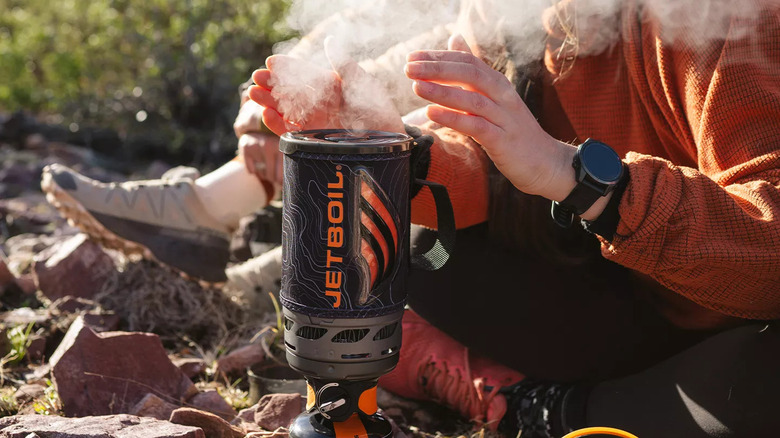
If a water filtration system doesn't make your final shopping list, you can safely drink water from wild sources by boiling it. According to New York's Department of Health, boiling water kills about 99.999% of waterborne micro-organisms. That includes bacteria, protozoa, and most importantly, viruses. Most viruses measure less than 1 micron, and their small size lets them slip through most filters you'll find in water filtration kits. Boiling is one way to be completely sure that the water you're drinking is safe.
The obvious question, though, is how to boil water on the go. Most cookers and pots are too bulky to carry in backpacks, but the Jetboil Flash weighs about 0.8 lbs—enough to fit without causing too much discomfort. You won't need a match to start it; it uses a turn-and-click knob igniter. It can boil about half a liter of water in two minutes, and it includes a color-coded indicator that alerts you when the water is ready.
While it's mostly for boiling water, it can also heat or cook food; you can buy stove components and the 100-gram fuel canister separately to prepare hot meals after a long trek. The Jetboil Flash is listed on Amazon for $144.99, although it's currently on sale for $108.74.
BioLite Charge 40 PD
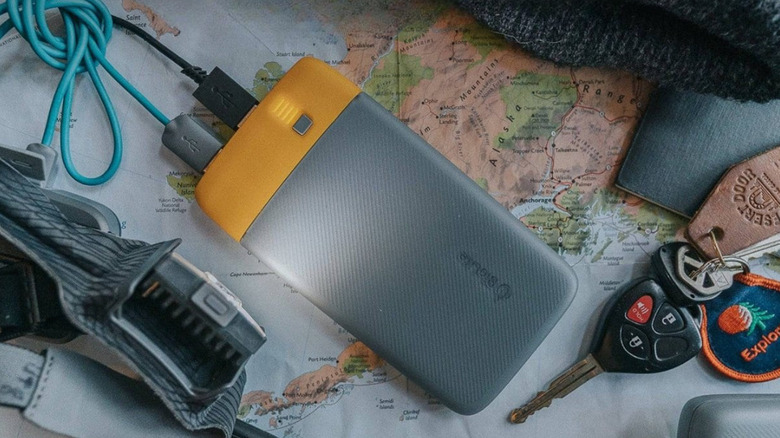
Phones aren't very practical for hiking beyond taking pictures and videos to capture the moment, especially if your trail takes you through a particularly remote area without network coverage. That doesn't mean you should trudge about with a flat battery, though. It's not just your phone that needs juicing up on the trail — cameras, smartwatches, and the whole rodeo could use a boost while you're outdoors.
For these reasons, a power bank should be high on your backpack gadget wishlist. And it shouldn't be just any power bank; it needs to withstand temperature swings and even a few falls on unfamiliar terrain. That's why we recommend the BioLite Charge 40 PD. It weighs just over half a pound, which is unobtrusive, and its 10,000-mAh capacity can charge a smartphone 2.5 times. If you're traveling with a handful of devices, the 80 PD could be a better fit at 20,000 mAh. However, that version weighs nearly twice as much as the 40 PD, so factor that difference into your planning.
Both models have one USB-C and two USB-A ports, and their 18W output can charge power-hungry devices like laptops. The feel matters too: its non-slip, rubberized shell lets you maintain a firm grip on uneven paths. REI sells the BioLite Charge 40 PD for $69.95.
ACR ResQLink 400 PLB
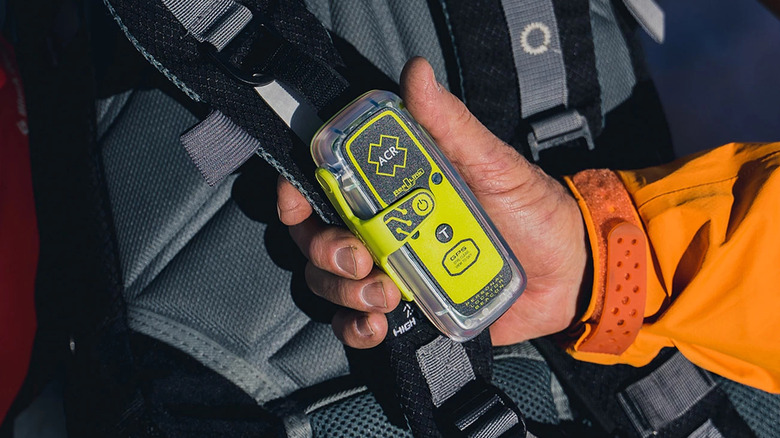
It's good practice to have multiple layers of security when traveling through open country. A satellite communicator like the Garmin inReach Mini 2 is usually the standard way to let the outside world know you're in an emergency, but we know you may want to avoid contact with people for a while. In that case, a simple personal locator distress beacon like the ACR ResQLink 400 PLB can alert emergency services with a single button press, no matter how remote the trail is.
You won't get any of the non-emergency features satellite communicators offer, but you won't be completely isolated should you need assistance. The ResQLink message includes a link to a map showing your location to help rescue services find you. Of course, how long it takes to get the aid you need depends on factors such as weather and local rescue services, and without other forms of communication available, you should be well-versed in first aid and carry a stocked kit if you're going down this route.
The ResQLink has LED and infrared strobes to make tracing your location by sight easier, too. Signaling is free, but you need to register your device before your trip, and you may have to pay for emergency services depending on local resources. It retails on Amazon for $409.95.
Motorola TALKABOUT T605 H2O
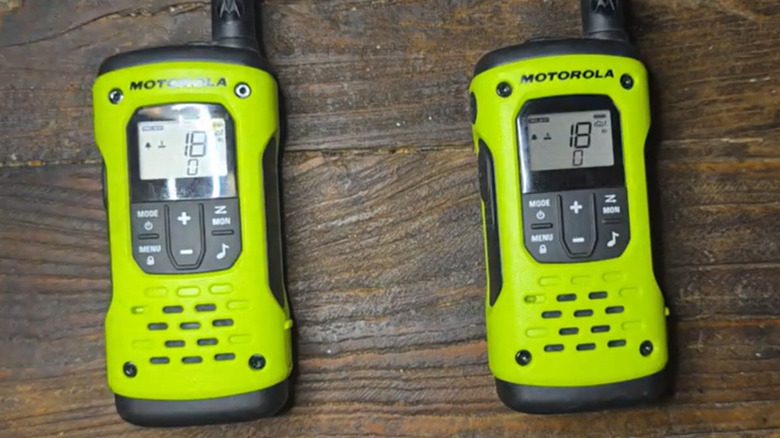
Like any fitness activity, you can choose to hike alone or in a group. For safety, though, it's usually best to travel with at least one companion. As the group grows, communication logistics can get tedious. One way to stay cohesive is to use radios; that way, you can quickly relay crucial information like detours or the need for emergency help.
That's where devices like the Motorola TALKABOUT T605 come into play. These two-way radios can cover up to 35 miles in mountainous terrain, though the range shrinks to six miles on water and only two miles in hilly forests and neighborhoods. It's especially worth considering if you plan to take a plunge in a river; its IP67 waterproof rating lets it withstand submersion up to about 3 feet for 30 minutes. It also floats and flashes lights to help you locate it if you drop it in water.
At just over two pounds, it's a bit cumbersome to hold all the time, so you can keep it in your backpack's external pockets for much of the hike. Battery life isn't the strongest: it's rated for only nine hours, but you can swap the factory pack for AA batteries if it's running low. You can buy a pair of Motorola TALKABOUT T605 units on Amazon for $117.
Casio Pro Trek PRG-340
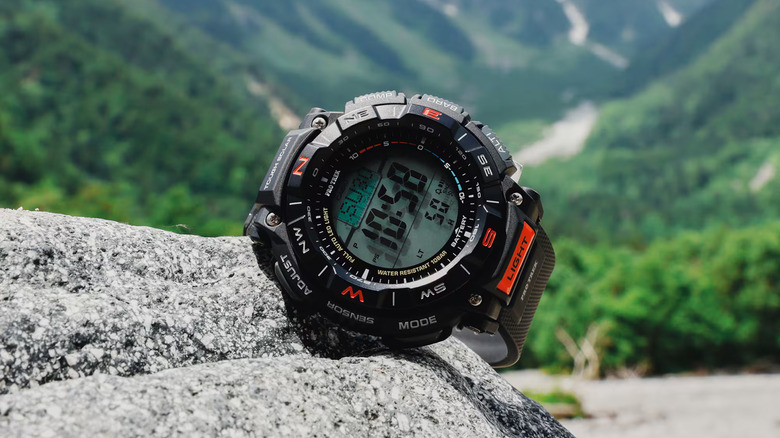
A hiking inventory isn't complete without a watch. Unless you're relying on your phone or you're an expert at telling time by the sun's position in the sky, you need a good timepiece; you don't want to be unable to keep an eye on the clock outdoors. The type of watch you choose matters too: beyond telling the time, it should have as many sensors as possible to inform your travels.
The Pro Trek PRG-340 could be the solution you've been looking for. It comes with a compass, barometer, and altimeter—toggling the button on the watch's right-hand side switches between modes and keeps you on track and informed about key environmental details. That way, on higher-altitude paths, you can remember to slow your pace, drink water, and watch for signs of altitude sickness so it doesn't sneak up on you.
In terms of feel, the PRG-340 is made of biomass plastic, so it might not be the most comfortable (or elegant) piece to wear. However, the trade-off is water resistance up to 100 meters. It also has solar charging, so you don't have to worry about your battery dying on you. The Casio PRG-340 is listed on Amazon for $310, but there's an offer to get it for $209.99 right now.
Shokz OpenRun Pro 2
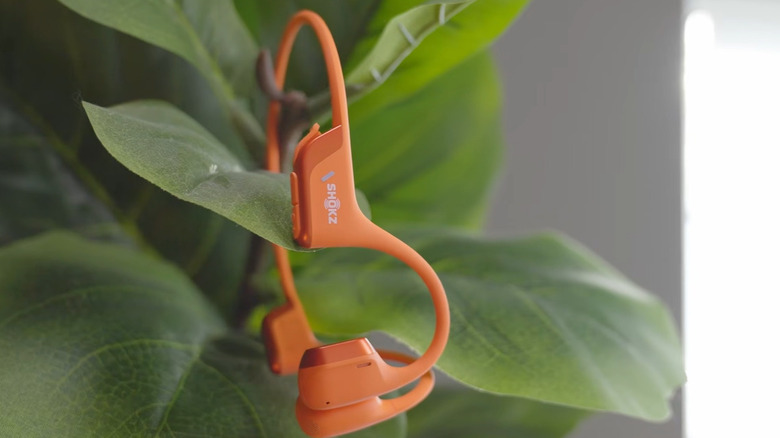
Out in the open country, you don't want to compromise your situational awareness; all your senses should alert you to danger as early as possible. That said, you don't have to go cold turkey on every form of entertainment you enjoy to enjoy a walk in nature. Music, calming sounds, or even your favorite podcasts can keep your mind (and, by extension, your body) engaged throughout the trail.
Plugging your ears with AirPods or wired earphones while outdoors isn't prudent, so a device like Shokz's OpenRun Pro 2 could do the trick. Its wraparound headband is made of Ni-Ti alloy memory wire that flexes and bends easily as you put it on, and it uses ear hooks to facilitate its open-ear design. If you're concerned about your noise footprint, the OpenRun Pro 2 offers leak-free listening to keep sound squarely in your ears.
In terms of sound quality, the open-ear design comes at a cost—you might have to increase the volume to overcome the distance between the buds and your ears. However, the combination of traditional speakers with bone conduction offsets that shortcoming to an extent, especially with a dedicated Volume Boost mode that makes listening in noisy environments possible. If you have cell coverage and need to take a call, it has wind-resistant microphones and an AI-powered noise reduction algorithm that filters out up to 96.5% of background noise. The Shokz OpenRun Pro 2 retails on Amazon for $179.95.
How we compiled this list

The items on this list share a common trait: they're useful on the trail and manageable in size. We considered gadgets hikers are likely to need on the trail, from light sources to communication tools. Then, for each need, we compiled a list of reputable manufacturers to help ensure you get products that meet the standards they advertise.