

If You See A White Cloth Hanging From The Window Of A Parked Car, This Is What It Might Mean
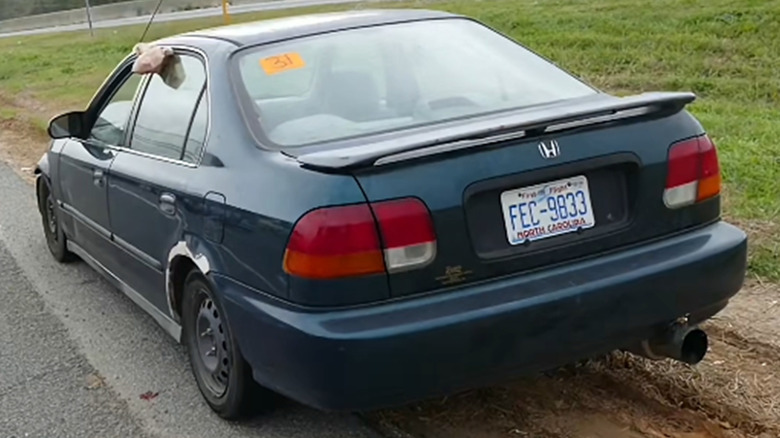
While there are universal rules of the road, some states have their own unique rules that may confuse outsiders. North Carolina's more peculiar rule got a bit of attention on TikTok when Kerry Burns posted a funny video about the number of cars you see on the side of the highway while driving through the state, which many found relatable. Even stranger, people noticed that a lot of these cars on the side of the road have a white piece of clothing hanging out the window.
In an old version of the North Carolina Driver Handbook, it states that if a vehicle breaks down, drivers must move off the road, then tie a white cloth on the left-door handle and raise the hood. This signifies that the vehicle isn't abandoned — instead, you may need assistance. "If we do see the white towel or T-shirt on the vehicle, we are going to stop and check on it," North Carolina Trooper Chris Casey said to local news station WLTX. However, vehicles left on the side of the road (white cloth or not) will get tagged with an orange sticker with the time and date on it. North Carolina law states that drivers can leave their car by the side of the road for up to 24 hours until it gets towed.
How did white cloth become a signal of distress in North Carolina?

The Pennsylvania Turnpike opened in 1940, stretching for 160 miles. By the time it became over 1,000 miles long in 1955, it was becoming known for how dangerous it was. At that time, cars had no airbags and no seat belts (they weren't required until the '60s), which became extra alarming due to the constant speeding. Police were not enforcing the initial 70 mph speed limit, and vehicles were breaking down quite a bit. By the 1950s, the turnpike was given its own roadside assistance system, which requested drivers use a white handkerchief to let officials know they were broken down and needed help.
The white cloth rule went from advice in a pamphlet to driver guides to police statements in newspapers. It's still part of North Carolina's culture, even though cellular phones have lessened the need for this distress signal. Steve Abbott, Assistant Director of Communications for North Carolina Department of Transportation told the Charlotte Observer, "So many people have cellphones now and will call for help, such as Highway Patrol or their travel service company like AAA and just remain with the vehicle knowing help is on its way." So, the white cloths are generally not needed any longer, but the tradition can sometimes still be spotted on the side of the road.