

Florida's Fixing Its Python Problem With High-Tech Stuffed Animal Spies
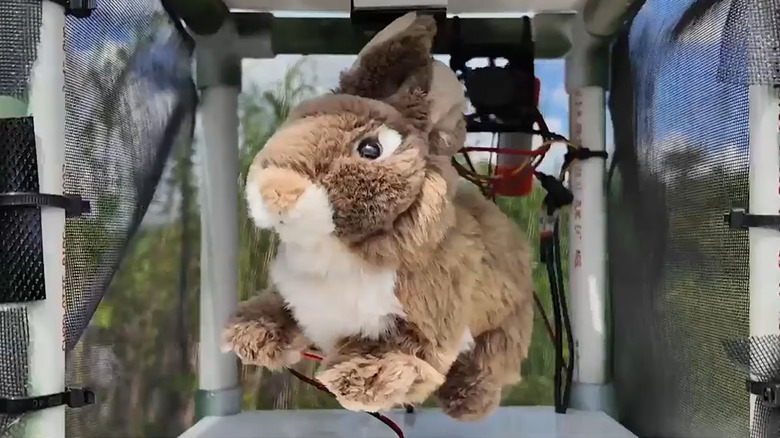
High-tech solutions have been used to combat wildlife threats in the past, but perhaps never to this level of cuteness. Florida researchers are turning stuffed rabbits into python lures, designed to imitate several of the signals that these massive snakes associate with prey. The idea is to draw the invasive and troublesome pythons toward a specific location instead of making hunters search for them.
The robot decoys are actually modified plush rabbits, built with motors, heating components, and solar panels. This gives them the ability to reproduce some of the same characteristics of a live marsh rabbit while operating in the Florida Everglades. They can also produce scent and vibrations, and can be programmed with different combinations of all these signals. An AI system is even being developed to recognize when a python gets close and alert nearby trappers to its location.
This idea didn't come from out of the blue, as it was previously explored in a University of Florida study. The study found that live domestic rabbits could attract Burmese pythons to a concentrated area, where cameras could then detect the snakes. During that study, researchers recorded 21 pythons, but found that using live rabbits required a considerable amount of resources. That discovery prompted researchers to investigate whether robotic versions of the rabbits could produce a similar effect while also being easier to use.
Florida's high-tech hunt for Burmese pythons
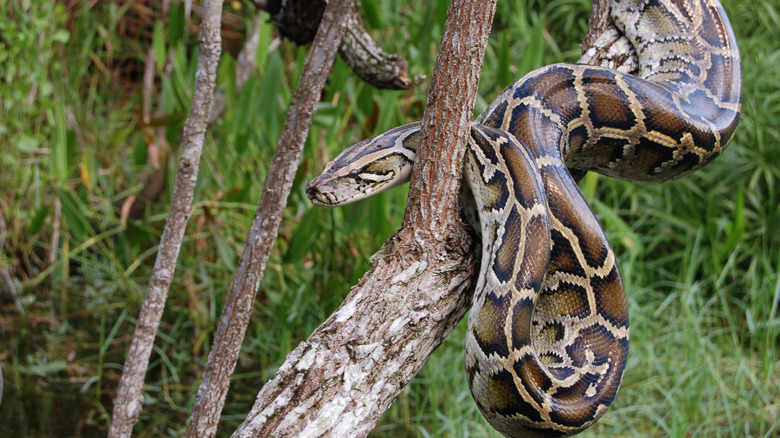
Burmese pythons are a serious problem in southern Florida because they consume a wide variety of native animals. They also compete with native predators for the same food and have been linked to extreme declines in mammal populations in the Everglades. The Burmese python is actually not native to the state, but after some were accidentally or intentionally released during the height of their popularity as pets in the U.S., the pythons established a breeding population that continues to expand.
Technology has already been used in the hunt for Burmese pythons, including a system that utilizes radio transmitters. Researchers would capture male pythons and equip them with these devices before releasing them back into the Everglades. During mating season, those males can be tracked to locations where other pythons are present, including females that can reproduce. While this method has resulted in the discovery of several large females, it is somewhat limited because of how long they're receptive to mating.
Scientists have also tried finding Burmese pythons without actually having to find the snakes themselves. Environmental DNA, or eDNA, testing uses water samples collected from the Everglades and checks them for signs of python DNA. In a 2019 survey, researchers took 140 samples from 28 different locations and found evidence of Burmese pythons at 25 of those sites. This survey showed how genetic testing could provide another way to monitor an animal that has become far too common in many areas.