

Who Owns DJI And Where Are Its Drones Made?
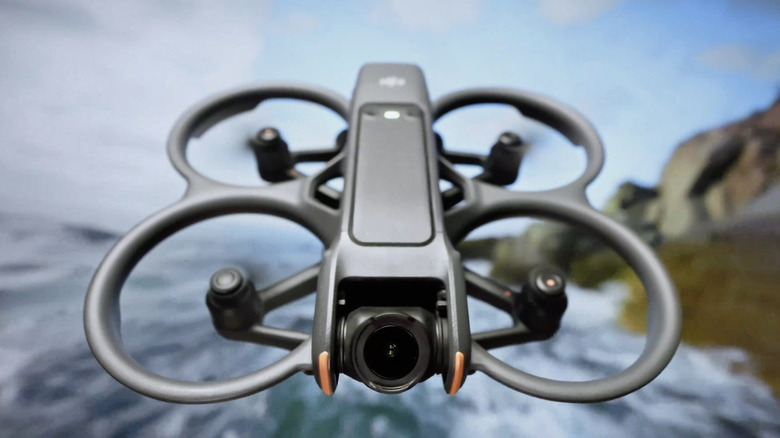
DJI was founded in 2006 by Frank Wang, who at the time was an engineering studentin his mid-twenties. Now, two decades on, he still holds the keys. It's hard to ascertain his actual stake in the company since it's never gone public, but according to some reports, it's roughly 45%. Wang is often referred to as the world's first drone billionaire, with his personal fortune being pegged at $5.1 billion by Forbes. He is joined by three early-stage investors, and the four of them together hold 99% of voting rights, and about 87.4% of shares in the company, a figure DJI itself disclosed in a 2024 lawsuit against the U.S. Department of Defense.
These three early-stage investors reportedly are Lu Di, Swift Xie, and Li Zexiang, all of whom have a personal connection to Wang. For instance, Lu is a family friend who wrote the first check for about $90,000 in 2006, then stayed on to run the finances. Meanwhile, Li is actually the robotics professor who encouraged Wang's early flight-control experiments.
Five Chinese state-owned enterprises hold 5.4% of the stock. This number was revealed as part of a lawsuit filed by the company against the U.S. Department of Justice to remove DJI from a Pentagon watch-list of companies tied to China's military. As for where the company began, while Wang has stated he started the company in Hong Kong, he quickly moved to Shenzhen, setting it up as the home base. Today, it's where DJI's drones are built, too.
Where DJI drones are actually built
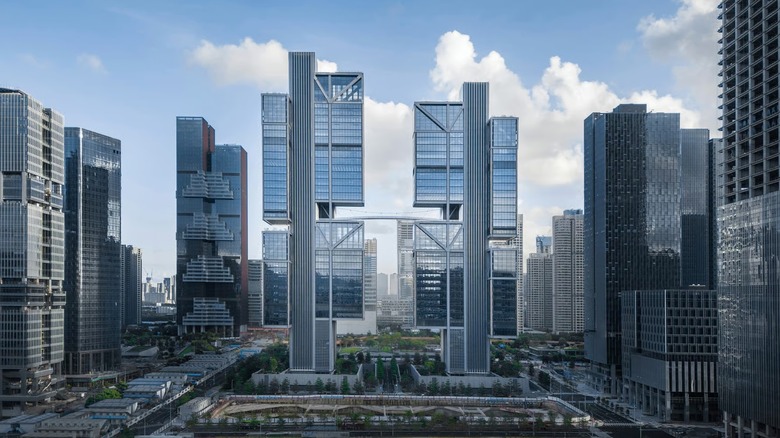
Moving to Shenzhen made sense from a business perspective, since the city is well known for its manufacturing prowess — in fact, it produces so many of the planet's electronics that people call it the World's Factory. This is also the city where the biggest supply chain of electronic components on Earth sits, so DJI — a small startup at the time — was able to prototype quickly and cheaply in its earliest days. Therefore, it's no surprise that the company runs its own manufacturing instead of farming it out to contractors like most other consumer electronics brands do. Besides Shenzhen, the company also builds drones in Malaysia.
However, if it's the country of origin for all of a DJI drone's components you're after, things get murkier. Interestingly, Nikkei in 2020 found one specific model — the Mavic Air 2, which is different to the Air 2S, was built mostly from standard off-the-shelf components rather than custom ones. Sure, most of these components may have been sourced from China, but a few notable pieces did come from further afield — the components that amplify radio signals were found to be from Qorvo, an American chipmaker, for example.
However, due to restrictions against the company's access to American parts, DJI has been trying to source its components from elsewhere. For instance, the company has reportedly swapped the American thermal sensors in one of its enterprise drones for parts from elsewhere, possibly a Chinese supplier.