

Why Are Inline-4 Motorcycle Engines Called 'Screamers'?
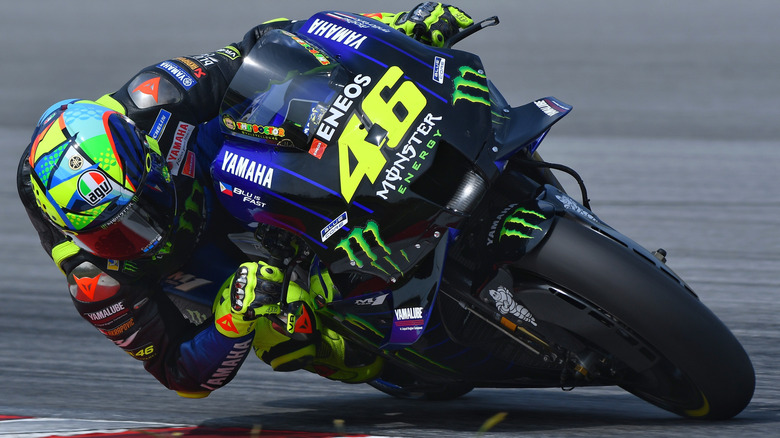
Fire up an inline-four motorcycle and it makes a pretty big deal about it with its sharp, high-pitched note that just keeps climbing as you rev higher. It's certainly nothing like a Harley-like cruiser, famous for their slow thumps. And by high pitch we don't mean it sounds like a two-stroke engine. Those produce a rather buzzy sound, often described as a "bee swarm". Rather, an inline-four's sound is, by all accounts, smooth and continuous, not unlike those older naturally aspirated V10 Formula 1 cars, known for their distinct scream. That wail is also a big part of why the inline-four keeps turning up on lists of the best-sounding motorcycles ever made.
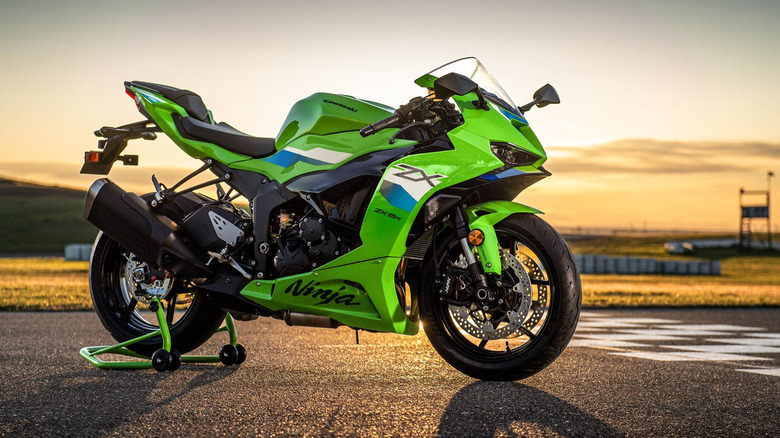
That's exactly how the screamers get their name. A good modern day example of such a bike is the Kawasaki Ninja ZX-6R. The reason why such bikes sound the way they do is because of how their engines are built, or rather, how they spin.
An inline-four bolts four pistons onto a single crankshaft. And since all of them cycle in sequence, the crank never gets to rest, according to Viking Bags. There is always at least one piston mid-bang shoving the crank along, so the power lands in a steady, unbroken stream. They also fire at even intervals, which is very different from what you get from a single-cylinder or twin-cylinder engine. These have fewer power strokes per revolution and do not fire as continuously as an inline-four, so there are brief periods of time where the crank coasts along on momentum alone. That's why the sound is different too.
The inline-four screamer delivers extra power, but with a catch
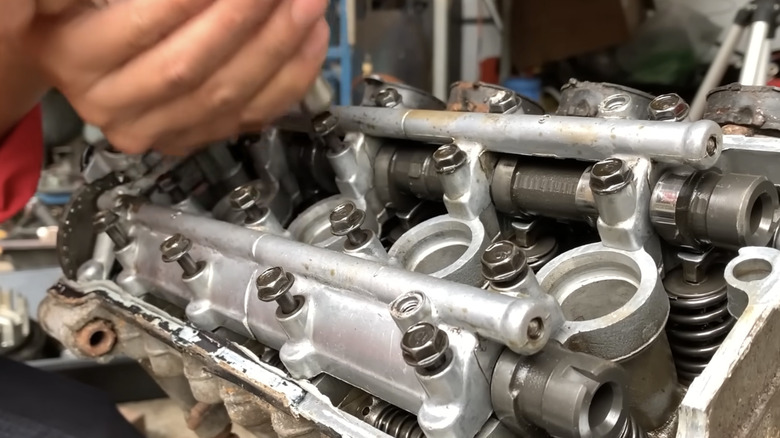
One of the biggest advantages that the inline-four offers is pure horsepower, mainly because the four-cylinder split of the kind allows the engine to be far more efficient. The firing is also pretty nonstop, which keeps power flowing to the wheel without pause. As a result, the screamer accelerates hard and tops out high. The flip side is that it can be a handful, since the tire gets fed power constantly and relies on a highly-skilled rider to maintain control.
However, with all that power came a notable downside. Masao Furusawa, the Yamaha engineer who led its MotoGP effort through Valentino Rossi's title run, explained in an interview to Crash.net that a screamer's torque noise at high rpm drowns out the feel a rider reads through the tire. Because of that, they can't feel the grip and end up throttling in a way that doesn't match what the tire can actually take.
But that was an early problem, since Grand Prix engineers actually addressed it decades ago. They did it by reshuffling the firing order of the cylinders so that they no longer fired at even spacing, which mostly came down to retiming the crankshaft. The upshot was that the noise was far less noticeable at higher rpms, helping riders feel the tire again. However, at the same time, the engine sound also turned a lot more rough, which is why these tweaked engines earned the name big bang.
If inline-fours are so great, why aren't they everywhere?
At least, on paper, with the kind of performance they offer, inline-fours look pretty close to ideal. Moreover, since their pistons move in opposite directions in pairs, they keep each other in check, canceling out the coarse shake that plagues smaller engines. However, they come with one big catch. While they get rid of primary imbalance, they still suffer from what engineers call secondary imbalance. Due to a quirk of the rod geometry, the pistons in these engines do not all travel at the same speed through a single revolution. This creates a buzz that the engine cannot smooth out on its own.
Now, there is a fix, called the counterbalancer, which is an extra spinning weight that pushes back against the buzz. It works, too, just not perfectly. However, it's still an additional component, and more components mean higher complexity, which translates to steeper costs and pricier maintenance. The bottom line is these are intricate — if not slightly imperfect — machines, but hey, at least they sound great.