

Can Fluid Film Save Your Tools From Rust Damage? Here's How It Works
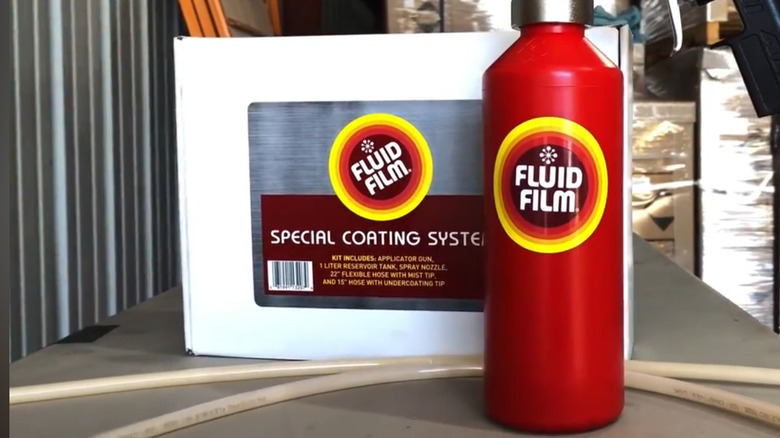
Whether you're a professional or a DIYer, it's important to maintain your hand tools and keep them from rusting. But with all of the options available on the market that can accomplish this, it might be tough to know which one to choose. When it comes to Fluid Film, this is a non-toxic solution that is designed to help prevent your tools from corroding due to either moisture or humidity.
Fluid Film works by adding a layer of protection from corrosion using a lanolin base. Lanolin is an environmentally friendly wax that naturally exists in sheep's wool. This substance has qualities that both keeps metals from rusting, as it can infiltrate the pores of metal tools to block rust formation. The lanolin is processed without chemical solvents, which means it won't evaporate or get sticky. Because it's water resistant, Fluid Film can actually prevent oxygen and moisture from penetrating to the tool's metal once it's applied.
However, if you're dealing with tools that already have rust buildup, Fluid Film alone is not one of the ways to completely restore them. That's because it's not designed to remove rust, only to prevent it from happening. However, you can apply it to rusty tools to keep the corrosion from spreading. That's because Fluid Film can actually penetrate through any existing rust and scale to the tool's surface. Once that happens, you may have an easier time removing rust during cleanup.
The drawbacks of using Fluid Film on your tools

You can apply Fluid Film to your tools to prevent rust by spraying it on a dry cloth first. You can even apply it directly to the tools themselves, which is just as effective. That's because the product will be able to penetrate the metal and protect it from rust either way. Fluid Film won't drip, has no odor, and once it's on the tools, you don't need to wipe it off as you would a cleaning agent.
But there are some drawbacks to using Fluid Film, beginning with how it's formulated. Because the product goes on wet and stays that way, you could attract dust or debris immediately after using, depending on your environment. However, since the product doesn't get sticky, you may not get a buildup of dust or dirt over time. Just as you should keep WD-40 from getting on rubber, you should also avoid this with Fluid Film. You should also keep it from any rubber components that are not oil-resistant, as it could cause those surfaces to swell.
Since anything coated with Fluid Film does remain wet, you'll need to be careful when applying it to your tools and later using them as well. Otherwise, you can get residue on your hands or clothing. Though it's non-toxic, Fluid Film should still be treated as the chemical solution it is, which means taking the proper precautions. You should wear gloves or a mask as needed to prevent the product from making contact with your skin and from inhaling it as well. Additionally, Fluid Film is highly flammable, so never use it around open flames.