

Please Don't Use Actual Fire To Fix A Dent In Your Car
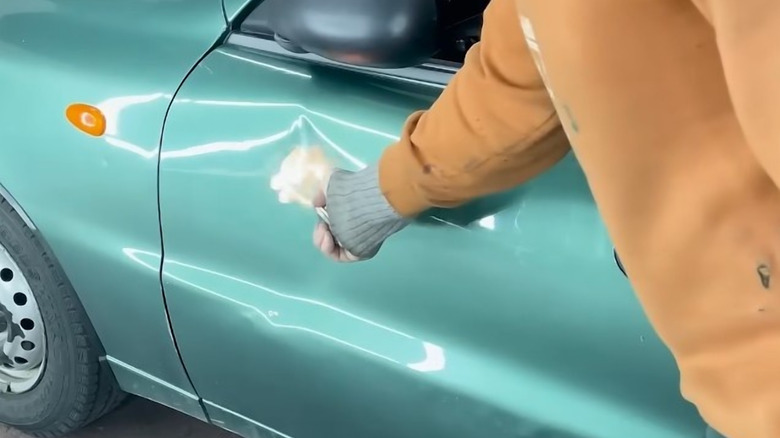
It doesn't matter how much of an expert you are at driving, your car will inevitably pick up dents. And it might be tempting to fix them yourself, maybe by using one of those viral hacks on the internet, but those may end up making things worse.
Take this clip from the Supercar Blondie YouTube page for example. It shows a mechanic supposedly fixing a dent on a car door using fire, as shown in the image above. He lights up the dented area, lets it burn for a moment, then reaches inside the door with a slim metal rod and pops the dent back out from behind. You can just tell it's the rod doing most of the work while the flames are mostly for the camera.
The trick isn't something anyone in the trade would suggest either. Modern automotive paint is a delicate, layered system that includes primer, color coat, and clear coat. And while it's built to handle up to 300 degrees Fahrenheit before it starts breaking down, it still fades with frequent sun exposure. That's what ceramic coating helps protect against.
Meanwhile, fire does in seconds what the sun does over years — after all, the blue tip of a clean-burning flame sits at roughly 2,700 degrees, which is well over nine times what your clear coat can survive. Hold a torch against your fender for more than a couple of seconds, and you might see bubbled paint and scorched primer. Fixing it would mean sanding the panel down, priming, color-matching, and respraying – a job that costs more than just pulling the dent out in the first place.
Heat is still an option, though
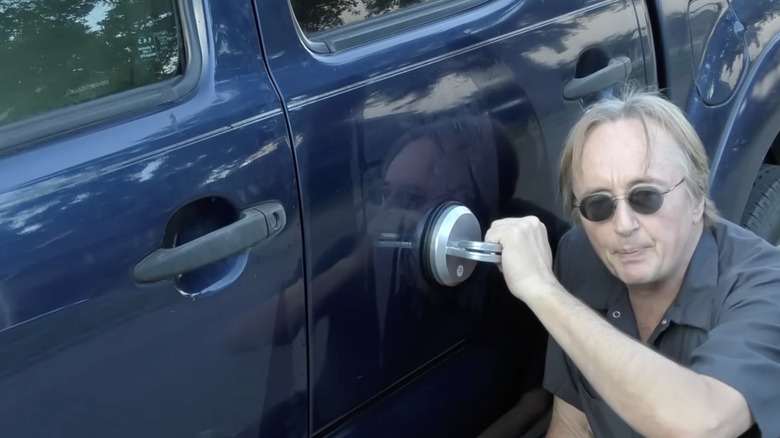
All this is not to say that you shouldn't use heat on dents at all. A heat gun, hair dryer, or hot water poured over the dent is enough to make the panel pliable without damaging the paint, especially if it's made of plastic. Then simply pull the dent out using something like a suction cup. The key is using the right amount of heat, not avoiding heat entirely.
But if heat's not your thing, you can go the opposite way and try cold. Specifically, we are talking about the dry ice technique. Rubbing it across a dent triggers a sharp temperature swing that pops the metal back, though getting this one right without damaging your car does need a pro.
But if neither end of the thermometer appeals to you, there are other DIY methods for removing dents from your car that skip temperature swings entirely. A wet plunger can pull smaller dings using suction. Suction cup dent pullers from a kit work on smooth, uncreased panels, though results vary with size and depth. A vacuum cleaner pulling through a bucket with a hole cut in it can lift flat dents. Mind you, this is all basic stuff, so for any serious damage, it's best to call a repair specialist.