

What Is The 6-12 Rule For Electrical Outlets?

There are various rules and regulations in home construction. Each discipline involved in the process — carpentry, plumbing, and electrical, to name a few — has codes to follow, which are intended to prevent shoddy workmanship or ensure homeowners' safety. The 6-12 rule (or, as it's sometimes known, the 2-6-12 rule) is definitely for the latter.
The rule mandates a certain spacing for electrical outlets and covers all the various types of outlets. Under the 2-6-12 rule, an electrical outlet must be installed in any wall space longer than 2 feet. A wall space is any continuous wall that is not broken up by a door or fireplace. Further, those outlets cannot be spaced more than 12 feet apart. This is to make sure that no point along the wall is more than 6 feet from an outlet.
The rule makes a lot of sense because most appliances that a homeowner will plug in have 6-foot cords. The rule is in place to ensure that there will always be an outlet in reach, no matter where you place a TV, stereo, lamp, or other electrical appliance. It's designed to discourage the use of extension cords wherever possible.
Kitchens follow different rules
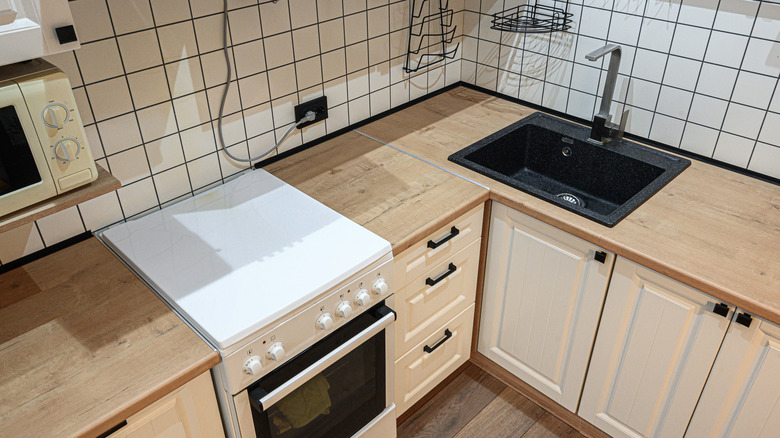
The one room in your house that isn't subject to the same rule is the kitchen. Those rules are modified to accommodate the shorter 2-foot cables that come with kitchen appliances such as coffee makers, blenders, and the like. In a kitchen, electrical outlets must be placed no more than 2 feet from the edge of a counter and no more than 4 feet apart. Those outlets will typically be required to be Ground-Fault Circuit Interrupt or GFCI outlets (the outlets with the reset button). These can be wall-mounted or mounted within the counter.
Kitchen islands have still more rules. Islands are not required to have an electrical outlet, but they still need to have all the necessary equipment for power to be added later. Often, this means a closed electrical box located in one of the island's cabinets. As long as it can be added later, it's allowed.
Other rooms, like foyers and bathrooms, have similar but different rules, and you'll have to be aware of what your local regulations require. This is especially true since those rules can vary between regions. If you're a DIYer, be sure to research what's applicable in your city or county.