

Why Do Electrical Plugs Have Different Sized Prongs?
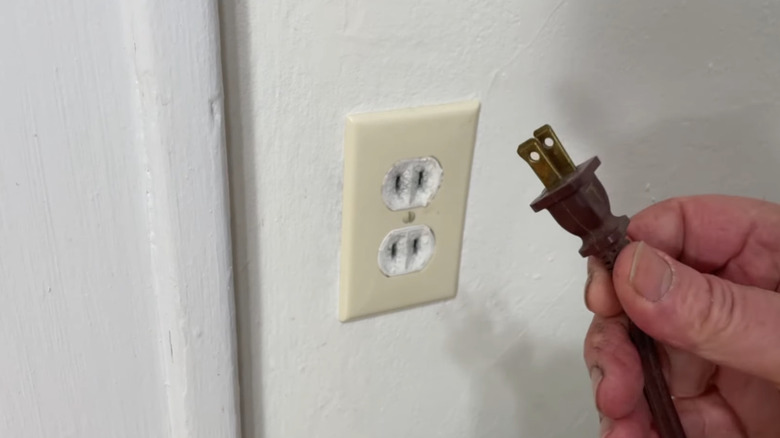
You know the struggle: You go to plug something in, but the orientation's wrong. The prongs are different sizes, so you turn it the other way and try again. Still wrong. You finally get it, third time's the charm, but you're left wondering why the electrical plug even has different-sized holes in the first place. Turns out, in North America, plugs are built like this to check multiple boxes. For one, it prevents them from being misused because there's only one right way to insert the plug.
It's all about polarity. The wider blade is for the neutral connection, while the narrower blade is for the hot (or live) current. In a typical household circuit, the hot wire is what delivers the voltage and the neutral wire is what completes the circuit. By making the neutral prong wider (and the corresponding slot in the outlet wider as well), manufacturers can guarantee the hot and neutral wires align with the correct internal connections inside a device. This reduces the risk of shock, fire, or other forms of electrical damage.
Why can't all prongs be the same size?
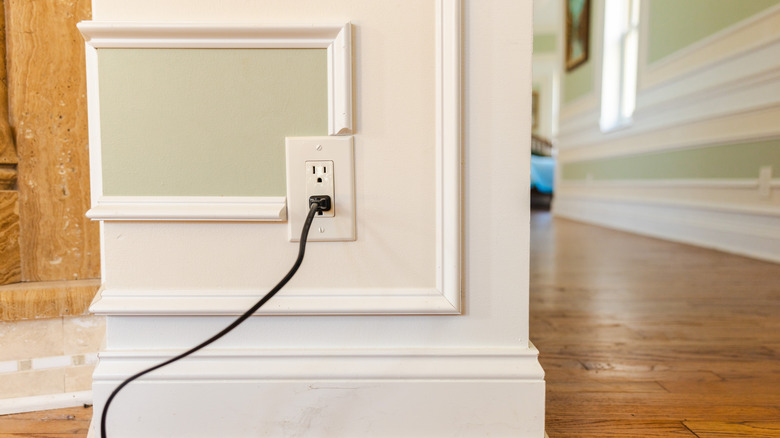
When plugged in the right way, electricity goes in through the hot side and goes out through the neutral side, safely completing the circuit. Not every plug is polarized like this, but many appliances (especially older models) are. It's non-negotiable for them because of their design, which uses switches or fuses to interrupt the hot wire and cut the power when off. If polarity were to be reversed, the device might look like it's powered off while its internal components actually stay on. That'd create a major shock hazard, not to mention increase the risk of electrical failure.
The different electrical plug types are all part of a broader safety system defined in the United States by standards from the National Electrical Manufacturers Association and the National Electrical Code. You might find non-polarized outlets with identically sized slots in older homes, but current safety codes definitely prefer the polarized designs. And what about three-prong plugs? These use a round grounding pin to create a path to trip the breaker if something goes wrong. Think of it like a bonus layer of protection. If something like water came in contact with the internal wiring of a kitchen appliance, the grounding pin would cut the power at the home's source to keep everyone safe.