

China Is Quietly Building The World's Largest Hydropower System
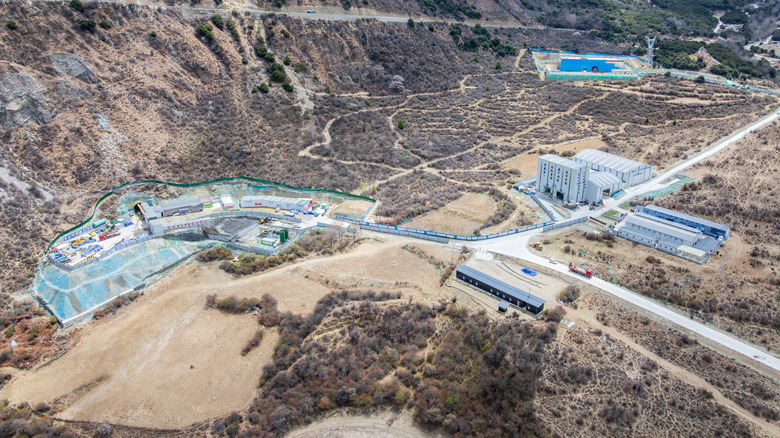
High in the Himalayas, up in the outer reaches of Tibet, China is building what is expected to be the world's largest hydropower project. Costing an estimated $167 billion, the enormous hydropower system could triple the energy output of the 22,500-mW Three Gorges Dam, which itself is already big enough to be seen from space. Called the Motuo Hydropower Station, China's latest hydropower project hopes to harness the Yarlung Tsangpo river's steep drops through a series of tunnels and cascading power stations to generate as much as 70 gigawatts of electricity.
The project has understandably sparked concern from its downstream neighbors, namely India and Bangladesh, both of which rely on the Yarlung Tsangpo for essentials such as irrigation, drinking water, and fishing. Indian officials went as far as to warn that diverting or releasing water from the dam could put millions of people at risk. Bangladeshi officials have also raised some questions about the dam's potential impact. And though Chinese officials insist there's no risk to downstream safety, India has already begun constructing its own dam on the Siang river to counter the potential effects of China's dam and act as a protection against flooding that could be caused by massive water releases from said dam.
The risks and rewards of China's new hydropower system
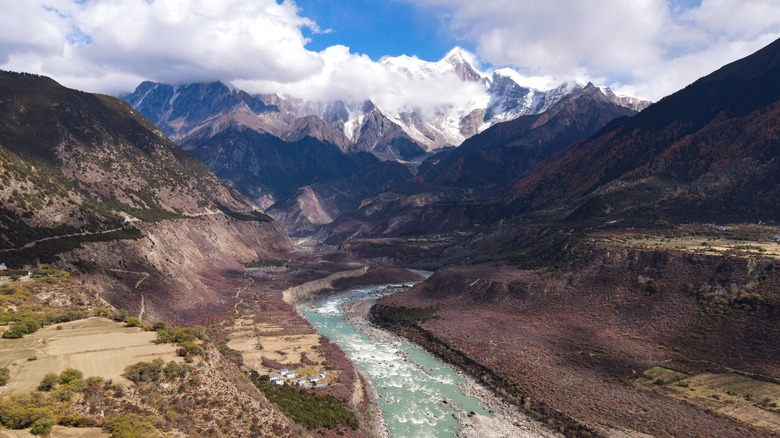
China's new hydropower dam is a massive undertaking that requires a number of engineering feats. Simply diverting the river to generate hydroelectric power, for example, will involve tunnelling through the Namcha Barwa mountain and the establishment of a complex network of power stations. The electricity generated will mainly be sent to China's eastern cities to support the country's goal of net-zero emissions by 2060. Other efforts to that end include the country's largest solar farm, which is also improving the region's biodiversity.
Nevertheless, the environmental and geopolitical concerns are just as significant. The main issue is that the region is seismically active, and scientists warn that new reservoirs and dams would likely increase earthquake risks. Tibetan valleys rich in biodiversity could also be flooded, with local communities facing displacement. Critics also point to the fact that the dam only strengthens Beijing's control over Tibet and its border with India, giving China even more leverage over its shared water resources in South Asia. So not only is the Motuo Hydropower Station the world's largest hydropower system, but it's also shaping up to be one of the most disruptive.