Thursday, Jan 24th 2008 by James Allan Brady


Worth Reading?


YesNo


-4 [10 votes]
Loading ...

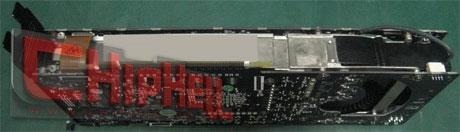
Judging from this prototype image they are in fact working on just that, a dual GPU graphics card based on the GeForce 9800. The reason it looks like they took apart a pair of 9800’s and inverted one of them on top of the other and combined the interfaces is because that’s more or less what they did, oh, and they stuck a cooler in between the two.

image3.php

Like I said it’s a prototype, but in my opinion, giving each GPU its own PCB is a far better idea than AMD’s iteration of a dual GPU card where they tried sticking 2 GPUs on the same PCB, I just think the performance would be better with each GPU doing its own thing than trying to mesh the two together, I mean multi-CPU computers don’t scale well, so why would a multi GPU graphics card be any different. The performance is rumored to be noticeably low, but its suspected that issue is due to almost a complete lack of driver support.

No word on when we can expect to see a production version of this card, if ever, but if we do it could supply the public another Quad-SLI option with the newer cards as the last time they did this was with the 7950GX2. Expect it to cost a lot if they do start producing these.

[via nordichardware]

Subscribe via RSS or Email | Read 3 times


  1.  Fuerer   View all comments by Fuerer  +2  Add karma Subtract karma Quote

    You say that “multi-CPU computers don’t scale well, so why would a multi GPU graphics card be any different”, I think you wrong. The most important factor in scalability is the application itself. If you have an application that uses efficiently the extra cores of a multiprocessor, the whole system is scalable. For far computer games are scalable. Think that GPUs already have hundreds of small processing units (stream processors), which implies that computer games are extremely scalable. If these applications weren’t scalable (cause of extented memory contesion) the use of many stream processors shoultn’t offer performance advances. In contrast usual applications are not enough scalable, usually running a few threads paralel.

  2.  Nikolas   View all comments by Nikolas  Neutral  Add karma Subtract karma Quote

    I agree with Fuerer. More scalable applications => more scalable system.

  3.  James Allan Brady   View all comments by James Allan Brady  -4  Add karma Subtract karma Quote

    what i meant was that they dont give you 1:1 performance increases, if you add a second core, its a lot closer, but if you add a second processor altogether, due to the overhead of balancing the workload and determining which processor is going to do what, you actually only get about 1.5 to 1.8 times increase from the second processor

    adding more cores and adding more processors are two different things, they arent totally different, but the technology that allows multiple cores to operate together is a lot different than the technology that allows multiple processors to operate together

  4.  Bruce   View all comments by Bruce  +2  Add karma Subtract karma Quote

    What this guy said in this article is as wrong as it can possibly be.
    Two GPUs on the same PCB would work WAY better. Because this 2 PCB solution is the same thing like SLI, wich all its disadvantages.
    What does that mean ?
    It means if the drivers or the game engine doesnt support SLI that well, this card will be terribly slow! That wouldnt be the case if they actually made a “dual core GPU”. You would get a guaranteed 50% performance boost with that solution, no matter how the drivers are or how the game engiens were developed.

    And who says multi CPU computers dont work fine? Do you live in the past? As a matter of fact, they destroy every single core CPU in any application.


Add your comments

Fill in the required fields below to leave a comment or login to your account. If you haven't signed up, you can do so free here. With SlashGear account, you will be able to participate on SlashGear Forums discussion.


Close [X]
E-mail It
About / Advertise / Contact / Archives / Privacy Policy / Terms of Use
Copyright © 2006-2008 SlashGear, All Rights Reserved.