

Can You Clean A Car's O2 Sensor? (And Why You Might Need To)
I live in New Jersey, one of the states that mandates inspection for all vehicles newer than 1995. My daily driver, a Jeep Cherokee, happens to be a 1996 model year with an OBD-II sensor, meaning I had to get that inspection sticker like any other new car. As anyone who daily drives a classic car will tell you, while dailying classics can be quite feasible — even practical, it's hardly without its issues. One of those, in my case, being emissions.
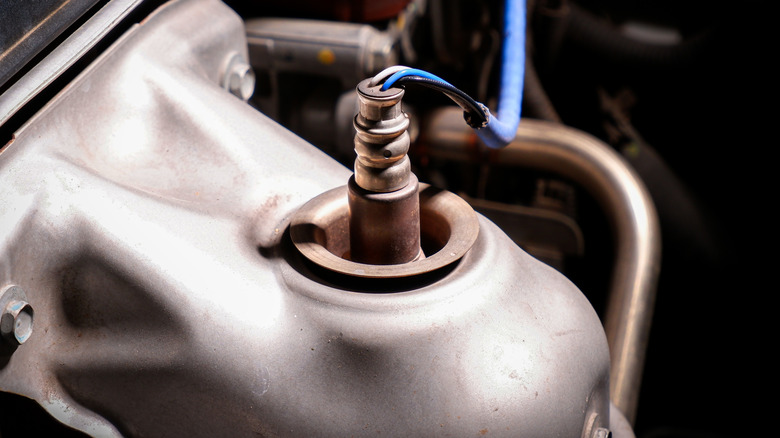
The problem stems from a little device hooked up to your car's emissions control system, called the oxygen sensor (or simply O2 sensor for short). Their purpose is to measure how much oxygen is left unburnt in the exhaust, sending the signal back to the engine so it can adjust the air-fuel mixture accordingly. And mine failed, so I had to do something, otherwise I would fail the inspection. I was basically broke and couldn't afford a replacement at the time. So instead, I took the thing out, sprayed some carb cleaner on it, wiped it down, and put it back in. It actually managed to pass, by some miracle, but it wasn't a cure-all. Ultimately, the O2 sensor was 25 years old and was well past its expiration date.
These systems can (and will) fail, and unfortunately, cleaning them won't make them new again. As a former mechanic and professional driver, I wish I could recommend that; however, it's ultimately better to replace them if you can. But if you're in a pinch and need your car inspected, or your car's running roughly and you suspect a bad O2 sensor, here's how you can clean it off and check if it's the source of your woes or not.
How to clean an O2 sensor
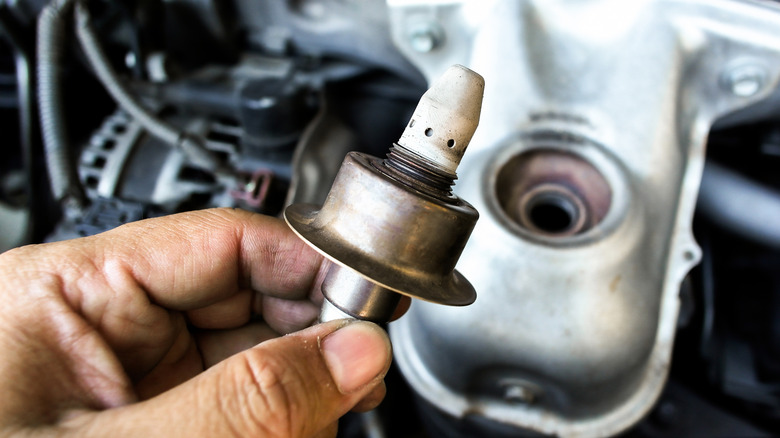
First things first. You have to remove the O2 sensor from the car. The procedure itself is generally pretty straightforward; sometimes they get stuck, but that's nothing a little penetrating oil can't fix. It works in much the same way as a spark plug, just screwed into the car's emissions control systems instead of the engine block. Locate the sensor by finding the electrical connector. Note how they have a little hexagonal piece like a spark plug; you can fit a wrench or specialized O2 sensor socket over that, then simply undo it.
Once it's out, we need to clean it. The problem is that when these are dirty, they're typically coated in soot and carbon buildup from the exhaust burning too rich; this is also what causes that dark smoke and gasoline smell emanating from the exhaust as well. The O2 sensor is directly in the path of all that. To get that off, you need a rag and some sort of cleaning agent — simply cleaning the exterior won't suffice, because you aren't cleaning the sensor bulb itself. Moreover, wire brushes and such can damage the housing or bulb, potentially ruining the sensor entirely. Instead, spray some carb cleaner until it's soaked, then wipe it down and let it dry naturally.
Though I must repeat, this should only be done if you're on a shoestring budget and can't outright replace the O2 sensor. These devices do wear out over time, owing to their extreme environment with all the heat cycles; replacing them is an annoying but necessary evil of modern emissions controls. Yes, you can drive with a bad O2 sensor, but I wouldn't recommend it.
Signs that your O2 sensor may be failing
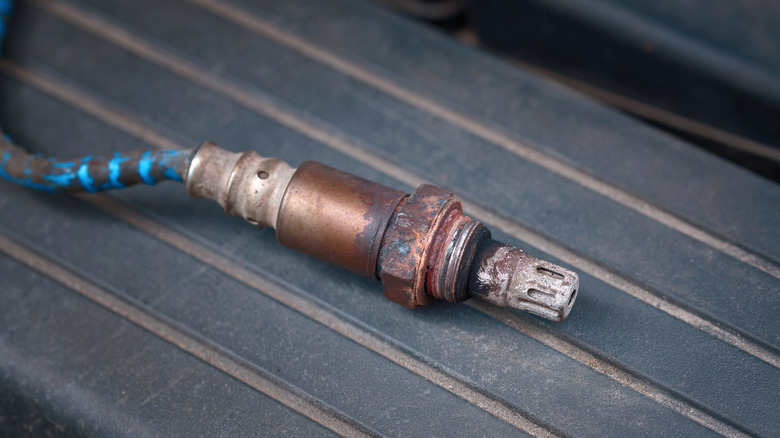
The most glaringly obvious sign that something's wrong with the O2 sensor is that your check engine light goes on. Obviously, this isn't the only thing that causes a check engine light; moreover, if the problem is that your car was running rich, fixing that issue will likely also fix the O2 sensor malfunctioning. This is because, at its core, the O2 sensor can't get a reading due to all the fouling and buildup. If your engine suddenly runs lean, a lot of that can simply burn away on its own, restoring functionality and getting rid of the check engine light in the process — although this is only a temporary fix.
The general symptoms of a bad O2 sensor revolve around what it causes in your engine. If your car cannot get an accurate reading from the O2 sensor, it'll basically revert to a conservative air-fuel mixture configuration, allowing it to continue running, albeit less efficiently. In other words, the car can't figure out what the mixture is, so it just uses a setting it knows will work all the time. The symptoms of this result in everything you see with running rich — carbon fouling, gasoline smell, dark exhaust smoke, poor fuel economy, and so on. Cleaning the O2 sensor may indeed fix many of these issues in the short term, owing to the engine having that interrogator again. However, it may not fix an underlying issue if the engine was running too lean or too rich to begin with.