REGISTER LOGIN

Worth Reading?

NoYes

+25 [45 votes]

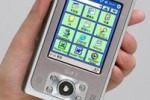
casio cassiopeia 1Windows Mobile has been around for a long time. It started life in 1996 as Windows CE (which some say stood for Consumer Electronics and Microsoft insisted was an acronym for nothing) with the first clamshell device coming from Casio, called the Cassiopeia. Over time, it’s evolved into a stable platform, with both enterprise and consumer appeal and devices from multiple vendors available for carriers around the world. Despite selling 20 million devices last year, there’s still a lot of negative buzz about the platform. Bloggers, analysts and journalists have all called the platform’s future into question (while still calling for a mythical Microsoft-created phone) and continue to raise the question of platform viability. I think the latest version of Windows Mobile, 6.5 addresses many of those issues along with strong support from OEMs who are still committed to the platform and will help drive business adoption further over the next 18 months.

Let’s be clear, while Windows Mobile’s UI is not as flashy or fluid as that of the iPhone, it certainly stacks up well against offerings from other vendors. This latest set of UI enhancements, along with hardware innovation from licensees HTC, Sony Ericsson and LG have also helped put a little more polish and chrome on the UI as well.

Just take a look at the HTC Touch Pro 2 if you want to see how far Windows Mobile has come these days. It’s not perfect but the key is that the core of the product works rather well and for synchronization with Exchange, there’s simply no better solution (or more cost effective solution, as pointed out in TCO study after TCO study). But Windows Mobile is more than just the Enterprise. Here are my top five reasons why we’re going to see Microsoft stay in the Windows Mobile game for some time to come.

1. Choice. Microsoft’s partners offer Windows Mobile devices (or Windows Phones as they’re now called) in in a variety of form factors. OEMs offer everything from touchscreen to full QWERTY keyboard as well as a range of devices in between. When it comes to mobile devices, one size does not fit all. In addition, Windows Phones are available from a range of carriers extending consumer choice even further.

2. Microsoft offers the best integration to Exchange via ActiveSync for sync of contacts, calendars and email. While other platforms have licensed the Exchange/ActiveSync protocol, no one else offers the degree of integration and management that Windows Mobile offers.

3. While email support is critical, it’s what’s in the email, often in the guise of attachments, that’s where the real information lies. Windows Mobile’s native support for Word, Excel, PowerPoint and One Note make it seamless to not only read the information but edit as needed as well.

4. Steve Ballmer is well noted for his mantra of developers, developers, developers. With Windows Marketplace for Mobile, which is a core part of 6.5 , Microsoft is emulating Apple with an integrated shopping experience that allows users to quickly find and purchase the latest application they’re looking for. While Microsoft does not have Apple’s 50,000 plus strong applications catalog, there have been more than 20,000 third party applications developed for Windows Mobile that extend the functionality of the platform. Moreover, the platform is completely open so developers need not use the store to deliver their applications if they choose not to.

5. Windows phones are among the few platforms that offer the ability to live in the intersection between business and personal spaces. The core software offers both business integration as well as entertainment and social features to seamlessly move between family and friends to co-workers and colleagues.

Today, it’s not just the IT department handing devices out to users. It’s people making the choice of platform and device to be used with both business and personal information and scenarios. Despite the negative hype, make no mistake, Windows Mobile should be still be on any mobile device purchase shortlist.


Author Bio

Michael Gartenberg is vice president of strategy and analysis at Interpret, LLC. His weblog can be found at gartenblog.net. Contact him at Gartenberg AT gmail DOT com Views expressed here are his own.

Subscribe via RSS or Email | Read 11,186 times

15 Responses to “Windows Mobile: Don’t write it off yet”

  1. benjitek August 20, 2009

    I don’t think anyone has written off Windows Mobile — there’s plenty of market share to keep it, and other fringe-OS devices afloat.

    What can be written off is the possibility of WM becoming any kind of standard. They should change their ad slogan to “Always Too Little, Too Late”.

    +2  Add karma Subtract karma  
  2. Remco August 20, 2009

    I’m very sorry, but Windows Mobile is very off date and I don’t think anyone is waiting for more non-innovating oldschool platforms.

    All the advantages that are mentioned above are covered by other Software developpers for other platforms just as well and more often even a lot better. Take Apple´s iPhone, everything they initiated works perfecly. And a lot of news things are being discovered by other developpers who want to make new things. Windows is only working on security (which I can imagine is a huge problem for them, since still more then 90% computer users are it). So where Windows must repair all their buggs constantly other platforms are investing in progress and improvements.

    I bought a brandnew PDA two years ago. The thing had more processor power and more internal memory then my PC on which I edited my first movies when I was still in college, but it didn’t work at all, even a simple 320 pixel movie performed at a framerate of an old fridge. That’s Windows main problem, they build software that doesn’t do what it promisses. Then six months ago I bought an iPhone and I was amazed who smooth every thing was operating. And all the possibilities with the accelerometer for instance, they are being explored and used by all the developpers that make apps for the iPhone. It’s just a huge step forward. My Windows PDA had such an accelerometer too. When I was browsing the internet with it, I could lean the machine backwards and it would start to scroll automatically, but when you are reading stuff you constantly had to balance the thing so it wouldn’t scroll your page away. These options should work in your advantage, not against you. And no, you could not turn it of. You could choose only what browser (there were 2 standard browsers on the thing) should use this option (and then the other one didn’t use it untill you changed the settings again). Where is the logics in this. And this is only one example of thousands that make Windows the most non-innovating developpers on the market.
    One more example is the main screen that Windows Mobile uses and all the lay-out of menu’s etc. I would love to talk to the developper of that. I don’t know what he/her/they was/were thinking, but clearly not how to make things clear for the users. I think they were only working on how to not let the OS crash when you are doing things with the machine while in the same time was trying to call you on the device. And I tell you they didn’t do a very good job, it crashed quit some times… But the layout is so rude, all the buttons are just way to big and give you the feeling you are dealing with a kind windows 95 or worse. It’s not up to date and Windows is not working to get up to date.

    I am very glad the iPhone initiated a whole new way of making mobile OS’s work intuitive. A lot of answers have come from other developpers. Symbian has improved a lot (they have let go of the idea only being a phone). These developments need to go even harder, much more is possible I think. I like to have a look on this site to all the beautiful concepts that are being published here, I can’t wait till they all go into production. But please don’t ever say that Windows is a good platform, they are the biggest developper in the world and they only try to slow down all progresses and improvements that other businesses are making, because they can’t keep up.

    +1  Add karma Subtract karma  
    • bkwmiata August 21, 2009

      I think you’re missing the point or the value of windows mobile. The device you purchased had features that you didn’t like. So buy from a different vendor next time. That is one of the strengths of windows mobile, if you don’t like one form factor try another one. Unlike the iPhone you have the ability to try different form factors from different companies. If you don’t like the way they implement a feature try another phone. Also the items that you described as not liking aren’t standard options for all windows mobile phones. Each vendor can add their own options such as using the accelerometer to scroll. I hear a ton of complaints about windows mobile but most of the complaints aren’t a problem with windows mobile it’s the way the manufacturer implemented a feature within windows mobile. It’s like blaming your electric company because the wiring inside your house is crappy. They can control everything right up to the front door but everything inside is the builder’s fault. Microsoft can control the OS but it’s up to the manuafaturer to build the best phone they can. Unfortunately Windows mobile is suffering from poorly designed phones. Hopefully companies like HTC can keep improving and making everyone else play catch up. We all benefit from competition and hopefully Apple will keep improving and force others to not only try to catch up but exceed the standard they have set. Make no mistake windows mobile needs to be improved but it’s far from a dead platform.

      +3  Add karma Subtract karma  
  3. Remco August 20, 2009

    sorry for the spelling errors above, I’m Dutch…

    Neutral  Add karma Subtract karma  
    • benjitek August 21, 2009

      No problem, forum posts of that length are rarely read in their entirety anyway — much to long and wordy…

      +3  Add karma Subtract karma  
  4. Remco August 20, 2009

    I’m sorry, one more add.
    The picture of the Windows mobile device posted along with the Windows promotional talk sais it all, that’s Windows. It slips into your pocket like a pick-up truck.

    -4  Add karma Subtract karma  
    • BitFlipper August 20, 2009

      “The picture of the Windows mobile device posted along with the Windows promotional talk sais it all, that’s Windows. It slips into your pocket like a pick-up truck.”

      You do realize that the picture is of the Cassiopeia, a PDA that was released more than 20 years ago, right?

      +5  Add karma Subtract karma  
      • BitFlipper August 20, 2009

        Sorry, that should be more than 10 years ago, not 20.

        +6  Add karma Subtract karma  
  5. Remco August 20, 2009

    I didn’t realize, but this device does exactly fit my image of Windows mobile.
    No offense. But I really think they won’t make things any better or more interesting for the future at Microsoft. It’s other developpers who will bring the new times.
    Only good thing for Windows is their touchscreen innovation for PC’s, I’m actually curious about the works of that effort. But I’m afraid they will not make it very usefull again. You would have to be really brilliant to make it handy for people to bring their arm all the way up and actually go touch the screen. Perhaps it’s the best use for tablet PC’s, but they didn’t quite break through.

    But that’s actually a good and new thing that they didn’t have to coy from Apple…

    -2  Add karma Subtract karma  
  6. Xperia August 21, 2009

    I would agree with the author. Microsoft would never want to call off itself from the Mobile Space. I had recently written an article indicating 5 simple reasons that assures me of Microsoft commitment towards its Windows Mobile OS.

    +1  Add karma Subtract karma  
  7. dherb August 21, 2009

    Well, maybe. You could also argue:

    1. Choice fragments WM to the point that addressable market for any one device renders the platform too costly for most devs and ISVs. If you are choosing where to port a product and you look at WM, you either have to generalize it to the point of non-differentiation (in which case why not just go widget) or develop handset by handset. Neither is a great option.

    2. Exchange ActiveSync integration wasn’t enough to keep Good afloat either as a company or MOT division–they were at least as good and most would say much better than MSFT at porting Exchange + Outlook to a mobile device. Today I still don’t see an open and shut case for Exchange + SCMDM versus Exchange + BES.

    3. I agree and think it’s an excellent point that email support has to mean attachments integration and abilities. Not convinced Microsoft sees this though.

    4. The “developers, developers, developers” chant was changed to “advertisers, advertisers, advertisers” wasn’t it? And Windows Marketplace for Mobile is so far from the app store. Channel conflict at the carrier AND OEM level, direct billing to consumer, no backwards portability. So many issues there. The historical amount of WM apps is pretty much meaningless isn’t it? Do you really think Microsoft is launching with 20, or even 10, thousand apps per device?

    5. “Windows phones are among the few platforms that offer the ability to live in the intersection between business and personal spaces”. I don’t see how you can make this argument with the commercialization of IT in general, the adoption of iPhone and BB by consumers for work/life solutions not managed by IT, etc. In fact I’d say this is where WM has really lost it–understanding that consumer technology has really outpaced enterprise IT.

    +3  Add karma Subtract karma  
  8. parkflyer August 22, 2009

    IMHO WM 6.5 is a poor showing, it’s the Vista of the WM line. I tried it on my phone, and I didn’t like either of the major new UI features at all: the updated Today screen, or the honeycomb program launcher. For developers, there doesn’t seem to be a lot of compelling new stuff either, other than some rudimentary gesture support and Marketplace. (BTW, according to MS, Marketplace will be available on WM 6.0 and 6.1 by the end of the year.)

    I would like to see WM at least be competitive with other current offerings, but MS is going to have to do much better in WM 7 to stay in the game, much less to gain mindshare. Fortunately other software developers have taken up a lot of slack to make the software much slicker, even to the point of copying some iPhone functionality. (iPhoneToday, iContact) And I do like that you can still get (and offer, as a developer) software for WM without having to go through Marketplace. When did you ever think that Microsoft platforms would be considered more “open”?

    +2  Add karma Subtract karma  
  9. darren_cruse September 9, 2009

    When I purchased a Dell Axim x50v a number of years ago, I quickly realized the hardware was killer but the Windows Mobile OS lacked polish and poor in the usability department.

    Having written software for Apple Macintosh years ago when it was new, I can’t say I was surprized when the iPhone came out and demonstrated exactly what I’d hoped that Dell Axim would have been.

    The result it the Dell wound up an expensive paperweight that never got used, whereas the iPhone is my constant companion (even though I’m really not that big a talker on the phone – I’m mostly using it for the internet or the apps).

    Having said that, I just looked briefly at a video of the Zune HD, and from that you can see Microsoft is capable of producing a slick user experience, and let’s face it they’ve had a history of stealing Apple’s thunder before!

    So no I’m not counting them out but it is a very tough road for them. Let’s face it aside from the technology at this point Apple as a brand is associated with music, youth, and “cool”. Windows Mobile as a brand is a drawback for Microsoft.

    +2  Add karma Subtract karma  
  10. David Wu September 9, 2009

    I have a feeling that microsoft will make a strong comeback.
    Ironically, they are the most “open” OS out there, so as the big hardware players (Nokia, Samsung, LGE, HTC is working on it, Sony isn’t quite dead yet) move forward and need something that can handle more than Symbian, WM is a decent choice. Although most of the venders are building their own UI on top of WM, i.e. the HTC has an credible interface, that works along with the microsoft common controls to make the phone feel like an HTC TouchFlow device.
    The other Operating systems vendors, Apple, Palm, RIM, and -to a degree- Google are not reasonable options for the OEMs to work with.
    WM will eventually win, but it may not take the glory, they will leave that to the OEM brands like Nokia and Samsung.

    Neutral  Add karma Subtract karma  
  11. Remco September 9, 2009

    HTC develops software over Microsoft OS, because the market demands better lay-outs and more advanced technology then Microsoft can deliver… If they want a come-back, then they need to work very hard starting yesterday. Why does HTC even use the Windows platform, when they hve to make their own software on top of it, because people will buy other and bettert phones instead. Perhaps their contract with Windows isn’t over yet… Windows only costs HTC extra energy and extra costs this way I think. Windows is out.

    Neutral  Add karma Subtract karma  

Post a comment

Please login to leave a comment. If you haven't signed up, you can do so free here. Lost your password? Reset it. With SlashGear account, you will be able to participate on SlashGear Forums.