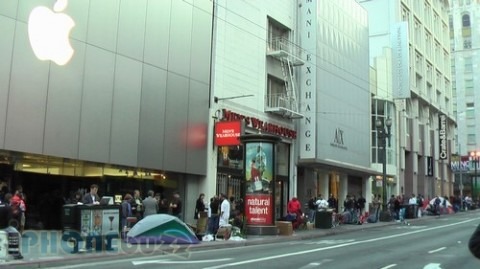
With Apple stoking the legal furnaces, Psystar facing the prospect of recalling each and every OS X clone machine they’ve sold, and Open Tech Inc. promising yet another EULA workaround, you could say we’re approaching a licencing milestone. Apple could be walking out of court with a watertight grip on OS X, or its EULA might be picked apart. But putting aside the terms & conditions, I’m left wondering exactly who would comprise the market for even a licenced OS X machine.

Boiling the Apple experience down to just the operating system seems a blinkered view of the Cupertino company’s success. Even the most ardent anti-Apple observer would likely agree that its a combination of their exclusivity, their industrial design, the so-called purity of their software and the presumed reliability of a controlled environment that comes together to create the Apple halo.
The ongoing Hackintosh OSx86 project, at worst merely ignored by Apple, have spent the past few years refining the OS X experience on mainstream PC hardware. Now there are relatively straightforward methods to create your own Hackintosh, potentially as simple as a single install DVD, and yet there have not been floods of defectors from official iMacs and MacBooks to homegrown alternatives.
Beyond those who like to tinker with their hardware, then, who is waiting desperately for a non-Apple Apple? Beginners, lured in by the simplicity, inevitably prefer the reassurance of an official product (or perhaps don’t even know a cloned version exists). Those tempted by the infamous Jonathan Ives style would turn their noses up at even a replica, never mind the budget cases we’ve seen so far. And even if a large company, say Dell, won the right to install OS X onto their machines, it’s hard to imagine them recreating the same customer experience as Apple do.
Apple fights this case because it has to – its trademarks and licencing are at stake – but, with the exception of the lawyers among us, the public is using it as just another opportunity to draw the line between Apple-philes and Mac-mockers. I’ve a sneaking suspicion that, even if companies such as Psystar won the right to make OS X computers, their market would be a bafflingly small percentage of the interest Apple themselves receive.
Am I wrong? Would you buy a clone OS X computer, and if so, what camp would you say you fall into: tinkerer, fan or something else? Let me know in the comments.


One Response to “Where is the Clone Mac’s potential audience?”
TheWerewolf August 22, 2009
You’re a bit right, but mostly wrong.
First off, you kind of overvalue the Mac’s appeal to the general population by projecting what is appealing to people who like Macs to everyone. You may be surprised to find that not everyone finds Apple’s industrial design that attractive. As for quality of design and construction, we read a lot of horror stories there too. While Apple is clearly in the lead of the pack for overall quality, there are PC makers who are close to them in that area, so rather than comparing Mac to ALL PC makers (and thus, being free to find the worst examples of the MANY PC makers), real consumers tend to look at the best in each class. Of course, in the class of MacOS running computers, the best (by definition, being the only one) is Apple.
With 7-8% of the US market and 4-5% of the world market, clearly, something is holding back a lot of people.
In reality, you can divide the market into four groups: those who don’t care about MacOS (either they prefer Windows or Linux, or they have no specific preference), those who are curious about MacOS (but not enough to pay for a Mac), those who want a Mac but can’t justify the price, and those who want a Mac and can (and have bought one).
Clones, especially netbooks, would appeal to the middle two, especially if it could also run Windows or Linux.
However, the fact is that there is no way to build a reliable (or possibly even legal) Mac clone. So the people who want a Mac but can’t afford it won’t buy a clone that’s not as reliable as a real Mac (or a real Windows box, for that matter), which is impossible as long as Apple doesn’t license their OS.
The people who are Mac curious won’t buy a commercial product for pretty much the same reasons – BUT – the more tech savvy ones won’t have a problem picking up a netbook or laptop that’s known to be Hackintosh friendly and install it on the box and play with it. That’s why there’s such a thriving Hackintosh community. That bleeds up to the people who want, but can’t afford – but who are willing to put up with some rough edges.
Would a clone Mac sell? If priced more in line with PCs, yes. It would give the middle two groups an option and might even entice some of the large “indifferent” crowd. Would a Mac netbook made by Apple sell? If Apple prices it as they probably would, then no. The appeal of a netbook is a small, light, inexpensive laptop – Apple isn’t good at the inexpensive part, nor do they really get the small part down right (weirdly – given Apple’s obsession with thin).
But a clone netbook could be a hit if it came out at the right price.
Neutral