SlashGear for iPad and iPhone

‘Science’ Stories

NASA Lunar Reconnaissance Orbiter spies GRAIL crash location

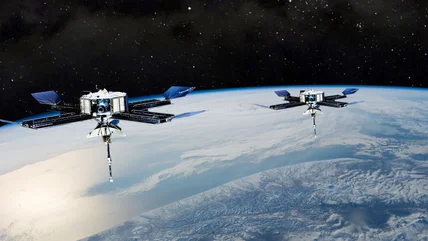
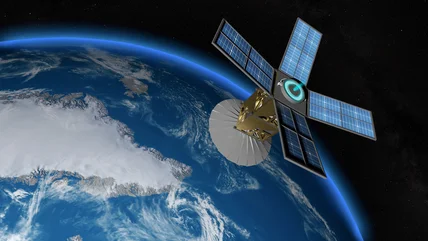
There are huge number of satellites and other spacecraft in orbit around the Earth and around other celestial bodies in our solar system. The point of all the spacecraft is to gather information to allow scientists and researchers to learn more about our world and the universe around us. Last year NASA crashed the twin GRAIL spacecraft into the side of a mountain on the moon. Read The Full Story

Complete Neanderthal genome published by German researchers

A group of German researchers announced this week that they have completed sequencing of a Neanderthal genome. The scientists say that the high-quality sequencing will be made available online for other researchers and scientists to study. The researchers were able to produce the genome using a toe bone found in a Siberian cave. Read The Full Story

NASA: Slashed space budget leaves asteroid spotting in the dark

, Mar 20th 2013 Discuss [0]

Earth runs the risk of an unexpected asteroid strike because NASA's budget for identifying and tracking potential risk-rocks is woefully insufficient, science advisors have warned US Congress this week. The ominous news, in which lawmakers were told that - at current funding levels - it would take until 2030 to adequately catalog 90-percent of near-Earth objects ranging between 140m and 1km in width, was revealed at a hastily-convened hearing of the House Science Committee following the Russian meteor incident in mid-February. There, members of Congress were warned that praying might be the only defense should an unpredicted asteroid be spotted three weeks out from Earth. Read The Full Story

Curiosity back roving Mars in days after “straightforward” fix says NASA

, Mar 19th 2013 Discuss [0]

NASA expects to have the Curiosity rover back up and exploring Mars "in a few days" time the space agency has announced, with the fix for the unexpected downtime "very straightforward" according to the mission lead. A software error was blamed for the rover being put into automatic fault-protection mode - freezing all activity - when a file was artificially inflated in size and thus failed a software check. Read The Full Story

Engineers win the Queen Elizabeth prize for creating the internet

, Mar 18th 2013 Discuss [0]

The Queen Elizabeth Prize for Engineering goes to none other than the creators of the internet. There isn't anyone better than those engineers that I can think of who deserve the award more. Each of the 5 engineers will be rewarded 1 million pounds, or about $1.5 million each. The internet and the world wide web have changed the world's way of life, with over 2.1 billion people using the internet every single day. Read The Full Story

Majority of the world’s gold deposits formed by earthquakes

, Mar 18th 2013 Discuss [0]

It's always interesting to learn how certain rocks are formed, and gold is one of those elements that is so precious and rare, yet very few people have any idea on how it's formed in the Earth. According to a study conducted by a group of Australian geologists, 80% of the world's gold deposits are actually formed in the blink of an eye thanks to earthquakes. Read The Full Story

Researchers find microbial life at the bottom of the Mariana Trench

If you've ever dove to the bottom of a swimming pool, you know firsthand how much pressure just a few feet of water can apply to your body. Imagine the incredible pressures exerted on anything living at the bottom of the Mariana Trench. This particular trench is the deepest point in the ocean, nearly 7 miles below the ocean surface. Read The Full Story

Galaxies produced stars shortly after Big Bang

, Mar 17th 2013 Discuss [0]

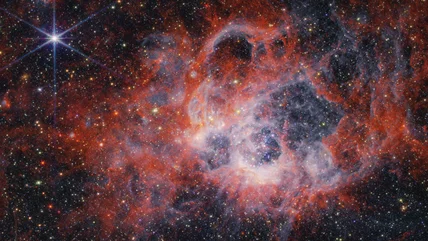
With the help of the Antarctic's South Pole Telescope and the ALMA (Atacama Large Millimeter/submillimeter Array) radio telescope, Scientists were able to discover something amazing in the field of Astronomy. The scientists discovered that there was a "baby boom" of stars very soon after the Big Bang. The scientists discovered stars 12 billion light years away, an interesting observation considering the universe is 13.7 billion years old. Read The Full Story

Higgs boson “God Particle” all but confirmed: here’s why it was worth it

, Mar 15th 2013 Discuss [0]

This week those responsible for working to find the elusive subatomic big of matter known as the Higgs boson have confirmed that they have, indeed, been able to confirm its existence. Of course as these scientists at CERN are, indeed, scientists, most have been just as cautious about saying they’re sure of their findings as their post would indicate: the data “strongly indicates that it is a Higgs boson” – is what they’ve announced today. This is indeed a proud day for the $10 billion dollar Large Hadron Collider one way or another.

CMS_Higgs-event

Read The Full Story

CERN: Yep, looks like it’s definitely a Higgs boson

, Mar 15th 2013 Discuss [0]

Physicists at CERN say new data crunching indicates the LHC discovery last July is almost certainly a Higgs boson, though there’s still some mystery as to which kind of the previously-theoretical particle it might be. The ATLAS and CMS teams manning the Large Hadron Collider (LHC) have worked their way through 2.5x the data that was possible for the Higgs boson announcement last year, they said this week, and that initial confidence looks to have been prescient. “The preliminary results with the full 2012 data set are magnificent and to me it is clear that we are dealing with a Higgs boson” CMS spokesperson Joe Incandela said of the latest findings.

large_hadron_colider_higgs_discovery

Read The Full Story

Carnegie Mellon University builds CHIMP for DARPA Robotics Challenge

A while back DARPA issued a challenge to researchers and educational institutions to help construct a robot that could meet a series of specific tasks. The competition had a prize of $2 million and was called the DARPA Robotics Challenge. The goal of the challenge was to have entrants build robots that have four limbs and possessed strength along the lines of a human. Read The Full Story

Massive ALMA observatory inaugurated in Chile

The massive telescope ALMA, which stands for Atacama Large Millimeter/submillimeter Array, went live back in October of 2011, snapping some images despite not yet being fully functional at the time. Although the telescope is still a work in process, with nine of the 66 antenna dishes still slated for activation that will take place this summer, the observatory was inaugurated today in Chile in a large ceremony. Read The Full Story

Pages: Prev 10 11 12 13 14 15 16 Next