SlashGear for iPad and iPhone

‘Science’ Stories

NASA live-streaming six-hour ISS spacewalk right now

, Apr 19th 2013 Discuss [0]

This isn't the first time that NASA has live-streamed a spacewalk, but we certainly don't get treated to them very often. Today, NASA is live streaming a six-hour spacewalk aboard the International Space Station, as two Russian cosmonauts venture their way out into deep, dark space to fix a broken reflector and install weather monitoring equipment on the exterior of the station. Read The Full Story

NASA discovers three Kepler system planets in the habitable zone

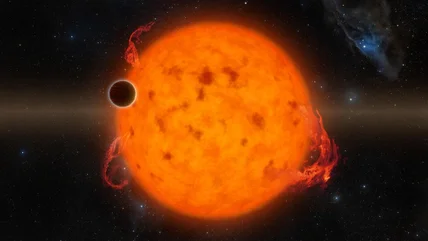
NASA's Kepler space telescope has made a new round of discoveries: two planetary systems, both of which are home to a total of three planets within the habitable zone. As such, it is possible that each planet could have a surface temperature capable of liquid water and supporting life. The findings were recently published in the journal Science. Read The Full Story

Archaeologists discover the oldest harbor ever in Egypt

When it comes to archaeology one of the most exciting places to excavate and search for ancient artifacts is Egypt. Archaeologists have announced that they have discovered the oldest harbor ever uncovered in Egypt along with the oldest papyrus ever found. The remnants from an ancient harbor date back 4500 years and was discovered in Wadi-Jarf. Read The Full Story

NASA IRIS spacecraft arrived in California this week

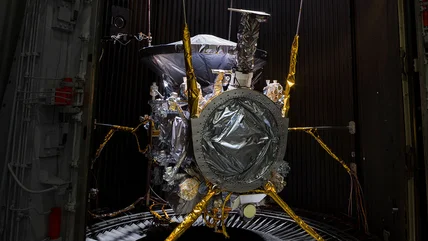
NASA has been working on a lot of projects over the years and one of those projects is the IRIS spacecraft that will be sent into space to study the sun to help scientists learn more about the sun. IRIS stands for Interference Region Imaging Spectrograph and the satellite arrived at Vandenberg Air Force Base in California earlier this week. The spacecraft now begin its final preparations for launch. Read The Full Story

NASA x-ray image shows off ancient supernova in fine detail

Back in May 1006 AD, a bright star appeared in the sky that was observed and written about by astromers across the globe. Now known as SN 1006, this supernova was detected by modern astronomers back in the 1960s using the very first round of x-ray satellites, which produced a faint image. Fast forward a handful of decades, and thanks to NASA's Chandra X-ray Observatory, we now have a bright, detailed image of this ancient supernova. Read The Full Story

Science taps “living fossil” for clues tipping first land animals

, Apr 17th 2013 Discuss [0]

If you want to find out what a millions-of-years-old creature was all about, you should only have to head to your local time machine and hit the button, right? As it turns out, studying the genes of one creature by the name of Coelacanth might not be far off. What scientists are doing here in 2013 and announcing this week is sequencing the genome of this deep-sea fish to compare it to the iterations of its being from a long, long time ago. Could Jurrasic Park be far off? Read The Full Story

Newly-discovered galaxy forms stars at record pace

, Apr 17th 2013 Discuss [0]

Scientists, researchers, and astronomers alike are all working around the clock to try and discover new bits and pieces on the history of the universe, and it appears they stumbled onto something quite interesting just recently. Astronomers have spotted what appears to be the most productive star-forming galaxy ever found, dubbed HFLS 3. Read The Full Story

Scientists discover materials that capture methane

Methane is a potent greenhouse gas that is released in the atmosphere by various means, including cow flatulence. Scientists say that they have discovered a new material able to capture and concentrate methane. So far, the ability to capture methane has been very difficult because methane interacts weakly with other materials. Scientist Amitesh Maiti, a researcher at the Lawrence Livermore National Laboratory have been working on a new solution to the problem of capturing methane (not pictured below). Read The Full Story

Rare long gamma ray bursts caused by supergiant star’s death, says researchers

There are two types of gamma-ray bursts: short and long. The short GRBs last a very short duration, a maximum of two seconds but sometimes even less. The longer ones are still relatively short, coming in at more than two seconds and sometimes several minutes, with the longest ones typically clocking in between 20 seconds and 50 seconds. A rare type of long GRB has been seen in action a couple times throughout recent years, however, and scientists finally have an answer about what causes them. Read The Full Story

Stanford scientists design cooling panels that cools structures during the day

, Apr 16th 2013 Discuss [15]

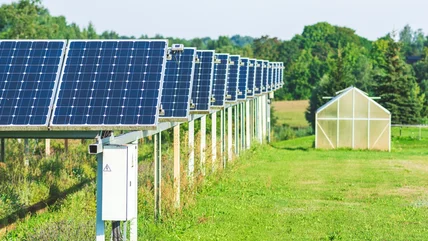
Scientists at Stanford University have just developed a new kind of cooling panel that may effectively reduce the cost of your air conditioning bill. The team, composed of Professor Shanhui Fan, and graduate students Aaswath Raman and Eden Rephaeli, wanted to achieve the goal of developing a structure that could cool buildings even while the sun is shining. They wanted to succeed "where others have come up short". Read The Full Story

Researchers develop microscopic sponge to soak up toxins in the blood

Researchers from UC San Diego have invented what's described as a microscopic sponge. The tiny sponge is design to circulate in the bloodstream and mop up toxins such as drug-resistant bacterium and even toxins such as snake venom. The researchers call the tiny sponge the nanosponge. Read The Full Story

Asteroid tracking sensor passes critical design test

A NASA funded project designed to create a sensor for tracking asteroids has passed a key design test. The test was designed to assess the performance of the Near Earth Object Camera (NEOCam) in an environment mimicking the temperatures and pressure of deep space. The NEOCam is a key instrument that will be used in a proposed space-based asteroid-hunting telescope. Read The Full Story

Pages: Prev 8 9 10 11 12 13 14 Next