REGISTER LOGIN

Worth Reading?

NoYes

+2 [4 votes]

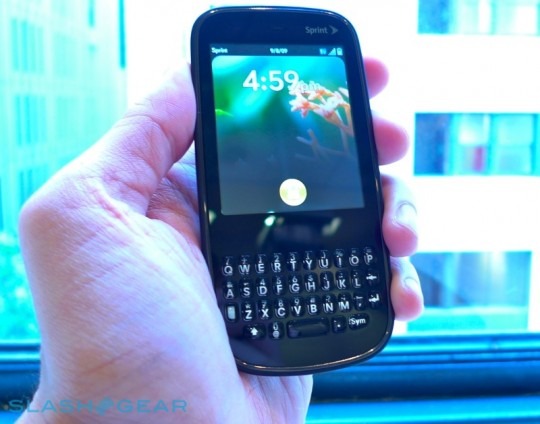
Full specifications for Palm’s second webOS smartphone, the Palm Pixi, have emerged, this time courtesy of Qualcomm.  The Pixi is based on Qualcomm’s MSM7627 chipset, and there are more than a few interesting details among the new chip’s capabilities, not least its dual ARM cores and ability to deliver both CDMA and GSM connectivity.

Palm Pixi Pre 02 r3media 540x424

The MSM7627 has both a 600MHz applications processor, with floating point unit and L2 cache, and a second, 400MHz “modem” processor.  There’s also a 320MHz application DSP which is used for multimedia crunching, giving the Pixi the ability to handle full 30fps WVGA encoding and decoding, while a further 200MHz hardware-accelerated 3D graphics core supports OpenGL 2.0.

Qualcomm’s chipset also has integrated GPS and supports high-resolution cameras – though the Pixi’s 2-megapixel fixed-focus shooter likely won’t trouble it in that respect – and measures just 12mm x 12mm.  Interestingly for future GSM carriers (and international releases), the MSM7627 offers both EVDO Rev.A and HSDPA/HSUPA (7.2Mbps/5.76Mbps) connectivity, though we’re assuming the Sprint version of the Pixi will only have the CDMA elements activated.

For more on the Palm Pixi, check out our hands-on with the smartphone from last week.

[Thanks Tony!]

Subscribe via RSS or Email | Read 2,360 times

One Response to “Palm Pixi CPU specs revealed: dual ARM cores, both EVDO and HSPA”

  1. jhoff80 September 15, 2009

    Sorry, I had to register just to say how horrible this analysis is. First of all, practically all phone modems have a separate ARM core for their separate software. Calling it “dual-core” is very misleading. The only core that is accessible to the operating system is the main CPU. The modem’s own ARM core just handles commands sent to the modem.

    As for the idea of it being EVDO and HSPA, the chipset supports either a GSM radio OR a CDMA radio. The chances of it supporting both at the same time (or even fitting both at the same time into that tiny form factor) are slim to none.

    As an example, the chipset of the Pre also supports XGA output or TV output, but the Pre itself doesn’t have the hardware for that. The same will be the case for the Pixi not supporting both GSM and CDMA.

    This is designed as a cheap low-end phone, having two cell radios would be more expensive than a cell radio and Wifi, and it’d most likely take up more space as well.

    If anything, the chipset was chosen because of how simple it’d be to swap out the CDMA radio with a GSM radio so when it’s sold on multiple carriers it doesn’t require a complete internal redesign. Honestly, I can’t believe anyone knowledgeable on phone internals would ever make the conclusions you made in this article.

    Neutral  Add karma Subtract karma  

Post a comment

Please login to leave a comment. If you haven't signed up, you can do so free here. Lost your password? Reset it. With SlashGear account, you will be able to participate on SlashGear Forums.