

Japan's Future Ocean Transport To Float On Air
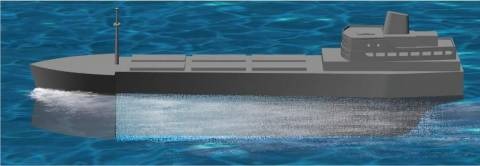
Something tells me that most of you, while on-board a ship, would be more concerned with whether you've got a seat at the Captain's table for formal dinner than how well the hull is cutting through the water. Well, people, that's what they thought on the Titanic, and look what happened to them! The latest idea for ocean-going efficiency isn't about avoiding icebergs, however (I think they do that as standard, now), but about making your vessel as super-slippery as possible. I'm not sure if they first tried an oil-based petrochemical lubricant, but they've now settled on tiny bubbles of air.
Yoshiaki Kodama, director of the Advanced Maritime Transport Technology Department at Japan's National Maritime Research Institute (NMRI), has come up with a system whereby spare power from the engine drives compressed air through a slot or porous plate at the bow of a ship. Those bubbles then coat the hull, forming a low-friction sheath that allows the ship to slide serenely through the water.

There are, of course, plenty of obstacles in the way before we see oil tankers and cruise ships using the technology – keeping the bubbles underwater for a start, and then having them avoid the propellers. But Kodama and his team are confident that a so-called "Super-Eco Ship", with 25% less greenhouse gas emissions and a 20% increase in cargo capacity is the future of Japan's import and export transport.
New Scientist [via Treehugger]