JP REGISTER LOGIN

Worth Reading?

NoYes

-1 [19 votes]

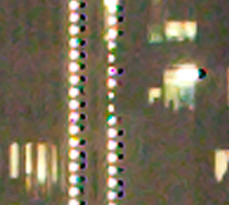
stephan hoerold 5dmarkII blackdotThough not as serious as the Mark III’s auto-focus disaster, the black dots are persistent on the new Canon 5D squeal. Frustrated photographers took it up with USA technical adviser Chuck Westfall at The Digital Journalist and the man spoke, “Watch for an official Canon comment on this issue in the very near future”

RG, in his brief interview with Westfall, also confirmed Canon is prepping to address the 5D mark II’s black dots debacle that’ve been widely spread on numerous community forums. No further details were disclosed but it would be a positive announcement. Well, if they’ve learned anything from Mark III; it’s wiser to break silence on founded technical difficulties, another case of lack-of-response could be the last straw that breaks the camel’s back.

[photo credit : Stephan Hoerold]

Subscribe via RSS or Email | Read 4,523 times

3 Responses to “Canon will address 5D Mark II’s “Black Dot” Issues soon”

  1. Charlie The Gold December 14, 2008

    The ‘Black Sun’ Effect in CMOS Sensors (source: http://www.appliedcolorscience.com/black_sun.htm)

    Image sensors used in today’s video and digital still cameras have come a long way from the grainy, noisy low-resolution devices of 15 years ago. The improvement in image quality has been especially dramatic in CMOS sensors. First generation CMOS sensors (circa 1990), were arrays of 256 X 256 photodiodes that required a good imagination to see an image hiding among the fixed pattern noise (FPN) , dark current and high read noise.

    In 2008, it’s commonplace to see CMOS sensors with 5Mpixel resolution or higher, and FPN and read noise have all but been eliminated by a combination of vastly improved pixel design and device fabrication processes. However, with all the improvements there are still lingering image artifacts that remain in many devices. One of these artifacts is what I call the ‘black sun’ effect or pixel inversion.

    This occurs when a camera is pointed at a scene with a very bright, very concentrated source of light like the disk of the sun. (Note – I don’t recommend doing this with any digital video or still camera for any length of time because imaging the sun’s disk on a sensor with a camera lens may cause irreparable damage to the sensor and or camera optics!) Under these conditions, we would expect the resulting image to look uniformly saturated across the image of the sun’s disk or whatever bright object is in the scene. However, some CMOS sensors actually show these super-bright areas as DARK, rather than saturated, as shown below.

    ‘Black Sun’ effect in an Omnivision OV5610 image sensor (picture removed)

    The picture above shows the output end of an optical fiber bundle placed in front of a digital camera resolution chart. The input end of the fiber bundle is connected to a 150W tungsten light bulb. The measured illumination from the fiber bundle is 20000 lux. The image sensor used is an Omnivision 5610 5Mpixel CMOS sensor, operating in full resolution mode at 4 frames per sec. It is clearly evident from the picture that the central core of the fiber bundle appears black compared to the bright saturated halo around the fiber bundle. How can this happen?

    Explanation-

    The simplest explanation for this effect uses the ‘photo-electron bucket’ model of image sensors.
    Single pixel of an image sensor array can be thought of as an electrical charge ‘bucket’ in which photons (squiggly lines) coming in from a scene are converted to photoelectrons (small ‘e’s). When a pixel is read out, the level of photoelectrons is compared to a reference level of electrical charge around the pixel. In the case of imaging a very bright object, the number of photons hitting the pixel during a given time period (the exposure time), is far greater than the storage capacity of the photoelectron bucket (See diagram below).

    When this happens, the photoelectrons converted by the pixel start spilling out into the area surrounding the pixel, temporarily raising the reference level of charge surrounding the pixel. As a result, the net signal that is read out from the pixel actually decreases because the signal level
    cannot exceed the full (saturated) level of the pixel well and the reference level is raised by the overflow photoelectrons. If the incident photon flux is high enough, the signal and reference levels are the same and the net output signal is zero – producing a black pixel.

    Solution -

    If your camera happens to be using an image sensor with this behavior, it is difficult to completely eliminate this effect in post-processing. One can think of several types of software fixes that can set up criteria to test for the onset of pixel inversion and correct for them by substituting saturation values for actual pixel values. The danger with this approach is that there may be legitimate scenes in which a dark core is surrounded by saturated pixels and this approach would incorrectly process them.

    Fortunately, some CMOS designers/manufacturers have recently devised pixel architectures and processes that appear to have eliminated this effect. An example of this is shown below with a Micron MT9P401 5Mpixel sensor using the same scene and capture conditions as in the Omnivision image above.

    No ‘Black Sun’ effect in a Micron MT9P401 sensor

    Conclusion -

    Not all image sensors are equal – if you can’t afford image artifacts like the ‘black sun ‘ effect, evaluate the sensor performance carefully before designing it into a video/ still camera system.

    Neutral  Add karma Subtract karma  
  2. Hiro Ikezi December 15, 2008

    The black sun effect, which is described by Charlie The Gold, does not account for the black dot artifact of Canon 5DII. Black sun appears at the middle of the bright image. Canon’s black dot artifacts appear on the right-hasnd-side of the bright images. I think this is due to poor frequency response characteristic of the circuit between the sensor and the digitizer. I wish Canon will fix the hardware instead of hiding the problem by software.

    Neutral  Add karma Subtract karma  
  3. Rishi Sanyal December 15, 2008

    I second Hiro. The black sun effect CANNOT account for Canon’s black dot artifact simply because:

    At higher ISOs, the CMOS sensor invariably receives less exposure for the same EV rating (i.e. hike up the ISO 200%, you also cut your shutter speed down 200%). Hence, pixels that were saturated previously become half saturated. Therefore there is no more ’spilling over the bucket’ effect.

    This would predict that the black dot effect should go away at higher ISOs.

    BUT THE EXACT OPPOSITE HAPPENS!

    In fact, at the lowest ISO, ISO 50, the black dot effect is subdued. Yet ISO 50 is actually a 1 EV OVEREXPOSURE @ ISO 100 sensitivity. The black sun effect would predict that the black dots problems GETS WORSE, then, at ISO 50. But the opposite happens.

    What’s the explanation then?

    Well, ISO 50 demands the least gain from the amplifiers amplifying the signal coming from the photosites. As photosites are read, the amplifiers apply a fixed gain. This gain is higher at higher ISOs, and lower at ISO 50. For saturated pixels, the signal is high, and the amplifier puts out a large amount of charge. At higher ISOs, even though the pixels may not be saturated, the high gain applied by the amplifier ensures that a high charge is output for that pixel by the amplifier. The amplifier has a ‘recovery time’ during which it negatively overshoots recovering from a high charge. This is known as ‘overshoot’ (http://en.wikipedia.org/wiki/F.....ignal.gif). When a neighboring pixel to the right (if we’re reading the rows from left to right) essentially has almost no charge, yet is read while the amplifier is in a ‘negative shoot’ region, essentially a ‘negative gain’ is applied to the dark pixel, such that the amplifier outputs a very low charge and/or zero charge. This registers as a ‘black dot’. Were this neighboring pixel of formidable intensity, instead of dark, then the negative overshoot would’ve similarly applied a negative gain to the pixel, but this wouldn’t have resulted in a charge of zero being output since the pixel had some significant charge to begin with.

    Hence why this is a problem at boundaries of high/low saturation (high contrast).

    Perhaps this can be fixed by changing the clock, or how fast the pixels are read, etc.

    +1  Add karma Subtract karma  

Post a comment

Please login to leave a comment. If you haven't signed up, you can do so free here. Lost your password? Reset it. With SlashGear account, you will be able to participate on SlashGear Forums.